

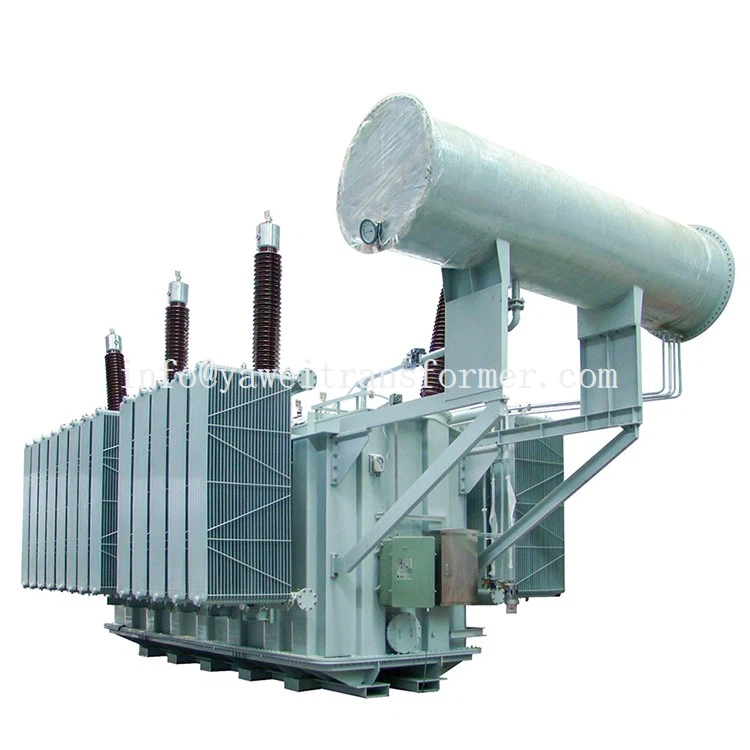
Power Rating: 10000 kVA, 12 MVA, 15 MVA
Primary Voltage Ratings: 69kV 66kV 63kV or others
Secondary Voltage Ratings: 33/13.8/11 kV or others
H.V. TAP RANGE: ±8×1.25% or others
CONNECTION TYPE: YNd11, Dyn11, YNd1, Dyn1 or others
TYPE: Oil Immersed Transformer
BIL: up to 350 kV
Standards: IEEE, CSA, AS, IEC

A 69kV power transformer is a device used in electrical power systems to convert electrical energy between different voltage levels. Here is an introduction to 69kV power transformers:


Design and Manufacturing: The design of a 69kV power transformer takes into account various factors, including electrical design (such as losses and impedance), thermal design, insulation, short-circuit capability, cooling, and sound levels, as well as mechanical design (such as tank and oil preservation). The manufacturing process follows specific standards, such as IEEE and ANSI standards.
Core Material: The core of the transformer is typically made of high-quality silicon steel sheets, which are laminated to reduce losses and improve efficiency.
Application Scenarios: 69kV power transformers are widely used in power stations, power plants, and other settings, earning high praise for their low loss, low noise, and short-circuit resistance capabilities.
Voltage Levels: 69kV power transformers can be designed for various voltage levels to meet the needs of different electrical systems. For example, they can function as step-up or step-down transformers, converting voltage from a lower to a higher level, or vice versa.

Protection Equipment: To ensure the safe operation of the transformer, surge arresters are typically installed to protect the transformer from voltage surges.
Operation and Maintenance: The operation of 69kV power transformers requires adherence to specific procedures to ensure the safety and reliability of the system. Additionally, maintenance of the transformer is key to ensuring its long-term stable operation.
Technical Specifications: Each 69kV power transformer has its technical specifications, including its rated capacity, impedance, insulation level, and other electrical characteristics, which are determined during the design and manufacturing process.
Turn Ratio and Connection Method: The turn ratio (i.e., the voltage ratio between the primary and secondary sides) and connection method (such as star or delta connection) of the transformer are determined based on system requirements and design specifications.
Intelligent Monitoring: Modern 69kV power transformers may be equipped with intelligent monitoring systems to monitor the performance and health of the transformer in real-time, thereby improving its reliability and efficiency.
Environmental Impact: When designing 69kV power transformers, the environmental impact must also be considered, including noise control and environmentally friendly treatment of oil.
This information provides an overview of 69kV power transformers, including their design considerations, applications, protective measures, and operational requirements.
Chief Introduction Of 66kV Power Transformer
A 66kV power transformer is an essential component in electrical power distribution and transmission systems, designed to handle high-voltage levels. It plays a crucial role in stepping up or stepping down voltage levels in the power grid. This transformer is designed for the 66 kilovolt (kV) voltage level. It can either step down 66kV from higher voltage levels for distribution purposes or step up voltage to 66kV for efficient transmission.
Capacity and Use: The capacity of a 66kV transformer can vary, but they are generally used in medium to large-scale power distribution and transmission applications. This includes substations and power plants, as well as industrial and large commercial power systems.
A 66kV power transformer is a high-voltage transformer that plays a pivotal role in the efficient transmission and distribution of electrical power. Its design, features, and operational capacities are aligned with the demands of handling high-voltage electricity in diverse power systems.
Applications: They are commonly found in electrical substations for both urban and rural power distribution networks, industrial complexes, and as part of the infrastructure for renewable energy sources like wind farms and solar power plants.
You can choose the configuration, and i will adjust the quotation table for you.
|
10000 kVA Transformer Specifications |
|||
|
Phase |
3 phase |
Std. |
IEEE & CSA |
|
Power rating |
10000 kVA |
Fluid |
ASTM D3487 Mineral Oil type II |
|
Type |
Oil Immersed with Expansion Vessel |
Frequency |
60Hz |
|
HV Voltage |
69 kV |
Tap changer |
12-step |
|
LV Voltage |
4.16 kV |
Fluid Capacity |
6600 kg |
|
Type of cooling |
ONAN/ONAF |
Total weight |
25500 kg |
|
HV bushing type |
Porcelain |
Paint Color |
Grey |
|
LV bushing |
Polymer |
Winding Material |
Copper |
|
Polarity |
(-) |
Vector group |
YNd1 |
|
12 MVA Transformer Specifications |
|||
|
Phase |
3 phase |
Std. |
IEEE & CSA |
|
Power rating |
12MVA |
Fluid |
Mineral Oil |
|
Type |
Substation transformer |
Frequency |
60Hz |
|
HV Voltage |
66 kV |
Tap changer |
5-step |
|
LV Voltage |
12.47Y/7.2 kV |
Fluid Capacity |
4350 kg |
|
Cooling means |
ONAN |
Total weight |
22000 kg |
|
HV bushing |
Porcelain(top-mount) |
Paint Color |
Grey 70 |
|
LV bushing |
Poly mere(side-mount) |
Winding Material |
Copper |
|
Environmental condition |
Outdoor |
Vector Group |
Dyn1 |
|
Insulation level |
325/95 kV |
Impedance(ONAN) |
6.50% |
Main products of YAWEI


