

Hey there! As a power transformer supplier, I often get asked about how to calculate the impedance voltage of a power transformer. It's a crucial aspect when it comes to understanding the performance and safety of these transformers. So, let's dive right in and break it down.
What is Impedance Voltage?
First off, the impedance voltage of a power transformer is the voltage that needs to be applied to the primary winding to circulate the rated current in the secondary winding when the secondary is short - circuited. It's usually expressed as a percentage of the rated voltage of the primary winding. This value gives us an idea of the transformer's ability to limit short - circuit currents and how it behaves under different load conditions.
Why is it Important?
The impedance voltage is super important for several reasons. For one, it helps in determining the short - circuit current that the transformer can withstand. A higher impedance voltage means the transformer can limit the short - circuit current more effectively, which is a big plus for the safety of the electrical system. It also affects the voltage regulation of the transformer. When the load changes, the impedance voltage plays a role in how much the output voltage fluctuates.
How to Calculate the Impedance Voltage?
There are a few steps involved in calculating the impedance voltage of a power transformer.
Step 1: Conduct a Short - Circuit Test
The first step is to perform a short - circuit test on the transformer. In this test, the secondary winding is short - circuited, and a reduced voltage is applied to the primary winding. The voltage is gradually increased until the rated current flows in the secondary winding.
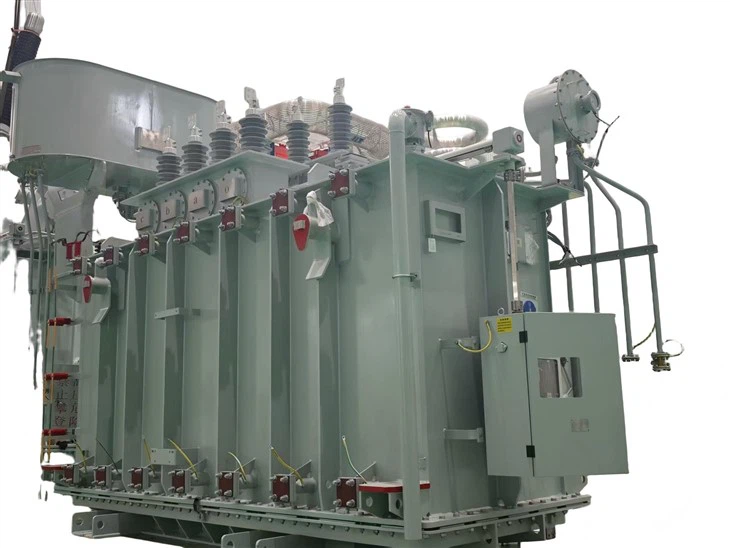
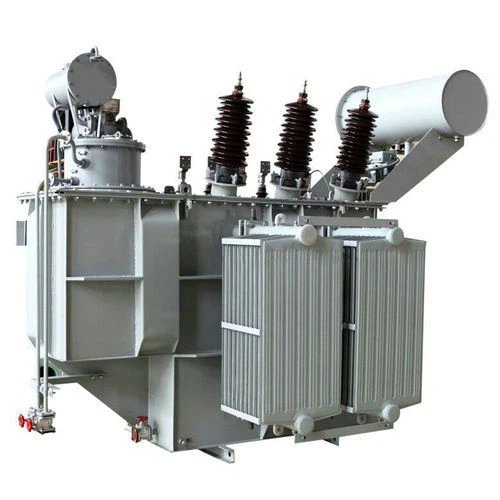
Let's say we have a Power Transformers. We connect the secondary terminals together and start applying a small voltage to the primary. We use a voltmeter to measure the applied voltage (Vsc) and an ammeter to measure the current (Isc).
Step 2: Measure the Short - Circuit Power
Along with measuring the voltage and current, we also need to measure the power (Psc) consumed during the short - circuit test. This can be done using a wattmeter.
Step 3: Calculate the Impedance
The impedance (Zsc) of the transformer can be calculated using Ohm's law. The formula is (Z_{sc}=\frac{V_{sc}}{I_{sc}}), where (V_{sc}) is the short - circuit voltage and (I_{sc}) is the short - circuit current.
Step 4: Calculate the Impedance Voltage Percentage
The impedance voltage percentage ((V_{z})) is calculated using the formula (V_{z}=\frac{V_{sc}}{V_{rated}}\times100), where (V_{sc}) is the short - circuit voltage and (V_{rated}) is the rated voltage of the primary winding.
For example, if we have a 25MVA 25000KVA 150KV Step Down Power Transformer With MR OLTC and during the short - circuit test, we find that (V_{sc} = 5000V) and the rated primary voltage (V_{rated}=150000V), then the impedance voltage percentage is (V_{z}=\frac{5000}{150000}\times100 = 3.33%)
Factors Affecting Impedance Voltage
There are several factors that can affect the impedance voltage of a power transformer.
Winding Design
The way the windings are designed, such as the number of turns, the arrangement of the coils, and the type of insulation used, can have a significant impact on the impedance voltage. A transformer with more turns in the winding will generally have a higher impedance voltage.
Core Material
The core material of the transformer also plays a role. Different core materials have different magnetic properties, which can affect the magnetic flux and, in turn, the impedance voltage.
Load Conditions
The load on the transformer can cause changes in the impedance voltage. As the load increases, the impedance voltage may change due to the effects of saturation and other electrical phenomena.
Real - World Applications
Understanding how to calculate the impedance voltage is crucial in real - world applications. For instance, in a power grid, knowing the impedance voltage of transformers helps in designing the electrical system to ensure proper protection against short - circuits. It also helps in determining the appropriate size and rating of the transformers for a particular application.
Let's say you're working on a project that requires a 110KV 6.3MVA - 63MVA 3 - Phase Power transformer. By calculating the impedance voltage, you can make sure that the transformer will perform as expected under different load conditions and will be able to handle short - circuits safely.
Conclusion
Calculating the impedance voltage of a power transformer is an important process that helps in understanding the transformer's performance and safety. It involves conducting a short - circuit test, measuring the relevant electrical parameters, and using specific formulas to calculate the impedance and the impedance voltage percentage.
If you're in the market for a power transformer and want to know more about impedance voltage or any other technical details, feel free to reach out. We're here to help you make the right choice for your electrical needs. Whether it's a small - scale project or a large - scale power grid, we have the expertise and the products to meet your requirements.
References
- Electrical Power Systems by J. R. Cogdell
- Power System Analysis and Design by J. Duncan Glover, Mulukutla S. Sarma, and Thomas J. Overbye