

Power Transformer
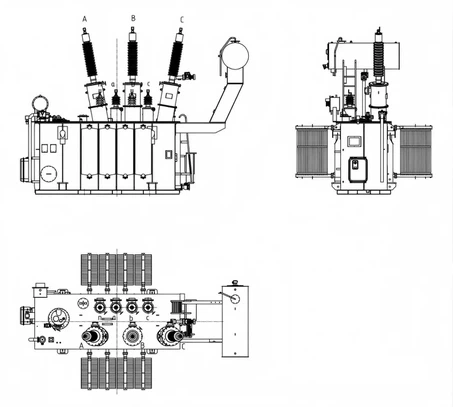
Yawei's 750kV, 500kV, 400kV, 330kV, 220kV, and 110kV ultra-high voltage transformers, as well as various dry-type transformers, oil-immersed transformers, and amorphous alloy transformers of 35kV and below, are meticulously designed, engineered, and rigorously tested, fully complying with the highest international industry standards, including IECC, TUV, UL, CE, KEMA, and GOST certifications.
The delivery time for main transformers is only 60 days, distribution transformers 20 days, dry-type transformers 15 days, and U-type transformers 30 days. This exceptional delivery speed helps customers seize market opportunities.
Product Scope
300 kVA - 240,000 kVA base
Up to 750kv
the vedio of the product


Product Advantages
High-voltage transformer,use Siemens simulation software and our company special calculation and validation procedures to the transformercore,winding,structural components,lead,fuel tanks,etc.Parts of the optimal design and carry on the omni-directional validation,ensure productperformance.Superior process equipment,elaborate material selection and efficient manufacturing,resulting in a transformer with a small volume,lightweight,low loss,low-partial-discharge,low noise characteristics,the product quality is superior,energy conservation and environmental protection,easy installation and maintenance,reliable operation and effectively reduced products running costs.
The SFZ-25000KVA 345134.5 transformer manufactured by our company holds KEMA cetifcation,fuly adchering to international electical equipmentstandards and technical specifications.
Our products ofer stable and relable performance and are widely aplicable to global power grid construction,large -scale AI computing centers,renewable energy (wind/solar)power stations,and high -end industrial parks.They are customized for core sectors such as power engineeringcontracting,grid operations,and renewable energy development.

Types of power Transformer

1. By Function in the Grid
The primary classification relies on whether a transformer increases or decreases voltage.
Step-Up Transformers: Positioned at power stations, these units boost low generation voltages to ultra-high levels ((up to 765 kV)). This reduces current, minimizing energy losses over long-distance transmission lines.
Step-Down Transformers: Located at regional substations and neighborhoods, these units lower high transmission voltages to safe, usable levels (11kVto230V) for homes and industries.
2. By Construction and Cooling
Core vs. Shell Type: In core-type designs, windings surround the magnetic core, which is ideal for high-voltage isolation. In shell-type designs, the core surrounds the windings, offering superior mechanical strength against short-circuit forces.
Liquid-Immersed: Coils are submerged in mineral oil, which acts as a high-performance electrical insulator and transfers heat to external radiator fins.
Dry-Type: These rely on air cooling and cast-resin insulation. Eliminating oil fire risks makes them the standard choice for indoor environments like hospitals and skyscrapers.
applications of power transformer
Power Generation Stations
At power plants, power transformers increase the generator output voltage to high transmission voltages. This reduces current flow and minimizes transmission losses over long distances, improving overall system efficiency.
Industrial Facilities
Manufacturing plants, mining operations, refineries, and processing facilities use power transformers to provide the voltage levels required for heavy machinery, motors, furnaces, and production equipment.
Transmission Networks
High-voltage transmission systems rely on power transformers to connect different voltage levels within the grid. They enable the safe and reliable transfer of electricity between substations and regional power networks.
Commercial Buildings
Large commercial complexes, hospitals, airports, and shopping centers depend on power transformers to ensure a stable and reliable power supply for lighting, HVAC systems, elevators, and critical equipment.
Distribution Substations
In substations, power transformers reduce transmission voltages to medium-voltage levels suitable for local distribution. This allows electricity to be delivered efficiently to residential, commercial, and industrial consumers.
Data Centers
Modern data centers use power transformers to distribute electricity from utility feeds to UPS systems, PDUs, cooling equipment, and server racks. They help maintain power quality, reliability, and operational continuity for mission-critical IT infrastructure.
How To Custom Power Transformer Process at Yawei?
Initial Consultation
Our customization process begins with an in-depth consultation to understand your specific needs. During this phase, we discuss your technical requirements, the application environment, and any special features you may need in your transformers. This consultation helps us gather all the necessary information to design a transformer that perfectly meets your requirements.
Design and Prototyping
Based on initial consultation, our engineering team designs a prototype that meets your specifications. This stage involves rigorous testing and validation to ensure the prototype performs as expected. We use advanced design software and simulation tools to create accurate models and test them under various conditions.
Material Selection
Choosing the right materials is crucial for the performance and durability of the transformer. We carefully select high-quality materials that match the specific needs of your application. Our team considers factors such as thermal stability, electrical conductivity, and mechanical strength to ensure the materials used will provide optimal performance.
Production and Quality Control
Once the prototype is approved, we move into full-scale production. Our production process is highly efficient and incorporates stringent quality control measures at every stage. We conduct various tests, including electrical, thermal, and mechanical tests, to ensure each transformer meets our high standards.
Testing and Validation
Before the final product is delivered, it undergoes comprehensive testing and validation. We simulate real-world operating conditions to ensure the transformer will perform reliably in its intended environment. This thorough testing process helps us catch any potential issues before they become problems, ensuring the highest quality for our customers.
Delivery and after-sale Support
Timely delivery is crucial, and we pride ourselves on our efficient production and logistics processes. We ensure that your order is delivered on time and in perfect condition. Additionally, our customer support team is always available to assist with any post-delivery questions or issues, ensuring complete satisfaction.
Value-Added Services
At Yawei Transformer, we strive to provide a comprehensive solution that goes beyond just the transformer itself. We offer value-added services such as custom labeling, packaging, and documentation to meet your specific needs.
Whether you require specialized labeling for identification or traceability purposes, or you need customized packaging solutions for safe transportation and storage, we have the capabilities to accommodate your requests.
Global Reach and Customer Support
As a leading custom power transformer manufacturer in China, we have established a strong global presence, serving customers across Europe, North America, Russia, Uzbekistan, Mexico, and many other regions. Our extensive customer base is a testament to our commitment to quality, reliability, and exceptional customer service.
Our Factory
Yawei Group has over 3000 employeesincluding more than 300 engineering and technical personel.The company covers an area of more than 1200 mu(80 hectares)and has a sales revenue of about 6 billion yuan in 2025.Among them,Jiangsu Yawei Transformer Co Ltd.has an annual sales revenue of over2 billion yuan.Jiangsu Yawei Transformer Co,Ltd.has been awarded the titles of National High tech Enterprise,National Specialized and Innovative "LittleGiant"Enterprise,Jiangsu Province High quality Development Technology Innovation Enterprise,Jiangsu Province Quality Trustworthy Enterprise,JiangsuProvince Famous Brand Enterprise,Jiangsu Province Quality integrity Five Star Enterprise,Provincial Five Star Cloud Enterprise,Nantong City AdvancedCollcie for Contract Abiding and Creditworthiness,Nantong City Science and Technology Progress Award,Nantong city Excellent Private Enterprise,Nantong City Civilized Unit.Nantong City Top 100 Private Enterprises,Hai'an City Industrial Growth Enterprise,Hai'an City Top 20 Industrial Enterprises,Hai'an City Top 10 High tech Enterprises,Hai'an City Quality Model Enterprise,and Hai'an City Mayor's Quality Award.
The company has strong production capacity and aneficient marketing team.The products include 500kv,400kV,330kV,220kv,and 110kV ultra-highvoltage transformers,various dry-type transformers/oil immersed transformers/amorphous alloy transformers of 35kV and below,new energy transform-ers,and prefabricated substations,Export series:single-phase transformer,three-phase transformer,cylindrical transformer,isolation transformer,controltransformer,voltage regulator and other products,And various specifications of special transformers such as grounding transformers,arc suppressioncois,Bitcoin transformers,prefabricated cabins,eactors,electric furnace transformers,rectifier transformers,mining transformers,marine transformers,etc.All eries of products of the company have passed the routine,type,and specil tests of the National Transformer Quality Supervision and IlnspectionCenter,Wuhan Branch of China Electric Power Research Institute,and Suzhou Electric Science Research institute.The enterprise has successively passedISO9001,ISO14001,ISO45001,SA8000 system certification,Jiangsu Province Enterprise Metrology Qualification Certification.At the same time,10kV and35KV level distribution transformers and box type substations have obtained international Electrotechnical Commission IEC certification,US UL certifica-tion,German TUV certification,EU CE cetification,Dutch KEMA certifcation,and GOST certification.Our product sales cover the global market,inluding123 countries and regions such as the United States,Europe,Canada.Mexico.etcIn 2025,our company sucesfully delivered the domestically pioneering fully-insulated ultra-high-voltage (UHV)large-capacity transformer(250MVA/345kV),which has been put into operation at the world's largest Alcomputing power center.Meanwhile,the construction of our UHV 765KV transformer manufacturing plant(scheduled for completion in October 2026)marks our imminent entry into the first tier of UHV equipmentmanufacturing and testing sectors,further consolidating our competitiveness in the globalmarket.

Electrical Steel Cut-to-Length Line

Automatic Core Stacking Robot System

Lamination Core

Paper Wrapping Machine

Winding Procedure

Transformer Assembly Operation

Our Products

Factory Acceptance Test

Test Station
Certifications


After-sales service
Warranty
Transformers typically come with a minimum two-year warranty (some products offer a one-year "three-guarantee" service – repair, replacement, and return). Warranty coverage usually includes performance issues caused by manufacturing defects and non-human factors. Extended warranties are also available.
Repair and Maintenance
We have a comprehensive after-sales service system capable of immediately resolving any product problems and ensuring equipment is back in operation. Services include on-site repair and ongoing maintenance support.
On-site Operation and Maintenance Support
We actively collaborate with customers to manage the operation and maintenance of transformers. We can provide guidance and assistance on-site.
After-sales Contact Information
Tel: +8615371741198
Email: peter@yaweitransformer.com
Address: No. 265, Huanghai Avenue West, Hai'an City, Jiangsu Province, China
FAQ
Jiangsu Yawei Transformer Co.,Ltd. is one of the most professional power transformer manufacturers and suppliers in China, specialized in providing high quality customized service. We warmly welcome you to buy high-grade power transformer made in China here from our factory.
power transformer for thin film photovoltaic wind turbine, power transformer manufacturer, power transformer repair