

Hey there, folks! As a supplier of Compact Transformers, I've been getting a lot of questions about what affects their performance in speech recognition. So, I thought I'd take a moment to break it down for you.
First off, let's talk about what Compact Transformers are. If you're not familiar, you can check out Compact Transformers for more info. These little wonders are designed to be small yet powerful, and they've been making waves in the speech recognition field. But like any technology, their performance can be influenced by several factors.
1. Model Architecture
The architecture of a Compact Transformer plays a huge role in its speech recognition performance. Different architectures have different ways of processing input data. For example, some architectures might have more layers, which can allow the model to learn more complex patterns in speech. However, more layers also mean more computational requirements. If the architecture is too complex for the hardware it's running on, it can slow down the processing speed and even lead to inaccurate results.
On the other hand, a simpler architecture might be more efficient in terms of computation, but it might not be able to capture all the nuances in speech. So, finding the right balance in the architecture is crucial. It's all about getting the model to be powerful enough to understand speech accurately, but not so complex that it becomes a resource - hog.
2. Data Quality
In speech recognition, garbage in, garbage out. The quality of the data used to train a Compact Transformer is of utmost importance. If the training data is full of background noise, inconsistent pronunciation, or incorrect labels, the model will learn these imperfections and perform poorly in real - world scenarios.
For instance, if the training data contains a lot of recordings with heavy background traffic noise, the model might have a hard time distinguishing between the speech and the noise in new recordings. To ensure good performance, the training data should be as clean and diverse as possible. It should cover a wide range of speakers, accents, and speaking styles. That way, the model can generalize well and recognize speech accurately in different situations.
3. Hardware Limitations
The hardware on which the Compact Transformer operates can significantly impact its performance. Slow processors, limited memory, or insufficient storage can all slow down the model's processing speed. When a model is running on hardware that's not up to the task, it might take longer to process speech input, or it might even crash.
Let's say you have a Compact Transformer model that requires a high - performance GPU to run efficiently. If you try to run it on a machine with only a basic CPU, the model will struggle. It won't be able to take advantage of parallel processing, which is essential for fast speech recognition. So, making sure that the hardware can support the model's requirements is key.
4. Hyperparameter Tuning
Hyperparameters are the settings that control how a Compact Transformer is trained. Things like the learning rate, batch size, and number of training epochs can have a big impact on the model's performance. If the learning rate is too high, the model might overshoot the optimal solution and fail to learn effectively. If it's too low, the training process will be incredibly slow.
The batch size also matters. A large batch size can make the training process faster, but it might also cause the model to converge to a sub - optimal solution. Experimenting with different hyperparameters and finding the right combination can be a tricky process, but it's essential for getting the best performance out of the Compact Transformer.
5. Environmental Conditions
The environment in which the speech recognition is taking place can affect the performance of the Compact Transformer. For example, in a noisy environment, the model might have a hard time picking up the speech signals. Background noise can mask important speech features, making it difficult for the model to recognize words accurately.
Temperature and humidity can also play a role. Extreme temperatures can cause hardware to malfunction, which in turn can affect the model's performance. High humidity levels can damage the hardware components, leading to errors and reduced performance over time.

6. Integration with Other Systems
In many real - world applications, Compact Transformers are integrated with other systems. How well they integrate can impact their speech recognition performance. For example, if the Compact Transformer is integrated with a microphone system, the quality of the microphone and its compatibility with the model can make a difference.
A low - quality microphone might not pick up the speech clearly, leading to inaccurate input for the model. Also, if the communication between the different systems is not smooth, there can be delays in processing the speech, which can affect the overall performance.
Our Offerings
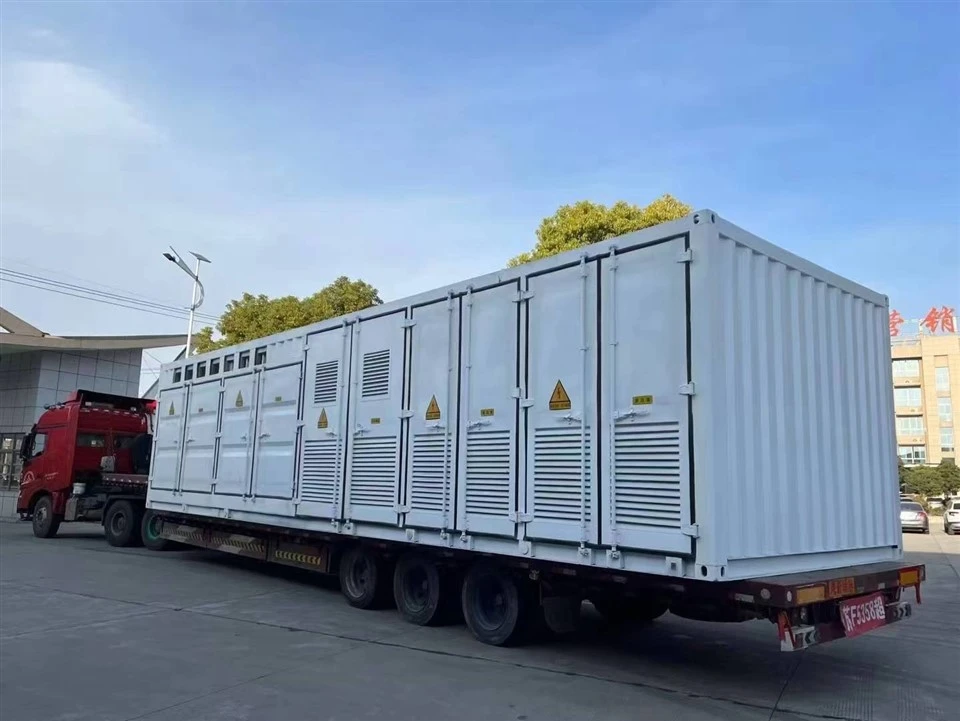
At our company, we understand all these factors and work hard to optimize the performance of our Compact Transformers. We offer a range of products, including New Energy Integrated Photovoltaic Prefabricated Cabin MV&HV Transformers Cutting - Edge Distribution Equipment and Compact Substation Transformer. These products are designed with state - of - the - art technology to ensure high - quality speech recognition performance.
If you're in the market for Compact Transformers for speech recognition or any other application, we'd love to talk to you. Whether you're a small startup or a large corporation, we can provide you with the right solutions to meet your needs. So, don't hesitate to reach out and start a conversation about how we can work together to enhance your speech recognition capabilities.
References
- Goodfellow, I. J., Bengio, Y., & Courville, A. (2016). Deep Learning. MIT Press.
- Vaswani, A., et al. (2017). Attention Is All You Need. Advances in Neural Information Processing Systems.