

As a dry transformer supplier, I've seen firsthand the importance of understanding partial discharge and its effects on these crucial electrical devices. So, let's dive into what partial discharge is and how it impacts dry transformers.
What is Partial Discharge?
Partial discharge is basically a localized electrical discharge that occurs within the insulation system of a dry transformer. It's like a mini - lightning strike inside the insulation. This can happen due to a few reasons. For instance, if there are voids or impurities in the insulation material. When an electric field is applied across the insulation, the electrical stress can be concentrated in these areas, causing the air or other gases in the voids to ionize and conduct electricity briefly.
Another common cause is improper insulation installation. If the insulation isn't wrapped tightly or there are gaps, it can lead to areas of high - stress electrical fields, which in turn can trigger partial discharges.
The Physical Impact on Dry Transformers
Insulation Degradation
One of the most significant impacts of partial discharge on a dry transformer is insulation degradation. When partial discharges occur, they generate a lot of energy in the form of heat, light, and chemical reactions. The heat can break down the molecular structure of the insulation material over time.
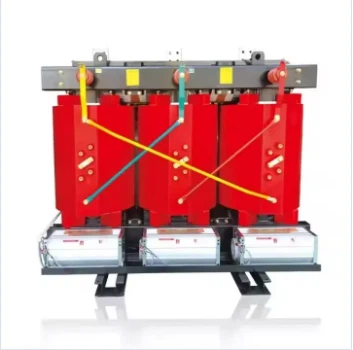

Imagine the insulation as a protective shield around the transformer's windings. With continuous partial discharge, this shield starts to weaken. For example, in epoxy - resin - cast dry transformers like our 1250 KVA Epoxy Resin Cast Delta Star Dry Type Step Down Transformer, the epoxy resin insulation can gradually lose its dielectric strength. This makes the transformer more vulnerable to electrical breakdowns.
Treeing and Tracking
Partial discharges can also lead to two other dangerous phenomena in the insulation: treeing and tracking. Treeing is the formation of delicate, tree - like channels in the insulation material. These channels are created as the partial discharges erode the insulation. Tracking, on the other hand, is the development of a conducting path on the surface of the insulation.
Both treeing and tracking can rapidly progress. Once they start, they can spread across the insulation, reducing its effectiveness and increasing the risk of a complete electrical failure. In a Delta Star Dry Type Transformer, if treeing or tracking occurs, it can lead to short - circuits and other serious operational issues.
Reduction in Transformer Life
Due to the insulation degradation, treeing, and tracking caused by partial discharge, the overall lifespan of the dry transformer is significantly reduced. A transformer that is supposed to last for decades might end up failing in just a few years if partial discharge issues aren't addressed.
For suppliers like us, it means that our customers may face unexpected costs for replacement. And for end - users, it can lead to costly downtime, especially in industrial settings where dry transformers are used to power critical processes.
Electrical Performance Impact
Power Loss
Partial discharge also results in power loss. When the insulation is compromised, the electrical current doesn't flow as efficiently as it should. Some of the electrical energy is wasted in the form of heat generated by the partial discharges.
This power loss not only increases the operating costs of the transformer but also reduces its overall efficiency. For example, in our High - Quality Hot Sales 10kv 500kVA Three Phases Dry Type Transformer Factoryprice, even a small amount of power loss due to partial discharge can add up over time, leading to significant financial losses for the user.
Voltage Instability
Another electrical performance issue is voltage instability. As the insulation degrades due to partial discharge, the transformer's ability to maintain a stable output voltage is affected. Fluctuations in the output voltage can cause problems for the connected electrical equipment.
For instance, sensitive electronic devices may malfunction or get damaged if they receive an unstable voltage supply. This can be a huge headache for businesses that rely on these devices for their day - to - day operations.
Detecting and Preventing Partial Discharge
Detection Methods
There are several methods to detect partial discharge in dry transformers. One common method is the electrical measurement technique. This involves using sensors to detect the electrical pulses generated by the partial discharges.
Another method is the acoustic detection method. Partial discharges produce sound waves, and by using acoustic sensors, we can pick up these waves and analyze them to determine the presence and severity of partial discharge.
Prevention Strategies
To prevent partial discharge, proper insulation design and manufacturing are key. At our company, we use high - quality insulation materials and follow strict manufacturing processes to ensure that there are no voids or impurities in the insulation.
Regular maintenance and monitoring are also crucial. By conducting periodic partial discharge tests, we can detect any early signs of problems and take corrective actions before they become serious.
Conclusion
In conclusion, partial discharge can have a huge impact on dry transformers, from physical damage like insulation degradation to electrical performance issues such as power loss and voltage instability. As a dry transformer supplier, we're committed to providing high - quality products and helping our customers understand and manage the risks associated with partial discharge.
If you're in the market for a dry transformer or need more information about partial discharge and how to prevent it, don't hesitate to reach out. We're here to assist you with all your transformer needs and ensure a reliable power supply for your business.
References
- Electrical Insulation Handbook for Power Systems Equipment, McGraw - Hill
- Transformer Engineering: Design, Technology and Diagnostics, Springer