

As a provider of Compact Transformers, I've witnessed firsthand the remarkable capabilities these devices offer in various electrical systems. However, like any technology, Compact Transformers face challenges, especially when it comes to handling long - sequence data. In this blog, I'll delve into these challenges and share strategies on how to overcome them.
Understanding the Challenges of Compact Transformers in Handling Long - Sequence Data
Compact Transformers are designed to be space - efficient and highly functional, making them ideal for a wide range of applications, from industrial settings to residential areas. But when it comes to long - sequence data, several issues arise.
One of the primary challenges is the limited processing power. Compact Transformers are often smaller in size and have less computational resources compared to their larger counterparts. This can lead to slower data processing speeds when dealing with long sequences of data. As the length of the data sequence increases, the transformer may struggle to analyze and make sense of all the information in a timely manner.
Another challenge is the memory constraints. Long - sequence data requires a significant amount of memory to store and process. Compact Transformers, due to their compact design, may have limited memory capacity. This can result in data loss or incomplete analysis, as the transformer may not be able to hold all the necessary data during the processing phase.
The complexity of long - sequence data also poses a problem. Long sequences often contain intricate patterns and relationships that are difficult to decipher. Compact Transformers may not have the advanced algorithms or models to effectively handle this complexity, leading to inaccurate results or misinterpretation of the data.
Strategies to Overcome the Challenges
1. Optimize the Transformer Architecture
One way to address the limited processing power is to optimize the architecture of the Compact Transformer. This can involve using more efficient algorithms and models that require fewer computational resources. For example, pruning techniques can be applied to remove unnecessary connections in the transformer, reducing the computational load without sacrificing too much accuracy.
Another approach is to use quantization. Quantization involves reducing the precision of the numerical values used in the transformer, which can significantly reduce the computational requirements. By using lower - precision data types, such as 8 - bit integers instead of 32 - bit floating - point numbers, the processing speed can be increased while still maintaining a reasonable level of accuracy.
2. Expand Memory Capacity
To overcome the memory constraints, we can consider expanding the memory capacity of the Compact Transformer. This can be achieved by using external memory devices or by implementing memory management techniques. For instance, we can use external hard drives or solid - state drives to store the long - sequence data, and only load the necessary parts of the data into the transformer's internal memory during processing.

Memory management techniques, such as caching and swapping, can also be employed. Caching involves storing frequently used data in a small, fast - access memory, so that it can be retrieved quickly when needed. Swapping, on the other hand, allows the transformer to move less frequently used data to a slower - access memory to free up space in the internal memory.
3. Enhance Data Pre - processing
Data pre - processing plays a crucial role in handling long - sequence data. By pre - processing the data before it is fed into the Compact Transformer, we can reduce its complexity and make it easier to analyze. This can involve techniques such as normalization, filtering, and dimensionality reduction.
Normalization ensures that all the data features are on a similar scale, which can improve the performance of the transformer. Filtering can be used to remove noise and outliers from the data, making it more reliable. Dimensionality reduction techniques, such as principal component analysis (PCA), can be applied to reduce the number of features in the data, thereby simplifying the analysis process.
4. Leverage Advanced Machine Learning Techniques
To handle the complexity of long - sequence data, we can leverage advanced machine learning techniques. For example, recurrent neural networks (RNNs) can be combined with Compact Transformers to capture the sequential information in the data more effectively. RNNs are designed to handle sequential data and can provide additional context and information to the transformer.
Another option is to use attention mechanisms. Attention mechanisms allow the transformer to focus on different parts of the data sequence based on their relevance, which can help in identifying the important patterns and relationships in the long - sequence data.
The Role of Our Compact Transformers in Overcoming Challenges
At our company, we are committed to providing high - quality Compact Transformers that are designed to overcome these challenges. Our Compact Transformers are built with the latest technologies and optimized architectures to ensure efficient data processing.
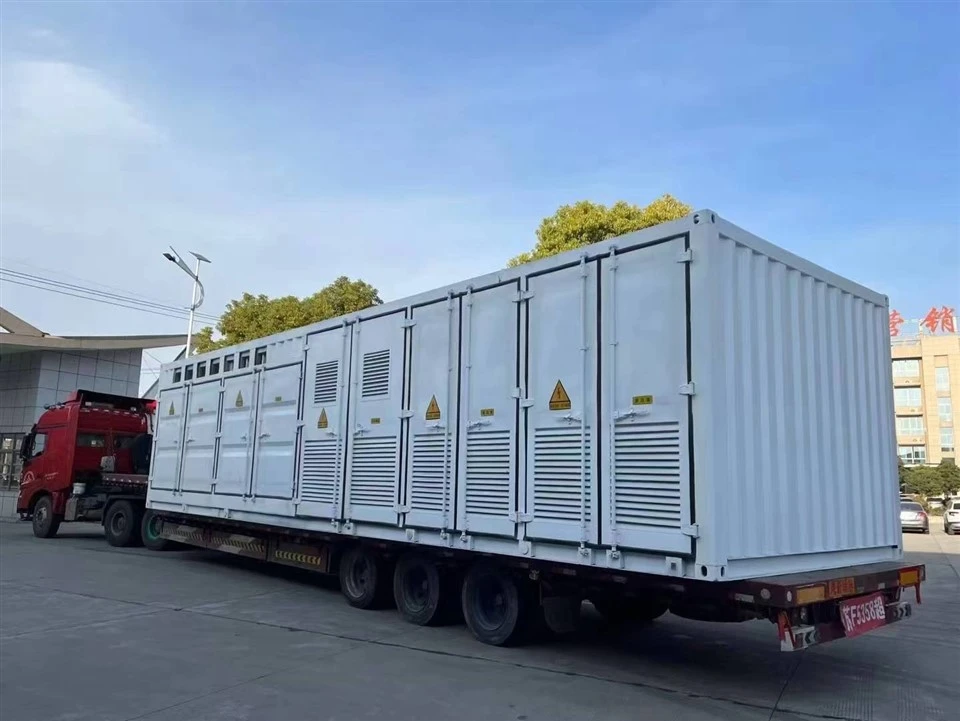
We offer New Energy Integrated Photovoltaic Prefabricated Cabin MV&HV Transformers Cutting - Edge Distribution Equipment, which are specifically designed for handling complex data in the new energy sector. These transformers are equipped with advanced memory management systems and powerful algorithms to handle long - sequence data with ease.
Our Compact Substation Transformer is another example of our innovative solutions. It is designed to be compact yet powerful, with the ability to process large amounts of data in a short period of time. We continuously invest in research and development to improve the performance of our transformers and to stay ahead of the curve in handling long - sequence data.
Conclusion
Handling long - sequence data is a significant challenge for Compact Transformers, but with the right strategies and technologies, it can be overcome. By optimizing the architecture, expanding memory capacity, enhancing data pre - processing, and leveraging advanced machine learning techniques, we can improve the performance of Compact Transformers in dealing with long - sequence data.
If you are facing challenges in handling long - sequence data with your existing transformers or are looking for a reliable Compact Transformer solution, we invite you to contact us for a procurement discussion. Our team of experts is ready to assist you in finding the best solution for your specific needs.
References
- Vaswani, A., Shazeer, N., Parmar, N., Uszkoreit, J., Jones, L., Gomez, A. N., … & Polosukhin, I. (2017). Attention is all you need. In Advances in neural information processing systems (pp. 5998 - 6008).
- Han, S., Pool, J., Tran, J., & Dally, W. (2015). Learning both weights and connections for efficient neural network. In Advances in neural information processing systems (pp. 1135 - 1143).
- LeCun, Y., Bengio, Y., & Hinton, G. (2015). Deep learning. Nature, 521(7553), 436 - 444.