

Harmonics are electrical frequencies that deviate from the fundamental frequency of the power system, typically 50 or 60 Hz. In the context of distribution transformers, these non - sinusoidal frequencies can have several harmonic impacts. As a distribution transformer supplier, I've seen firsthand how these effects can influence the performance and lifespan of our products.
1. Overheating
One of the most significant harmonic impacts on distribution transformers is overheating. Harmonics cause additional losses in the transformer's core and windings. The core losses are mainly due to hysteresis and eddy currents. When harmonics are present, the magnetic field in the core becomes more complex, increasing the hysteresis losses. Eddy currents, which are induced circulating currents in the core, also increase because of the higher - frequency components of the harmonics.
In the windings, the additional losses come from the skin effect and proximity effect. The skin effect causes the current to flow more on the outer surface of the conductor at higher frequencies. This effectively reduces the cross - sectional area available for current flow, increasing the resistance and thus the I²R losses. The proximity effect occurs when conductors are close to each other, and the magnetic fields from adjacent conductors interact, further increasing the losses.
Overheating can lead to a reduction in the transformer's insulation life. The insulation materials in transformers are designed to operate within a certain temperature range. When the temperature exceeds this range due to harmonic - induced overheating, the insulation degrades more quickly. This can eventually lead to insulation breakdown and a catastrophic failure of the transformer.
2. Increased Load on the Transformer
Harmonics increase the effective current flowing through the transformer. Since the transformer is rated based on the RMS (root - mean - square) value of the current, the presence of harmonics can cause the transformer to operate closer to or even beyond its rated capacity, even if the fundamental load is within the normal range.
For example, if a transformer is rated for a certain amount of power at the fundamental frequency, the additional harmonic currents can push the total current above the rated value. This means that the transformer has to handle more power than it was designed for, which can lead to premature wear and tear.
3. Noise and Vibration
Harmonics can also cause increased noise and vibration in distribution transformers. The magnetic forces within the transformer are affected by the non - sinusoidal current waveforms. The additional frequencies in the harmonics create additional magnetic forces that cause the transformer core and windings to vibrate more than normal.
This increased vibration can not only be annoying but can also lead to mechanical damage over time. The constant vibration can loosen the connections within the transformer, which can further lead to electrical arcing and other problems.
4. Impact on Power Quality
Harmonics can degrade the power quality of the electrical system. They can cause voltage distortion, which can affect the performance of other electrical equipment connected to the same system. For example, sensitive electronic devices may malfunction or have reduced efficiency when exposed to distorted voltage waveforms.
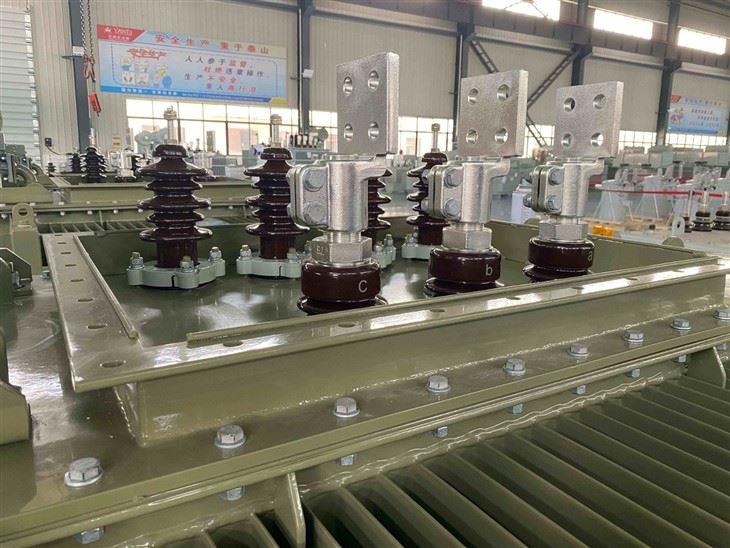
As a distribution transformer supplier, we offer a range of products that are designed to handle different levels of harmonic loads. For instance, our Yawei S11 1200KVA & 1600KVA Distribution Transformer is built with high - quality materials and advanced design techniques to minimize the impact of harmonics. This transformer is suitable for a variety of applications where harmonic loads are present.
Another product in our lineup is the 500KVA 22.9KV Three Phase Step Down Distribution Transformer. This transformer is designed to step down high - voltage power to a lower voltage suitable for distribution. It is engineered to handle harmonic currents and maintain a stable output voltage, even in the presence of harmonics.
Our Delta Star Distribution Transformer is also a great option for applications where harmonic mitigation is required. The delta - star connection provides certain advantages in terms of handling harmonics, such as reducing the third - order harmonics in the neutral current.
5. Mitigation Strategies
To address the harmonic impacts on distribution transformers, several mitigation strategies can be employed. One common approach is the use of harmonic filters. These filters are designed to reduce the harmonic content in the electrical system by providing a low - impedance path for the harmonic currents.
Another strategy is to derate the transformer. This means reducing the transformer's rated capacity to account for the additional losses caused by harmonics. By operating the transformer at a lower capacity, the overheating and other problems associated with harmonics can be minimized.

Proper sizing of the transformer is also crucial. When selecting a transformer for a particular application, it's important to consider the expected harmonic load. A larger transformer may be required to handle the additional current caused by harmonics.
Conclusion
Harmonics can have significant impacts on distribution transformers, including overheating, increased load, noise and vibration, and power quality degradation. As a distribution transformer supplier, we understand the importance of providing products that can withstand these harmonic effects. Our range of transformers, such as the Yawei S11 1200KVA & 1600KVA Distribution Transformer, 500KVA 22.9KV Three Phase Step Down Distribution Transformer, and Delta Star Distribution Transformer, are designed to meet the challenges posed by harmonics.
If you're in the market for a distribution transformer and want to discuss how our products can help you deal with harmonic impacts, feel free to reach out for a purchase negotiation. We're here to provide you with the best solutions for your electrical needs.
References
- Electric Power Systems Quality, by Roger C. Dugan, Mark F. McGranaghan, and H. Wayne Beaty
- Power System Harmonics: Fundamentals, Analysis and Filter Design, by N. G. Hingorani and L. Gyugyi