how to tell if transformer is bad
A bad transformer may produce missing or incorrect output voltage, overheating, burned insulation, or unusually loud buzzing. But these clues do not prove the transformer itself has failed: supply problems, loose connections, and overloaded circuits can look similar. Learning how to tell if a transformer is bad starts with recognizing warning signs, then having a qualified technician confirm the cause.
What are the clearest signs of a bad transformer?
The clearest evidence is incorrect output despite the correct input voltage, correct connections, and suitable operating conditions. Visible burning or damaged insulation strengthens the case for failure. Noise, heat, or equipment shutdown alone calls for investigation, not an automatic replacement.
Common transformer failure symptoms include:
Missing output: The equipment loses the power it needs, although an interrupted incoming supply must be ruled out first.
Incorrect output voltage: Readings fall outside the manufacturer's specifications after input voltage and wiring are checked.
Overheating or a burned smell: Excessive loading, poor cooling, or damaged insulation may be involved.
New or excessive buzzing: Loose connections and vibration can create noise and overheating.
Repeated protective trips: A short circuit or overload may be responsible rather than a failed winding.
Treat these transformer warning signs as clues to share with a technician. Note when they started and whether they occur continuously or only when the equipment tries to run. That timing helps focus the inspection without requiring you to access electrical components.
HVAC symptoms: furnace and AC control problems
Many HVAC transformers supply nominal 24-volt AC control circuits. When that supply disappears or moves outside the equipment's permitted range, controls may stop working correctly. However, the acceptable voltage depends on the installed equipment; one universal cutoff does not diagnose every system.
Furnace symptoms to report
Possible symptoms of a bad furnace transformer include heating that will not start and control-voltage faults. These are not exclusive to transformer failure: incoming power, thermostat wiring, and other control problems can also prevent heating. Record any visible diagnostic code and use the equipment manual rather than assuming a no-heat condition identifies one failed component.
When discussing bad furnace transformer symptoms with a technician, describe the sequence. Does the thermostat request heat without a response? Did the trouble begin after thermostat work? Report observations rather than repeatedly trying to restart the furnace.
AC symptoms and overlapping causes
Possible bad AC transformer symptoms involve lost control power or control voltage outside specification, potentially leaving cooling unresponsive. The same complaint can originate in wiring or the thermostat, so a cooling failure alone cannot identify the transformer.
For bad transformer symptoms in HVAC equipment, the useful distinction is between missing control power and a confirmed defective transformer. Ask the technician what measurement establishes the difference. This keeps a plausible symptom from becoming an unsupported diagnosis.
How does a technician confirm transformer failure?
A technician checks the rated input and output, verifies connections, and measures performance against the manufacturer's specifications. They also investigate the connected load and protective devices. Correct input paired with significantly incorrect output can indicate winding damage, but wiring and operating conditions must be considered first.
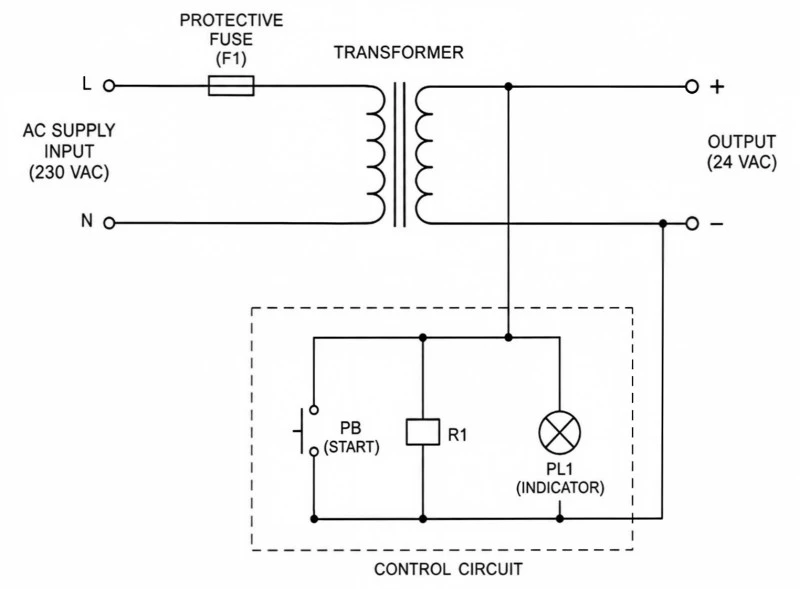
A professional diagnostic sequence typically covers:
Identify the ratings. Read the nameplate and equipment documentation instead of assuming the required voltage or capacity.
Verify incoming power. Missing or incorrect primary voltage can explain missing or incorrect secondary voltage.
Check connections and protection. Incorrect taps, damaged connections, or operated protection can change the diagnosis.
Evaluate output and loading. Compare measurements with the manufacturer's requirements and investigate shorts or excessive current draw.
Continuity testing can reveal an open winding, but it is not a complete assessment of transformer health. A technician must interpret it alongside voltage measurements, connections, and evidence of damage. Avoid treating a single meter result as the entire diagnosis.
Power transformers and audio output transformers
Bad power transformer symptoms center on power delivery: missing output, abnormal voltage, overheating, or damaged insulation. Those symptoms still require checks of the supply and load. A transformer feeding an excessive load may overheat even when the original fault lies elsewhere.
Suspected bad output transformer symptoms in an amplifier require a different diagnostic approach. Weak, distorted, or absent sound is not enough to condemn an output transformer; speaker faults and failing tubes can also cause audio trouble. Have an amplifier technician distinguish the signal-path fault rather than replacing an expensive component based on sound alone.
Do not open a tube amplifier for a casual inspection. Its internal voltages can remain dangerous after unplugging because capacitors can retain charge. Leave internal testing to someone qualified to service that equipment.
Safe next steps before replacement
Your most useful contribution is a clear symptom history. Record the equipment model, displayed fault codes, unusual sounds, and recent changes. Keep observations external; do not remove electrical covers or attempt live measurements.
If protection repeatedly trips, stop resetting it and arrange service. Resideo's transformer instructions specifically call for checking short circuits and current draw when trips continue. Replacing the transformer without resolving those transformer problems may leave the actual cause untouched.
The takeaway: recognize transformer issues, but confirm them through a complete diagnosis. Ask for the measured input, measured output, and explanation of the underlying fault before approving replacement. That conversation is more useful than guessing from buzzing, a blank control, or a system that will not start.
FAQ
Q: How soon can you delivery the transformer?
A: It depends on the quantity and capacity of the transformer, normally within one month since the date drawing confirmed by buyer.
Q: How long can you provide the quality warranty?
A: 24 months since the date transformer operated.
Q: What payment method do you accept?
A: T/T (wire transfer) preferred, L/C both accepted.