

When we talk about generating stations, the massive transmission transformers usually steal the spotlight because of their mind-boggling voltage ratings. But honestly? A distribution transformer for power plant use is just as critical. Whether a facility runs on coal, gas, hydro, nuclear, solar, or wind, these workhorses are what keep the lights on-literally-ensuring electricity safely makes it to the plant's own auxiliary systems and local networks.

Think of it this way: a power plant needs a ton of juice just to run itself before it can send anything to the grid.
In this guide, we'll break down how these transformers actually fit into a power plant ecosystem, their real-world applications, technical specs, and what you should look for when picking one. Plus, we'll look at why utilities worldwide tend to team up with Yawei Transformer.
What Exactly Is a Distribution Transformer for Power Plant Use?
In plain English, its main job is to step down medium-voltage electricity to lower, usable levels. This is the power that keeps a plant's internal organs functioning. We're talking about things like:
Auxiliary equipment and motor control centers (MCC)
Plant lighting and administrative buildings
Heavy-duty pumps and cooling systems
Workshop facilities and local utility distribution networks
While massive transmission lines handle 220kV, 400kV, or even more, distribution transformers operate in a much lower sandbox. Here's a quick look at the typical voltages they handle:
| Primary Voltage | Secondary Voltage |
| 33kV | 415V |
| 22kV | 400V |
| 11kV | 415V |
| 6.6kV | 400V |
| 13.8kV | 480V |
Depending on how much internal load the plant has, you'll usually see capacities ranging anywhere from 100 kVA up to 10 MVA.
Why You Can't Run a Plant Without Them
If these transformers go down, the whole plant grinds to a halt. They feed the critical internal systems that keep the entire operation stable, including:
Boiler feed, cooling water, and condensate pumps
Ventilation systems and air compressors
Conveyor belts and fire protection gear
Control rooms, instrumentation, and emergency backup power
Getting the right fit here pays off big time. You get a steady voltage supply, longer equipment life, fewer electrical losses, and-best of all-lower maintenance bills and safer daily operations.
To visualize where they sit, here is how power typically flows through a station:

Where Do They Move the Needle? (Common Applications)
You'll spot a distribution transformer for power plant setups across all kinds of generation sectors, each with its own specific demands:
Thermal Plants: They keep the grit moving-powering boiler auxiliaries, coal and ash handling gear, water treatment setups, and cooling towers.
Hydroelectric Facilities: They handle the logistics, running spillway gates, pumping stations, generator cooling, and the main maintenance shops.
Solar Farms: Here, they're the backbone for inverter stations, SCADA monitoring networks, battery storage, and weather tracking setups.
Wind Farms: They're tucked away keeping turbine service power alive, running control centers, and handling substation auxiliary loads.
Nuclear Facilities: Safety is everything here. High-reliability transformers feed reactor cooling gear, emergency diesel generators, and critical monitoring systems.
The Main Types You'll Run Into
These are the old faithfuls of the industry and the most common choice by far.
The Perks: They cool down incredibly well, handle overloads like a champ, last for decades, and love the outdoors.
Where they go: Open-air utility substations, major power stations, and heavy industrial yards.
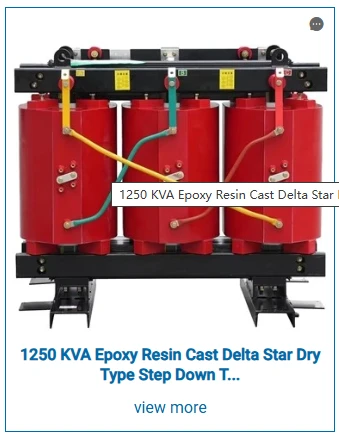
If you're working indoors, this is your go-to.
The Perks: Zero oil means zero fire risk. They require almost no maintenance and won't leak fluids into the environment.
Where they go: Control buildings, indoor substations, and administrative complexes.
You see these all over modern renewable energy sites.
The Perks: Safe from tampering, compact, and designed to connect directly to underground cables. Perfect if the public might walk past them.


The Nitty-Gritty: Key Technical Specs
When engineers sit down to spec out a distribution transformer for power plant applications, these are the baseline numbers they look at:
| Parameter | Typical Range |
| Capacity | 100 kVA–10 MVA |
| Frequency | 50 Hz / 60 Hz |
| Voltage Class | 6.6kV–35kV |
| Cooling | ONAN / ONAF |
| Vector Group | Dyn11, Yyn0 |
| Insulation Class | Class A / F / H |
| Efficiency | Up to 99% |
| Impedance | 4%–8% |
| Tap Changer | Off-circuit or OLTC (On-Load Tap Changer) |
How to Choose the Right One Without Getting Burned
Picking a transformer isn't just about matching the numbers on a data sheet. You have to look at the bigger picture:
Load Analysis: Don't just look at continuous load. Check the peak spikes, potential future expansions, and the massive inrush current when large motors start up. Go too small and you risk failures; go too big and you're wasting budget.
The Environment: Where is it sitting? High altitudes, blistering heat, extreme humidity, heavy dust, or seismic zones all change how a transformer needs to be built.
Cooling Methods: Match the cooling to the workload.
ONAN (Oil Natural Air Natural): Great for standard everyday distribution.
ONAF (Oil Natural Air Forced): For when things get heavy and you need fans.
OFAF (Oil Forced Air Forced): Best for massive, high-load power stations.
Efficiency Rules: Plants run 24/7/365. Buying a premium, high-efficiency transformer might sting a bit upfront, but over its lifespan, it pays for itself many times over by trimming down core and copper losses. Less heat generated means longer insulation life, too.
What's inside a modern premium transformer? Look for features like low-loss silicon steel cores, oxygen-free copper windings, vacuum oil filling, and solid monitoring setups (like Buchholz relays, pressure relief devices, and online monitoring) to save yourself a ton of maintenance headaches later.
Installation & Maintenance: Keeping the Beast Happy
Getting a transformer to last 30+ years requires doing the groundwork right. During installation, always make sure it sits on a level concrete pad, has plenty of breathing room for ventilation, and is perfectly grounded. Don't forget to test the insulation resistance and check the oil quality before you flip the switch.
Once it's live, don't just forget about it. A solid maintenance schedule stops small quirks from turning into catastrophic failures.
| Maintenance Item | Recommended Interval |
| Visual checks & Oil levels | Monthly |
| Temperature monitoring | Continuous |
| Cooling system inspection | Every 6 months |
| Insulation resistance test | Annually |
| Dissolved Gas Analysis (DGA) | Annually or condition-based |
| Bushing checks & Oil testing | Every 1–2 years |

Why Partner with Yawei Transformer?
Look, when you're sourcing a distribution transformer for power plant use, you need a manufacturer who actually knows the ropes. Yawei Transformer has spent over 30 years building a reputation for supplying top-tier transformers to utilities, industrial plants, and renewable energy sites around the globe.
Here is what they bring to the table:
Deep Experience: Over three decades in the manufacturing game with automated, modern facilities.
Certified Quality: Fully compliant with IEC, IEEE, and GB standards.
Tailored to You: They don't just do cookie-cutter builds; you get custom voltage and capacity solutions designed for your specific site.
Rock-Solid Reliability: Low-loss, high-efficiency designs that undergo brutal factory testing before they ever ship out.
Global Reach: Years of export experience backed up by real, responsive technical support and after-sales service.
Whether you just need a compact auxiliary unit or a heavy-duty distribution setup for a massive utility station, Yawei has the engineering muscle to build exactly what your project demands.
FAQ
Q: How soon can you delivery the transformer?
A: It depends on the quantity and capacity of the transformer, normally within one month since the date drawing confirmed by buyer.
Q: How long can you provide the quality warranty?
A: 24 months since the date transformer operated.
Q: What payment method do you accept?
A: T/T (wire transfer) preferred, L/C both accepted.


