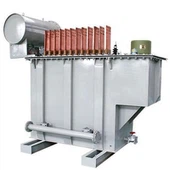
The power consumption of a transformer, i.e. its rated power, depends on its rated voltage, rated current, and the design, manufacturing, and material quality of the winding. The calculation formula is: rated power (kVA)=rated voltage (V) x rated current (A) x root sign 3. Among them, the radical 3 represents the root of the logarithm 3. This indicates that the rated power of the transformer is closely related to voltage and current.
In addition, the amount of electricity that a transformer can pass through is also related to its rated capacity. The rated capacity represents the maximum electrical power that a transformer can handle, usually measured in kilovolt amperes (kVA) or megavolt amperes (MVA). Therefore, to determine how much electricity a transformer can supply, it is necessary to comprehensively consider its rated voltage, rated current, and rated capacity.
Please note that the actual power consumption of transformers is also affected by factors such as load type, usage time, and ambient temperature. Load types such as pure resistive load, pure inductive load, pure capacitive load, and mixed load will have different effects on the load of transformers. At the same time, the load of the transformer also needs to consider the usage time, i.e. the duration of the load, as well as the impact of environmental temperature. In high-temperature environments, the load capacity of transformers will decrease.
Therefore, to accurately understand how much electricity a transformer can supply, it is necessary to comprehensively consider its design parameters, operating environment, and actual load conditions. For more information, it is recommended to consult books on electrical engineering or consult experts in related fields.
Contact YAWEI for more info.
Email: keiko@yaweitransformer.com
Whatsapp/Wechat:+86 15221863286