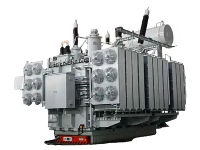
Kirk Key for Transformers: When and Why to Use Them

Kirk Key interlocking systems are a proven mechanical solution for improving safety, reliability, and operational integrity in transformer systems. They enforce sequential logic-ensuring that equipment is operated in a specific order, minimizing human error and preventing hazardous conditions.
This article explores their application in transformers, highlighting when to use them, why they are essential, and some diverse perspectives regarding their implementation. To provide clarity, relevant statistics and tables have been included where appropriate.
What Is a Kirk Key Interlock System?
A Kirk Key system is a mechanical interlock designed to enforce safe operating protocols. It prevents equipment or access points from being energized or accessed until prior steps in the sequence have been completed. This is achieved using locks and keys: a key is released only when the equipment is safely positioned, such as a breaker in the "open" condition, locking subsequent unsafe actions.

| Component | Description |
|---|---|
| Locks | Mechanical devices mounted on equipment, requiring a unique key for activation or removal. |
| Keys | Physical keys that represent operational states and enable interlocking sequences. |
| Key Exchange Blocks | Devices for storing and transferring keys, ensuring logical operations. |
| Sequential Logic | Ensures required steps are performed in a specified order (e.g., de-energize → isolate → access). |
When to Use Kirk Keys for Transformers
| Scenario | Requirement | Why Use Kirk Keys |
|---|---|---|
| Maintenance/Inspection | De-energize and isolate before accessing equipment. | Prevent improper energization, protecting personnel and equipment. |
| Arc Flash Prevention | Enforce proper shutdown sequence. | Reduce human error, minimize risk of deadly arc flash incidents. |
| Source Transfer | Prevent simultaneous energization of conflicting sources. | Avoid backfeed, overvoltage, or fault conditions. |
| High-Voltage Transformers | Ensure equipment isolation at high energy levels. | Mitigates catastrophic risks in high-power scenarios. |
| Complex Switching Operations | Lock switching sequence to avoid misoperation. | Ensures reliability in systems with frequent reconfiguration. |
During maintenance or inspection of transformers, it is critical to ensure that the equipment is properly de-energized and isolated. Improper isolation is a major cause of electrical incidents, with a significant percentage tied to failures in lockout/tagout protocols.
In these scenarios, Kirk Key interlocking systems enforce the correct isolation sequence, preventing employees from opening access doors until all associated breakers have been locked open and transformers have been properly de-energized.
| Cause | Percentage of Electrical Accidents | Implication |
|---|---|---|
| Improper LOTO Procedures | 60–70% | Highlights safety risks when proper isolation is not enforced. |
| Energization During Maintenance | 10-20% | Often linked to human errors during switching. |
Arc flash incidents can result in severe injuries or deaths, equipment damage, and costly downtime. Analysis of industry trends shows that a significant proportion of incidents occur due to misoperations, such as switching on equipment assumed to be de-energized.
| Step | Risk Without Kirk Key | How Kirk Key Reduces Risk |
|---|---|---|
| De-energize breaker | Forgetting to open upstream breaker. | Breakers must be open to retrieve access key. |
| Engage grounding switch | Attempted grounding on live equipment. | Grounding keys cannot be accessed if live. |
| Open access door | Opening door with live transformer in service. | Keys prevent access until equipment is safe. |
These interlocks prevent human error by physically blocking unsafe actions unless prior safe conditions have been met.
In transformer configurations with multiple voltage sources-such as utility and generator feed-critical failures can occur if two sources are energized simultaneously. Kirk Key systems ensure proper source-to-load transfer by interlocking the sequence such that breakers for conflicting sources cannot be closed at the same time.
| Potential Issue | Cause | Impact |
|---|---|---|
| Simultaneous source closure | Operator error during manual switching. | Severe fault conditions, backfeed damage. |
| Incorrect source grounding | Ground applied on live breaker. | Risk to personnel and equipment operation. |
| Out-of-phase energization | Improper synchronization protocol. | High fault currents, damage to transformers. |
Kirk Key systems mitigate these issues by enforcing either/or logic, meaning only one source can supply a load at a time.
High-voltage transformers operating at voltages such as 132 kV or higher pose unique risks due to the energy levels involved. Kirk Key interlocking systems provide a vital layer of protection, especially in substations and transmission systems, by preventing operations that could lead to arc faults, equipment explosions, or personnel injuries.
| Component | Known Risk Without Kirk Key | Benefit of Kirk Key Implementation |
|---|---|---|
| Transformers | Energizing while grounded. | Prevents conflicting operations. |
| Disconnect switches | Sequential errors disconnecting circuits. | Guarantees isolation sequence. |
| Circuit breakers | Closing breakers out of sequence. | Blocked unless proper configuration exists. |
These safeguards become critical when fault energy levels are high and consequences of error can be catastrophic.
Why Use Kirk Keys?
Human error consistently ranks as the leading cause of electrical incidents. Kirk Key systems enforce safe behavior and remove opportunities for personnel to bypass proper isolation sequences, reducing error risks significantly.
| System Type | Strengths | Weaknesses |
|---|---|---|
| Kirk Key Mechanical Interlock | Reliable, prevents bypass of operation logic. | Requires upfront design, limited automation. |
| Electronic Interlocks | Flexible for remote operation and dynamic logic. | Dependent on auxiliary power and software. |
| Procedural Controls | Relatively inexpensive to implement. | May be bypassed under pressure. |
International safety standards like OSHA 1910 and NFPA 70E mandate proper LOTO protocols to protect workers and equipment. Kirk Keys actively enforce these protocols through mechanical means, ensuring compliance even in the absence of auxiliary systems.
| Requirement | How Kirk Keys Help |
|---|---|
| Prevent accidental energization | Make improper sequence physically impossible. |
| Ensure proper isolation | Prevent access until breakers are confirmed de‑energized. |
| Support audit trail | Visible locking and key sequence enforce accountability. |
Electrical incidents can carry enormous financial costs, including medical liability, equipment damage, and productivity losses. Kirk Key systems represent a cost-effective investment that:
Prevent costly downtime-avoiding production loss during repairs.
Extend equipment life-by preventing switching errors that damage transformers or breakers.
Minimize liability risks-reducing regulatory fines and lawsuits.
Industry estimates suggest that the costs of an arc flash or transformer failure incident can range from hundreds of thousands to millions of dollars per event, making the investment in mechanical safety tools highly justifiable.
Challenges to Kirk Key Implementation
| Challenge | Description | Solutions |
|---|---|---|
| Cost of Customization | May require bespoke design for retrofits. | Consider Kirk Keys early in design phases. |
| Operational Delays | Misplaced keys can lead to downtime. | Use organized key storage systems. |
| Limited Adaptability | Less suitable for automated systems. | Complement with electronic interlocks. |
While these challenges exist, they can often be mitigated through thoughtful planning and integration.
Conclusion
Kirk Key interlocking systems play a critical role in transformer and electrical system safety. By enforcing mechanical safety measures, they prevent human error, mitigate risks, and comply with important safety standards.
While their upfront costs and mechanical nature may limit flexibility in some scenarios, Kirk Keys are a reliable, durable safeguard that remains highly relevant in both traditional and modern electrical installations. Balancing their use with automation and procedural controls can create a layered approach to safety, benefiting personnel and infrastructure alike.
FAQ
Q: How soon can you delivery the transformer?
A: It depends on the quantity and capacity of the transformer, normally within one month since the date drawing confirmed by buyer.
Q: How long can you provide the quality warranty?
A: 24 months since the date transformer operated.
Q: What payment method do you accept?
A: T/T (wire transfer) preferred, L/C both accepted.