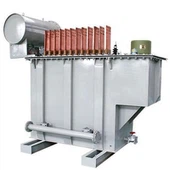
Power Line Transformer: The Backbone of Efficient Grid Transmission and Distribution
In the modern power system, power line transformers are total workhorses-they're the unsung bridges that connect power plants, transmission lines, and the electricity we use every day. Let's be real: without them, we'd never get electricity efficiently across long distances, and we definitely couldn't safely use it in our homes or businesses. This article breaks down what they do, the different types out there, their key features, and where you'll actually find them-so you can see why they're the backbone of every grid around the world.

(Click the image to know more.)
What Even Is a Power Line Transformer?
Put simply, a power line transformer is a static device that moves AC energy between different electrical circuits using electromagnetic induction. Unlike some other electrical gear, it doesn't mess with the frequency of the power-it just adjusts the voltage. Sometimes it cranks the voltage up for long-distance transmission; other times, it dials it down so we can use it in our houses, offices, or factories. At the end of the day, its main job is to get electricity from point A to point B with as little waste as possible, and make sure it's safe to use when it gets there.
At its core, every power line transformer has three basic parts: a magnetic core (usually made of high-permeability steel to boost induction), a primary winding (connected to the input power line), and a secondary winding (connected to the output). The ratio of how much it steps voltage up or down depends on how many turns are in those two windings
Key Things Power Line Transformers Actually Do
Power line transformers pull off three huge jobs that keep the entire power grid running-seriously, we couldn't live without them in today's world:
1. Cranking Up Voltage for Long-Distance Runs
Power plants (think coal, hydro, wind, or solar) usually make electricity at medium voltages-around 11kV to 33kV. But if you try to send that low voltage across hundreds of miles, you'll lose tons of energy to the resistance in the power lines. That's where transformers come in: they step the voltage up to high (HV) or extra-high (EHV) levels-anywhere from 66kV to 750kV or more. Higher voltage means lower current, and lower current means way less energy waste (since loss is tied to the square of the current). It's a total game-changer for efficient long-distance transmission.
2. Dialing Down Voltage for Us Regular Folks
Once electricity reaches distribution substations near towns or cities, transformers flip the script and step the high voltage down to something safe. For most homes and small businesses, that means taking 10kV or 35kV and turning it into 230V (single-phase) or 400V (three-phase)-the standard voltages we use for lights, appliances, and outlets. For factories or big industrial sites, they might step it down to medium voltages (11kV to 33kV) for heavy machinery.
3. Keeping Things Safe with Electrical Isolation
Another big job? They keep the primary (power line) and secondary (load) circuits electrically separate. That's a big deal for safety-it protects us, our equipment, and the people maintaining the grid from dangerous high voltages. Plus, if something goes wrong in the secondary circuit (like a short), it won't mess up the main power line. It's like a safety barrier that keeps the whole grid more stable.
Common Types of Power Line Transformers
Power line transformers aren't one-size-fits-all-they're grouped by where you install them, how many phases they use, how they cool down, and their voltage level. Here are the ones you're most likely to come across in grid setups:
1. Pole-Mounted Transformers
You've definitely seen these-they're the small, compact ones mounted on utility poles, mostly for neighborhoods and small businesses. They're usually single-phase, with a capacity between 10kVA and 100kVA, and they step down 10kV/35kV to 230V/400V. Their small size makes them perfect for areas where space is tight, and they're oil-immersed, which helps them cool down and hold up in outdoor weather.

2. Pad-Mounted Transformers
These are the ones you'll find on the ground (on a concrete pad) in cities, industrial parks, or commercial areas. They're enclosed in a weatherproof steel box-lockable, too, which keeps them safe from tampering. Most are three-phase, with a capacity between 100kVA and 2MVA, and they're designed to be low-maintenance. Perfect for busy areas where you don't want a big pole-mounted unit.

3. Substation Power Transformers
These are the heavy hitters-huge transformers used in power substations for high-voltage transmission. They come in two flavors: step-up (for getting power from plants onto the grid) and step-down (for distributing power to local areas). Their capacity ranges from 10MVA to 500MVA or more-seriously big. Most are oil-immersed with radiators or forced cooling to handle the load, and they're built to withstand extreme voltage swings and tough weather.

4. Dry-Type Power Transformers
Unlike the oil-immersed ones, these use air or resin for insulation. That makes them great for indoor use-think office buildings, data centers, or factories where fire safety is a top priority. They're eco-friendly, low-maintenance, and quiet-perfect for places with strict environmental rules where you can't have oil-based equipment.

What to Look for in a Good Power Line Transformer
If you're picking a power line transformer for a grid, there are a few key features that make all the difference in efficiency, reliability, and how long it lasts:
High Efficiency: Advanced core materials (like grain-oriented silicon steel) and smart winding design cut down on energy loss-saves money and makes the grid more sustainable. No one wants a transformer that wastes power!
Low Loss: Low no-load loss and load loss mean less energy goes to waste when it's running. That's a big deal for long-term grid efficiency.
Durability: Outdoor models need weatherproof, corrosion-resistant casings, and high-quality insulation to handle extreme temps, humidity, and whatever the weather throws at them. You don't want to replace a transformer every few years.
Safety: Built-in protections-like pressure relief valves for oil-immersed models, over-temperature guards, and short-circuit protection-keep accidents and equipment damage at bay. Safety first, always.
Long Service Life: Good components and strict manufacturing mean these things can last 20–30 years. That cuts down on replacement costs and keeps the grid from going down unexpectedly.

Where You'll Find Power Line Transformers
Power line transformers are all over the power system-from the moment electricity is made to the moment we plug in our phones. Here are the main places you'll see them:
Power Plants: Step-up transformers take the electricity from generators (11kV–33kV) and crank it up to high voltage so it can travel long distances.
Transmission Lines: Substation transformers adjust voltage between different transmission lines, making sure power flows smoothly across the grid.
Distribution Networks: Pole-mounted and pad-mounted transformers step down voltage for homes, stores, and small businesses.
Renewable Energy: They connect wind farms, solar parks, and hydro plants to the main grid-converting the variable voltage from renewables into something the grid can use.
Industrial Facilities: Custom transformers provide the right voltage for heavy machinery, factories, and industrial processes. One size doesn't fit all here!
Power Line Transformer vs. Current Transformer (CT)
A lot of people confuse power line transformers with current transformers (CTs), but they do totally different jobs. Let's break it down simply-no jargon:

Wrapping It Up
Power line transformers are the unsung heroes of the modern grid-they're the reason we can get electricity from a power plant hundreds of miles away to our homes, safely and efficiently. Whether they're stepping up voltage for long trips or stepping it down for our daily use, they're the glue that holds the entire power system together. As we use more electricity-especially with more wind and solar coming online-good, efficient power line transformers will only get more important for building a sustainable, reliable grid.
At the end of the day, picking the right power line transformer-whether for a utility grid, a factory, or a renewable energy project-makes all the difference. It ensures good performance, less energy waste, and long-term reliability. Trust me, it's an investment worth making.