

In the realm of power distribution, distribution transformers play a pivotal role in ensuring the efficient and reliable delivery of electricity from the high - voltage transmission network to end - users. As a supplier of distribution transformers, I have witnessed firsthand the importance of understanding the losses associated with these crucial pieces of equipment. In this blog, we will delve into the various types of losses in a distribution transformer, their causes, and the implications they have on overall system performance.
Core Losses
Core losses, also known as iron losses, are one of the primary types of losses in a distribution transformer. These losses occur in the transformer's core, which is typically made of laminated silicon steel. The core losses can be further divided into two components: hysteresis loss and eddy current loss.
Hysteresis Loss
Hysteresis loss is caused by the repeated magnetization and demagnetization of the transformer core as the alternating current (AC) passes through the primary winding. When an AC voltage is applied to the primary winding, the magnetic field in the core changes direction periodically. The magnetic domains in the core material must realign themselves with the changing magnetic field, and this process consumes energy in the form of heat.
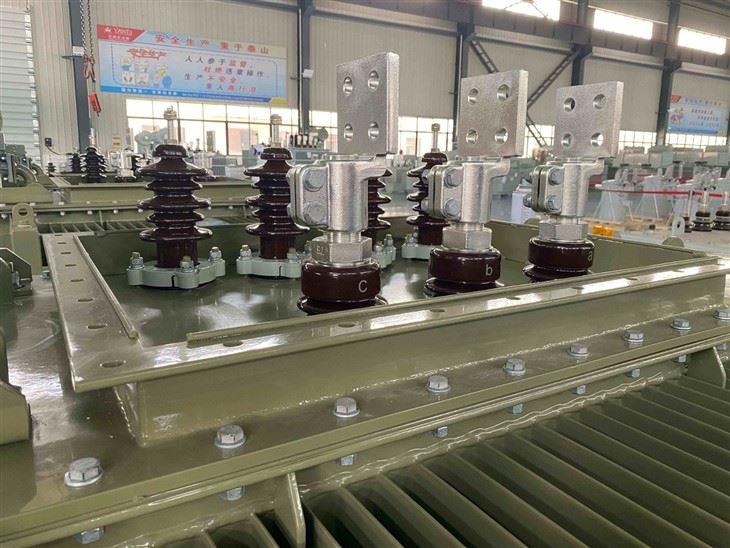

The hysteresis loss is proportional to the frequency of the AC supply and the area of the hysteresis loop of the core material. Materials with a narrow hysteresis loop, such as high - grade silicon steel, have lower hysteresis losses. Manufacturers carefully select core materials to minimize hysteresis loss and improve the efficiency of the transformer.
Eddy Current Loss
Eddy current loss is another component of core losses. When the magnetic field in the transformer core changes, it induces circulating currents, known as eddy currents, in the core material. These eddy currents flow in closed loops within the core and generate heat due to the resistance of the core material.
To reduce eddy current loss, the transformer core is made of laminated sheets of silicon steel. The laminations are insulated from each other, which increases the resistance of the path for eddy currents and reduces their magnitude. The thickness of the laminations also plays a crucial role in minimizing eddy current loss. Thinner laminations result in lower eddy current losses.
Copper Losses
Copper losses, also referred to as I²R losses, occur in the transformer windings. These losses are caused by the resistance of the copper conductors used in the primary and secondary windings. When current flows through the windings, the electrical energy is dissipated as heat according to the formula P = I²R, where P is the power loss, I is the current flowing through the winding, and R is the resistance of the winding.
The magnitude of copper losses depends on the load current and the resistance of the windings. As the load on the transformer increases, the current flowing through the windings also increases, and so do the copper losses. Copper losses are variable and depend on the operating conditions of the transformer.
To reduce copper losses, transformers are designed with low - resistance windings. This can be achieved by using larger cross - sectional area conductors or by using materials with lower resistivity. Additionally, proper design and construction techniques are employed to minimize the length of the winding conductors and reduce their resistance.
Stray Losses
Stray losses are additional losses that occur in a distribution transformer due to leakage fluxes. Leakage fluxes are magnetic fluxes that do not link both the primary and secondary windings and instead interact with the transformer's structural components, such as the tank, core clamps, and bus bars.
These leakage fluxes induce eddy currents in the structural components, which results in heat generation and power loss. Stray losses are difficult to calculate accurately and are often estimated based on empirical data or through finite - element analysis.
To minimize stray losses, transformers are designed with proper magnetic shielding and insulation. The use of non - magnetic materials for structural components can also help reduce the interaction between leakage fluxes and these components.
Dielectric Losses
Dielectric losses occur in the insulation materials used in the transformer. The insulation materials, such as oil or solid insulation, are subjected to an electric field when the transformer is energized. The alternating electric field causes the molecules in the insulation material to vibrate, and this molecular motion results in the dissipation of energy in the form of heat.
Dielectric losses depend on the type of insulation material, the frequency of the AC supply, and the magnitude of the electric field. High - quality insulation materials with low dielectric loss factors are used in transformers to minimize these losses. Regular maintenance and monitoring of the insulation condition are also essential to ensure that dielectric losses remain within acceptable limits.
Impact of Losses on Transformer Performance and Efficiency
The losses in a distribution transformer have a significant impact on its performance and efficiency. High losses result in increased heat generation, which can lead to a rise in the temperature of the transformer. Excessive temperature rise can degrade the insulation material, reduce the lifespan of the transformer, and increase the risk of failure.
Efficiency is a key performance parameter of a distribution transformer. It is defined as the ratio of the output power to the input power. The losses in the transformer reduce the efficiency, as some of the input power is dissipated as heat. For example, if a transformer has a high core loss and copper loss, a large portion of the input power will be wasted, and the efficiency will be low.
As a supplier of distribution transformers, we understand the importance of minimizing losses to improve efficiency and reliability. Our Distribution Transformers are designed and manufactured using advanced technologies and high - quality materials to reduce losses and maximize performance.
Case Studies of Loss Reduction
Let's take a look at some of our products and how they address the issue of losses. Our 500KVA 22.9KV Three Phase Step Down Distribution Transformer is designed with a high - grade silicon steel core to minimize hysteresis and eddy current losses. The windings are made of high - conductivity copper to reduce copper losses. Additionally, the transformer is equipped with proper magnetic shielding to minimize stray losses.
Another example is our Yawei S11 1200KVA & 1600KVA Distribution Transformer. These transformers are designed with advanced insulation materials to reduce dielectric losses. The use of optimized winding designs and low - resistance conductors helps to keep copper losses at a minimum.
Conclusion and Call to Action
In conclusion, understanding the losses in a distribution transformer is crucial for ensuring its efficient and reliable operation. Core losses, copper losses, stray losses, and dielectric losses all contribute to the overall power loss in the transformer. By minimizing these losses, we can improve the efficiency, reduce the operating costs, and extend the lifespan of the transformer.
As a leading supplier of distribution transformers, we are committed to providing high - quality products that offer low losses and high efficiency. If you are in the market for distribution transformers and want to learn more about how our products can meet your specific requirements, we encourage you to contact us for a detailed discussion. Our team of experts is ready to assist you in selecting the right transformer for your application and provide you with comprehensive technical support.
References
- Billings, K. (2000). Transformers and Inductors for Power Electronics: Theory, Design and Applications. Wiley.
- Chapman, S. J. (2012). Electric Machinery Fundamentals. McGraw - Hill.
- Gross, G., & Sarma, M. S. (2007). Power System Analysis. Wiley.