

What is the short - circuit test of a Pad Mounted Transformer?
As a supplier of Pad Mounted Transformers, I've witnessed firsthand the importance of ensuring the reliability and safety of these crucial electrical devices. One of the key tests in assessing the performance of a Pad Mounted Transformer is the short - circuit test. In this blog, I'll delve into what the short - circuit test of a Pad Mounted Transformer is, its significance, the testing process, and its implications for the end - users.

Understanding Pad Mounted Transformers
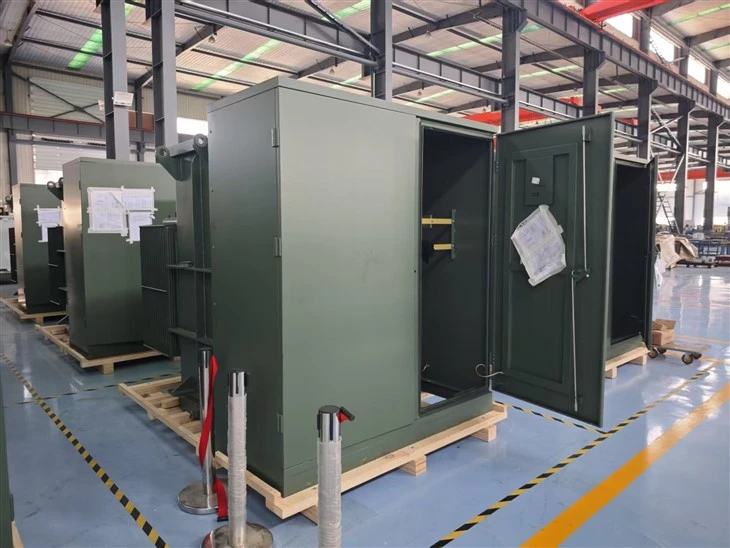
Before we dive into the short - circuit test, let's briefly understand what Pad Mounted Transformers are. Pad Mounted Transformers are self - contained units that are typically installed on a concrete pad at ground level. They are commonly used in distribution networks to step down high - voltage electricity to a lower voltage suitable for use in commercial, industrial, and residential areas. Our company offers a wide range of Pad Mounted Transformers, including the 2500Kva Pad Mount Transformer and 25KVA Single Phase Step Down Pad Mounted Transformer, which are designed to meet different power requirements.
What is the Short - Circuit Test?
The short - circuit test of a Pad Mounted Transformer is a type of electrical test used to determine the transformer's impedance, copper losses, and the ability to withstand short - circuit currents. In a short - circuit test, the secondary winding of the transformer is short - circuited, and a reduced voltage is applied to the primary winding. The applied voltage is adjusted until the rated current flows through the primary winding.
This test simulates a fault condition where a short - circuit occurs in the electrical system connected to the transformer. By subjecting the transformer to such a test, we can evaluate its performance under abnormal conditions and ensure that it can handle the mechanical and thermal stresses associated with short - circuit currents.
Significance of the Short - Circuit Test
- Determining Impedance: The impedance of a transformer is a crucial parameter that affects the flow of short - circuit currents in the electrical system. A lower impedance means that the transformer can supply more short - circuit current, which can be beneficial in some cases but may also pose a risk to the electrical equipment connected to it. By conducting a short - circuit test, we can accurately measure the impedance of the Pad Mounted Transformer and ensure that it meets the design specifications.
- Measuring Copper Losses: Copper losses occur in the windings of the transformer due to the resistance of the copper conductors. These losses are proportional to the square of the current flowing through the windings. During the short - circuit test, the applied voltage is low, and most of the power input is dissipated as copper losses. By measuring the power input during the test, we can calculate the copper losses of the transformer, which are important for evaluating its efficiency.
- Assessing Short - Circuit Withstand Capability: Pad Mounted Transformers need to be able to withstand short - circuit currents without suffering significant damage. The short - circuit test helps us evaluate the mechanical and thermal integrity of the transformer under short - circuit conditions. If a transformer fails the short - circuit test, it may indicate design flaws or manufacturing defects that need to be addressed before the transformer can be put into service.
The Short - Circuit Test Process
The short - circuit test of a Pad Mounted Transformer typically involves the following steps:

- Preparation: The transformer is first disconnected from the electrical system and thoroughly inspected for any visible damage or defects. The secondary winding is then short - circuited using appropriate short - circuiting devices.
- Voltage Application: A reduced voltage is applied to the primary winding using a variable voltage source. The voltage is gradually increased until the rated current flows through the primary winding. The current and voltage values are carefully measured using calibrated instruments.
- Data Collection: During the test, various parameters such as current, voltage, and power input are continuously monitored and recorded. These data are used to calculate the impedance, copper losses, and other performance parameters of the transformer.
- Post - Test Inspection: After the test is completed, the transformer is inspected again to check for any signs of damage or overheating. If any issues are detected, further investigations may be required to determine the root cause and take appropriate corrective actions.
Implications for End - Users
For end - users of Pad Mounted Transformers, the results of the short - circuit test have several important implications:

- Safety: A transformer that passes the short - circuit test is more likely to operate safely under normal and abnormal conditions. This reduces the risk of electrical accidents, such as fires and explosions, which can pose a significant threat to personnel and property.
- Reliability: Transformers with good short - circuit withstand capabilities are more reliable and less likely to fail due to short - circuit faults. This ensures a stable power supply and minimizes downtime, which is crucial for commercial and industrial applications.
- Compliance: Many electrical standards and regulations require Pad Mounted Transformers to undergo short - circuit testing to ensure compliance with safety and performance requirements. By purchasing transformers that have passed the short - circuit test, end - users can ensure that they are using equipment that meets the necessary standards.
Why Choose Our Pad Mounted Transformers
At our company, we are committed to providing high - quality Pad Mounted Transformers that meet the strictest industry standards. All our transformers, including Pad Mounted Transformers, undergo rigorous short - circuit testing to ensure their reliability and safety. Our experienced engineering team uses state - of - the - art testing equipment and techniques to accurately measure the performance parameters of the transformers and identify any potential issues.
In addition to our focus on quality, we also offer excellent customer service and technical support. We work closely with our customers to understand their specific requirements and provide customized solutions that meet their needs. Whether you need a small - scale transformer for a residential application or a large - capacity transformer for an industrial project, we have the expertise and resources to deliver the right product.
Contact Us for Procurement
If you are interested in purchasing Pad Mounted Transformers or have any questions about our products, we encourage you to contact us for procurement discussions. Our sales team is ready to assist you in selecting the most suitable transformer for your application and providing you with detailed product information and pricing. We look forward to the opportunity to work with you and meet your electrical power needs.
References
- Electrical Power Systems: Analysis and Design by J. Duncan Glover, Mulukutla S. Sarma, and Thomas J. Overbye.
- Transformer Engineering: Design, Technology, and Diagnostics by G. S. Mudgal and S. K. Gupta.
- IEEE Standard C57.12.28 - Standard Requirements for Pad - Mounted, Compartmental - Type, Self - Cooled, Three - Phase Distribution Transformers, 500 kVA and Smaller; High - Voltage, 34 500 GrdY/19 920 Volts and Below; Low - Voltage, 480Y/277 Volts and Below.