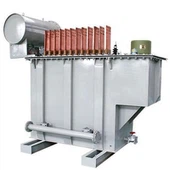
The voltage of a power line transformer depends on a number of factors, including the design of the transformer, the manufacturing process, the materials used, and the voltage of the transmission line to which it is connected. Therefore, the voltage going through power line transformers is not a fixed value, but varies depending on the circumstances.
In China, the voltage levels of transmission and transformation lines (i.e., the line terminal voltage) are 0.38kV, 3kV, 6kV, 10kV, 35kV, 63kV, 110kV, 220kV, 330kV, 500kV and so on. The primary rated voltage of the transformer connected to the line terminal (called step-down transformer) should be the same as the above voltage levels. And considering the voltage drop of the line, the voltage at the beginning of the line (power supply terminal) will be higher than the rated voltage, as follows: 5% higher for 35kV and below, and 10% higher for 35kV and above. The secondary rated voltage of the transformer (i.e. step-up transformer) connected to the line start is the same as the above values.
In a low-voltage distribution system, the typical incoming voltage is 220V or 380V, i.e., single-phase 220V or three-phase 380V. In a high-voltage system, the typical incoming voltage is 10kV or higher, and usually needs to be converted from high-voltage to low-voltage at a transformer station before being delivered to the consumer.
Please note that the type of power system and voltage level may vary from region to region, and you need to check with the local power department before use. At the same time, when carrying out any work related to electricity, be sure to follow the relevant safety operating procedures to ensure the safety of people and equipment.
Connect with us:
➡️ Email: keiko@yaweitransformer.com
➡️ whatsapp:+8615221863286
➡️ Website: https://www.yaweitransformer.com