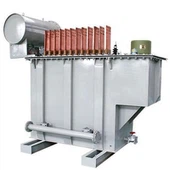
Ever think about what happens between the power plant and your wall outlet? Electricity travels hundreds-sometimes thousands-of kilometers before it reaches your home, office, or that data center streaming all your shows. And throughout that entire journey, transformers are quietly doing the heavy lifting, cranking voltage up and down to keep everything from tripping out.
Here's the thing that blows my mind: even a tiny bump in power transformer efficiency can save an absurd amount of energy over a transformer's typical 30- to 40-year lifespan. We're talking "pay for a small city's street lighting" levels of savings.
With global electricity demand going up pretty much every single year, utilities and big industrial players are geeking out over transformer efficiency like never before. Sure, saving on electricity bills is a nice perk-who doesn't like that?-but it's bigger than that. We're talking carbon cuts, staying on the right side of environmental regs, and keeping the grid from falling over when everyone cranks their AC on a scorching summer day.
So in this guide, let's break down what power transformer efficiency actually means, how you calculate it, what eats away at it, and how modern designs are pushing these beasts past that magical 99% mark.

What Is Power Transformer Efficiency, Anyway?
Okay, plain and simple: power transformer efficiency is the percentage of power you put in that actually makes it to the load-instead of turning into useless heat.
Efficiency (%) = Output Power ÷ Input Power × 100
Look, no transformer is perfect-there's always some loss in the core and windings. But honestly? Modern power transformers are some of the most efficient machines humans have ever built. And I'm not exaggerating.
| Transformer Type | Typical Efficiency |
|---|---|
| Distribution Transformer | 97%–99% |
| Medium Power Transformer | 98.5%–99.3% |
| Large Utility Power Transformer | 99.5%–99.8% |
For those massive transmission units? Losses can be under half a percent. Yeah, pretty wild.
Where Does All That Energy Go? (Types of Transformer Losses)
If you want to get serious about power transformer efficiency, you've gotta know where the losses are hiding.
Core Loss (No-Load Loss) – This one happens the moment the transformer is energized, even if nothing's connected to it. Blame hysteresis and eddy currents. Core losses stay pretty flat regardless of load, so manufacturers fight this with high-grade silicon steel, amorphous metal cores, and careful stacking techniques.
Copper Loss (Load Loss) – This shows up in the windings when current flows, and it depends on how much current, the winding resistance, and temperature. Since copper loss goes up with load, transformers are usually tuned to hit peak efficiency right around where they'll actually be working most of the time.
Stray Loss – Extra losses from leakage flux, heating in structural steel, and the tank itself. Fancy electromagnetic design keeps these under control.
Dielectric Loss – Tiny losses in the insulation system, especially in high-voltage units. Good insulating materials keep these nice and low.

What Messes With Efficiency?
A bunch of factors can make or break your transformer's performance:
Core material – Better steel means lower hysteresis and eddy current losses. Think CRGO silicon steel or amorphous alloys.
Copper quality – High-purity copper = lower resistance = better conductivity. Simple as that.
Winding design – Get the geometry right, and you reduce hot spots and leakage flux.
Cooling system – Keep things cool with methods like ONAN, ONAF, or OFAF. Better cooling = better efficiency and longer life.
Operating load – Peak efficiency usually happens around 60–80% load. So right-sizing your transformer matters-a lot.

Efficiency by Rating: A Quick Snapshot
| Transformer Rating | Typical Efficiency |
|---|---|
| 500 kVA | 98.2% |
| 1000 kVA | 98.8% |
| 5000 kVA | 99.3% |
| 20 MVA | 99.5% |
| 100 MVA | 99.7% |
The differences might look tiny on paper-but over decades of 24/7 operation? They stack up to jaw-dropping energy savings.
How to Squeeze More Efficiency Out of Your Transformer
Utilities and industrial operators can boost power transformer efficiency with a few no-nonsense practices:
Size it right – Oversized units waste energy at light loads; undersized ones overheat and lose efficiency. Find that sweet spot.
Stick to a maintenance routine – Oil testing, insulation resistance checks, infrared thermography, dissolved gas analysis-stay on top of these.
Keep cooling systems healthy – Fans, pumps, radiators-make sure they're actually working.
Watch out for harmonics – Use harmonic filters or K-rated transformers to cut down extra losses from all those power electronics floating around.

Standards and Compliance: The Rules of the Game
A few key standards keep everyone honest when it comes to transformer efficiency:
| Standard | Region |
|---|---|
| IEC 60076 | International |
| IEEE C57 Series | North America |
| DOE Efficiency Standards | United States |
| EU EcoDesign Regulations | European Union |
Manufacturers test their transformers against these to verify loss values and overall efficiency. No shortcuts.
Why Yawei Transformer?
Alright, full disclosure-we're pretty proud of what we do. At Yawei Transformer, efficiency isn't an afterthought; it's baked into every single stage of design and manufacturing. We're talking premium CRGO silicon steel cores, high-conductivity copper windings, advanced electromagnetic optimization, and vacuum oil processing that squeezes out every bit of performance. We comply with IEC, IEEE, ANSI, and whatever custom specs you throw at us.
Our lineup covers power transformers, distribution transformers, oil-immersed and dry-type units, substation transformers, renewable energy solutions, and custom-engineered designs. Every transformer we ship is built for reliable performance, low lifecycle costs, and top-notch power transformer efficiency that'll hold up for decades.
Because at the end of the day? Efficiency isn't just a number-it's money saved, emissions cut, and a grid that stays up when it counts.
FAQ
Q: How soon can you delivery the transformer?
A: It depends on the quantity and capacity of the transformer, normally within one month since the date drawing confirmed by buyer.
Q: How long can you provide the quality warranty?
A: 24 months since the date transformer operated.
Q: What payment method do you accept?
A: T/T (wire transfer) preferred, L/C both accepted.