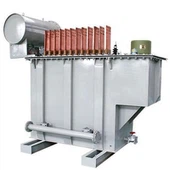
Transformer Specifications: A Complete Guide to kVA Ratings and Key Parameters
Choosing the right transformer really matters if you want things to stay safe, run efficiently, and last for the long haul. No matter if you're powering a commercial building, a factory, a data center, or a utility substation, getting a good grasp on transformer specifications - especially the kVA rating - makes a big difference. It helps everything perform better and keeps those nasty, expensive breakdowns from happening.
This guide walks you through what buyers and engineers actually need to know, with straightforward explanations and handy tables.
What is kVA in Transformers?
kVA (kilovolt-amperes) is the standard way to measure a transformer's apparent power capacity. Simply put, it tells you the maximum load the unit can handle day in and day out without getting too hot.
Unlike kW, which only measures real power, kVA factors in both real power and reactive power. That's why it's the go-to rating - real-world equipment rarely runs at a perfect power factor (usually landing somewhere between 0.8 and 0.95 in industrial settings).
Basic Formulas:
Single-phase: kVA = (Voltage × Current) / 1,000
Three-phase: kVA = (√3 × Voltage × Current) / 1,000
Handy tip: Always throw in a 20–30% safety margin when sizing your transformer. It gives you breathing room for future growth and those random overload moments.
Standard kVA Ratings
Transformer makers usually stick to a range of standard sizes, depending on what you're using it for and where in the world you are.
Common kVA Ratings by Phase Type

Popular sizes that most people end up buying: 500 kVA, 750 kVA, 1,000 kVA, 1,500 kVA, and 2,000 kVA.
Comprehensive Transformer Specifications Checklist
Here's a useful table to keep handy when you're comparing different quotes:

How to Choose the Right Transformer
Calculate your load - Add up all your equipment in kW, then apply diversity factor and power factor.
Think about the environment - Indoor or outdoor? What's the ambient temperature like? Any altitude issues?
Plan for the future - Oversize by 20–30% so you're not stuck later.
Check certifications - Look for IEC, ISO, and whatever local approvals you need.
Pick a solid supplier - Good warranty (usually 1–5 years), decent after-sales support, and actual stock ready to go.
For example, a 500 kVA dry-type transformer is pretty popular for commercial buildings because it's safe and doesn't take up a ton of space.
Wrapping It Up
Getting your head around transformer specifications - starting with the right kVA rating and then looking at voltage, cooling, efficiency, and everything else - helps you get the best performance and value for your money.
When you're serious about buying, always ask suppliers for detailed datasheets, type test reports, and factory acceptance testing (FAT) info. It can save you a lot of hassle later.
Looking for high-quality power and distribution transformers? Feel free to reach out. We've got standard and custom-built units from 25 kVA up to 5000 kVA, with competitive pricing, fast delivery, and solid technical support.
FAQ
Q: What does kVA mean for a transformer?
A: kVA stands for kilovolt-amperes. It measures the transformer's apparent power capacity - basically how much load it can safely handle without overheating. Higher kVA means the transformer can support bigger electrical loads.
Q: What is the difference between kVA and kW?
A: kW measures real power, while kVA includes both real and reactive power. Since most equipment has a power factor below 1 (usually 0.8–0.95), transformers are rated in kVA to ensure they can handle the actual current draw.
Q: Which kVA rating should I choose?
A: It depends on your total load. Always calculate your equipment's power needs and add a 20–30% safety margin for future expansion. Popular sizes include 500 kVA, 1000 kVA, and 2000 kVA for commercial and industrial use.
Q: What voltage ratings are most common?
A: Common combinations are 11kV/400V, 33kV/11kV, and 22kV/415V. Always match the transformer's voltage rating to your incoming supply and required output.