Unit Substations and Power Transformers: A Practical Guide to Design, Components, Installation, and Maintenance
Reliable power is the backbone of almost every modern facility. Whether it is a manufacturing plant running heavy machinery, a data center supporting critical digital services, or a renewable energy project feeding electricity into the grid, the power distribution system has to be safe, stable, and easy to maintain.
This is where unit substations come in.
A unit substation is a complete power distribution solution that combines a transformer, medium-voltage switchgear, low-voltage switchgear, protection equipment, and an enclosure into one integrated system. Instead of installing each component separately, engineers can use a factory-assembled package that simplifies project planning, reduces installation time, and improves system reliability.
For EPC contractors, utility companies, industrial facility managers, and procurement teams, choosing the right unit substation design can make a big difference in project efficiency and long-term operating costs.

As a professional transformer manufacturer, Yawei Transformer provides customized unit substations and power transformer solutions for industrial, commercial, utility, and renewable energy applications.
What Is a Unit Substation?
A unit substation is an electrical distribution system designed to receive medium-voltage power from the utility network and convert it into a lower voltage suitable for end users and equipment.
In simple terms, it acts as a bridge between the utility supply and the electrical loads inside a facility.
A typical unit substation includes a medium-voltage section, a power transformer, a low-voltage distribution section, and protective devices. Depending on the project requirements, it can be designed for indoor or outdoor installation.
These systems are commonly used in factories, commercial buildings, hospitals, data centers, solar farms, wind projects, and infrastructure facilities.
Because of their compact structure and integrated design, unit substations are also often called compact substations.
| Main Section | Function |
|---|---|
| Medium-voltage switchgear | Controls incoming power and provides fault protection |
| Power transformer | Reduces medium voltage to usable low voltage |
| Low-voltage switchgear | Distributes electricity to different loads |
| Protection equipment | Detects and responds to electrical faults |
| Enclosure | Protects equipment from environmental conditions and improves safety |
Unit Substations vs Traditional Electrical Substations
Both unit substations and traditional electrical substations are designed to control, transform, and distribute electrical power. However, their construction methods are quite different.
Traditional substations usually involve multiple separate pieces of equipment installed on-site. Unit substations, on the other hand, are designed as an integrated package, which can save installation time and reduce engineering complexity.
| Feature | Unit Substation | Traditional Substation |
|---|---|---|
| Design approach | Factory-integrated system | Separate equipment installation |
| Installation time | Faster installation | Longer construction period |
| Space requirement | Smaller footprint | Requires more space |
| Maintenance | Easier access and inspection | More complex maintenance work |
| Typical applications | Industrial, commercial, renewable projects | Utility transmission and large grid systems |
For projects where space is limited or the construction schedule is tight, unit substations are often the more practical choice.
Main Components of a Unit Substation
Understanding the major substation components helps buyers, engineers, and contractors select the right equipment for their projects.
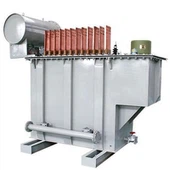
The transformer is the heart of any unit substation. Its main job is to step down medium-voltage electricity into a voltage level that can be safely used by industrial equipment, lighting systems, motors, and other loads.
Common transformer types used in unit substations include:
Oil-immersed transformers
Cast resin dry type transformers
VPI dry type transformers
Custom-designed power transformers
The transformer selection depends on several factors, including load capacity, voltage level, environmental conditions, fire safety requirements, and future expansion plans.
For example, industrial plants may require high-capacity oil transformers, while indoor facilities with strict fire safety requirements may prefer dry-type transformers.
The medium-voltage switchgear section controls the incoming electrical supply and protects the transformer from abnormal conditions.
Typical equipment includes circuit breakers, disconnect switches, surge arresters, current transformers (CTs), and voltage transformers (VTs).
A properly designed switchgear system helps reduce downtime and protects expensive electrical assets from damage caused by short circuits or overloads.
After voltage transformation, the low-voltage section distributes electricity throughout the facility.
It usually contains:
Main breakers
Feeder breakers
Busbars
Metering devices
Protection systems
For large industrial facilities, low-voltage switchgear must be carefully selected to handle motor starting currents, sensitive electronic loads, and changing operating conditions.

Modern unit substations often include advanced monitoring and protection functions.
Depending on the application, these may include:
Overcurrent protection
Transformer temperature monitoring
Buchholz relays for oil-filled transformers
Digital monitoring systems
These features help operators identify potential problems earlier and improve overall system reliability.
Unit Substation Design Considerations
A successful unit substation design requires more than simply selecting a transformer size. Engineers need to consider the entire operating environment.
Important factors include:
| Design Factor | Key Considerations |
|---|---|
| Voltage rating | Match utility voltage and equipment requirements |
| Transformer capacity | Support current demand and future growth |
| Installation location | Indoor, outdoor, or special environment |
| Cooling method | Natural cooling or forced cooling |
| Protection level | Based on safety and operating conditions |
| Maintenance access | Allow safe inspection and servicing |
Today, many facilities are experiencing increasing power demand due to automation, electric vehicle charging, renewable energy systems, and high-density computing loads. A well-designed unit substation should leave room for future upgrades.
Standards and Technical Requirements
Reliable unit substations must comply with recognized international standards. These standards help ensure equipment safety, performance, and compatibility across different markets.
| Standard | Application |
|---|---|
| IEC 60076 | Power transformer design and testing requirements |
| IEC 62271 | High-voltage switchgear and controlgear |
| IEC 60076-11 | Dry-type transformer requirements |
| IEC 60529 | Enclosure protection rating (IP rating) |
| IEEE C57 Series | Transformer performance and testing standards |
| ANSI/NEMA Standards | North American electrical equipment requirements |
For global projects across the United States, Europe, and Southeast Asia, selecting equipment that meets these standards can simplify approvals and improve long-term reliability.
Unit Substation Installation Process
Professional substation installation is essential to ensure safe operation.
Although installation methods vary depending on project size, the general process usually includes site preparation, equipment positioning, electrical connections, testing, and commissioning.
Before installation begins, engineers normally check the foundation, cable routes, grounding system, ventilation requirements, and working clearances.
After the transformer and switchgear are installed, technicians complete cable connections, grounding, protection wiring, and functional tests.
Before energization, important tests may include:
| Test Item | Purpose |
|---|---|
| Insulation resistance test | Checks insulation condition |
| Transformer ratio test | Confirms transformer voltage ratio |
| Protection relay testing | Verifies protective functions |
| Visual inspection | Confirms installation quality |
Substation Maintenance: Keeping Systems Reliable
Even a high-quality unit substation requires regular inspection and maintenance.
Proper substation maintenance helps prevent unexpected failures, reduces downtime, and extends equipment service life.
A typical maintenance plan may include:
| Maintenance Activity | Recommended Frequency |
|---|---|
| Visual inspection | Monthly or quarterly |
| Transformer oil testing | Annually |
| Electrical connection inspection | Annually |
| Protection system testing | Every 1–3 years |
| Complete system evaluation | Based on operating conditions |
For oil-filled transformers, methods such as dissolved gas analysis (DGA) can help detect internal issues before they become major failures.
Where Are Unit Substations Used?
Unit substations are widely used across many industries because they provide reliable and flexible power distribution.
Common applications include:
| Industry | Application |
|---|---|
| Manufacturing | Motor loads and production equipment |
| Data centers | Reliable power for servers and cooling systems |
| Renewable energy | Solar and wind power collection systems |
| Mining | Heavy-duty electrical equipment |
| Commercial buildings | Building power distribution |
| Utilities | Local distribution networks |
Their compact design makes them especially suitable for projects where installation space is limited.
Choosing the Right Unit Substations for Sale
When searching for unit substations for sale, buyers should look beyond price alone. Equipment quality, engineering support, manufacturing capability, and after-sales service are all important factors.
A reliable supplier should be able to provide:
| Selection Factor | Why It Matters |
|---|---|
| Custom design capability | Ensures the system matches project needs |
| International certifications | Supports global project approval |
| Factory testing | Improves reliability before shipment |
| Engineering support | Helps during installation and commissioning |
| After-sales service | Supports long-term operation |
Why Choose Yawei Transformer for Unit Substation Solutions?
Yawei Transformer specializes in the design and manufacturing of  power transformers and customized electrical distribution solutions.
The company provides:
Customized unit substation design
Oil-immersed and dry-type transformers
Integrated transformer and switchgear solutions
Factory testing based on international standards
Support for industrial, utility, renewable energy, and infrastructure projects
From the early design stage to final delivery, Yawei Transformer works with customers to develop reliable and cost-effective power distribution solutions.
Conclusion
Unit substations have become an important part of modern electrical infrastructure. By integrating transformers, switchgear, protection systems, and enclosures into one complete package, they provide a simpler and more efficient way to manage power distribution.
For EPC contractors, industrial facilities, utilities, and procurement teams, selecting the right unit substation design can improve project performance, reduce maintenance challenges, and support future energy demands.
Whether the requirement is a compact substation for a commercial building or a customized solution for a large industrial project, choosing an experienced manufacturer is a key step toward reliable power distribution.
Yawei Transformer provides customized unit substations and power transformer solutions for global customers. Contact us to discuss your project requirements and request a professional quotation.
Q: How soon can you delivery the transformer?
A: It depends on the quantity and capacity of the transformer, normally within one month since the date drawing confirmed by buyer.
Q: How long can you provide the quality warranty?
A: 24 months since the date transformer operated.
Q: What payment method do you accept?
A: T/T (wire transfer) preferred, L/C both accepted.