Let's Talk About What's Happening in Power Right Now (2026 Edition)
Man, 2026 electricity demand is no joke. IEA's latest numbers put global consumption heading past 11 trillion kWh-up roughly 5% from last year. Data centers exploding, EV chargers popping up everywhere, AI chewing through power like crazy… it's all driving insane pressure on equipment. Lead times are brutal, prices are up, and everyone wants things that don't just work-but work smart and don't burn money.
Transformers? Still the boss of the whole distribution game. But the real game-changer lately is Automatic Power Reduction-basically the transformer getting smart enough to dial back power when you're not using much, so you're not wasting electricity just keeping it warm. Real-world tests show 15–20% savings in a lot of setups. Pretty solid.
In this guide I'm putting transformers front and center (where they belong), explaining how this auto-reduction trick actually works, and giving you some no-BS tips on matching them with circuit breakers, switchgear, and ring main units so the whole system plays nice.

Why Transformers Are Still King + What Automatic Power Reduction Really Does?
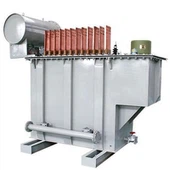
At the end of the day, transformers handle the heavy lifting: stepping voltage up/down, keeping power flowing safely. With renewables, storage, and all the new loads, demand for both dry-type and oil-immersed units is up over 30% in recent years. And these days, if it doesn't have Automatic Power Reduction, it's starting to feel a bit old-school.
So… What Exactly Is This "Automatic Power Reduction" Thing?
It's pretty straightforward once you break it down. Modern transformers now pack sensors that constantly watch load current, voltage, temperature, you name it. When the load drops low (say under 50%), the system automatically cuts output power instead of idling at full strength. It uses some clever algorithms (a bit of AI flavor) to predict patterns and make adjustments super fast-milliseconds, not seconds.
The main pieces:
Sensors keeping an eye on everything
Smart control logic that learns your usage habits
Fast actuators (thyristors, relays, etc.) to make the change happen instantly
Classic example: a distribution transformer sitting at 30–40% load used to waste ~5% just on no-load losses. Now? It can squeeze that down below 2%. You save electricity, the units run cooler, and if you've got multiple transformers, they balance better-no one's getting overworked while another chills.
The Real Benefits (Stuff That Actually Matters)
Saves Serious Cash - Transformer losses are a huge hidden cost. Cut them 15–25% and big sites can save tens of thousands (sometimes more) a year on bills. In a world pushing carbon neutrality, this is basically table stakes now.
Better Load Balancing - No more one transformer sweating while the backup naps. It spreads the work evenly, especially in parallel setups, which means longer life overall.
Smarter & More Reliable - Hook it up to IoT/remote monitoring and you get early warnings on issues. Data centers, hospitals, factories-places that can't afford downtime-love this.
Yeah, these units cost 10–15% more upfront, but payback is usually 2–3 years. If you're buying, look hard at S13 or S15 series-they support this feature really well in 10kV and 35kV ranges.
How to Actually Pick the Right Transformer in 2026?
Dry-Type (Great for Indoor Stuff Like Data Centers & Offices)
Go for something like the SCB13 series with Automatic Power Reduction built in-covers 100 to 2500 kVA nicely. Perfect when loads swing wildly (think AI servers). During quiet times it drops power way down, saving ~20% on energy. Saw a case in Hong Kong where a data center slashed their annual bill by over $100k after switching. That's real money.

Oil-Immersed (Outdoor, Heavy-Duty Jobs)
S11 series is still the go-to, 50–5000 kVA range. Great for solar farms-nighttime loads are basically zero, so auto-reduction kills reactive
losses. One project down south in China hit 98%+ system efficiency with this setup. Bosses were happy.

Quick side-by-side so you don't have to hunt:
| What to Check | Dry-Type (SCB13) | Oil-Immersed (S11) | Why Auto Power Reduction Wins Here |
|---|---|---|---|
| Voltage | 10kV / 0.4kV | 35kV / 10kV | Drops power automatically below 50% load |
| No-Load Losses | ≤2% | ≤3% | Can cut waste by up to 20% |
| Load Balancing | Strong (AI helps) | Decent | Stops overloads, extends life |
| Best For | Indoor, clean rooms | Outdoor, rough sites | Places with big load swings |
| Rough Price (per kVA) | 500–800 | 400–600 | Extra 10%, but pays back in ~2 yrs |
Pro tip: Grab ones that support Modbus or IEC 61850-makes smart grid integration way easier down the road.
How to Match the Supporting Cast (Circuit Breakers, Switchgear, RMUs)?
Transformers are the star, but you still need the rest of the team to not screw things up.
Circuit Breakers (The Bodyguards)
Usually vacuum or SF6 types upstream for protection. Pick ones like ZW32 series with current ratings that match your transformer. Fast trip time (<50 ms) is key so faults don't mess with the auto-reduction logic. When the transformer's in low-power mode, the breaker can go low-power too-whole system gets more efficient.

Transformer & Circuit Breaker Matching Selection Guide
(Mainly for 10kV high-voltage side circuit breakers, suitable for dry-type and oil-immersed distribution transformers)
| Transformer Capacity (kVA) | Approx. HV Side Rated Current (A) | Recommended Breaker Rated Current (A) | Recommended Breaker Type | Suggested Short-Circuit Breaking Capacity Icu (kA) | Key Considerations & Matching Notes |
|---|---|---|---|---|---|
| 315 | 18 – 22 | 25 – 40 | Vacuum (VD4 / ZW32) | ≥25 – 31.5 | Account for inrush current (8–12×), prefer electronic trip unit, supports linkage with Automatic Power Reduction |
| 500 | 29 – 36 | 40 – 63 | Vacuum | ≥31.5 – 40 | Medium load fluctuation, fast breaking <50 ms, compatible with low-power mode of Automatic Power Reduction |
| 800 – 1000 | 46 – 58 | 63 – 100 | Vacuum / SF6 | ≥40 – 50 | High fluctuation (data centers/industry), recommend LSIG protection (long-time, short-time, instantaneous, ground) |
| 1250 – 1600 | 72 – 92 | 100 – 125 | High-performance Vacuum | ≥50 | High reliability required, breaker short-circuit rating must match system level, remote monitoring interface essential |
| 2000+ | 115+ | 125 – 160 | Intelligent Vacuum | ≥63 | Large projects / parallel operation, must support IEC 61850 protocol for seamless integration with smart power reduction |
Switchgear & Ring Main Units
KYN28 switchgear plays nice with transformers and even lets you remotely tweak the auto-reduction. HXGN-12 RMUs are solid for branching loads without interrupting the optimization.
Just remember: these are helpers. Keep the spotlight on the transformer.
Transformer & Switchgear Matching Selection Guide
(Mainly for 10kV medium-voltage switchgear, common types: KYN28, HXGN series, etc.)
| Transformer Capacity (kVA) | Recommended Switchgear Type | Busbar Rated Current (A) | Short-Time Withstand Current Icw (kA/4s) | Key Recommended Features | Application Scenarios & Compatibility with Automatic Power Reduction |
|---|---|---|---|---|---|
| 315 – 500 | KYN28-12 (Withdrawable) or HXGN-12 (RMU) | 630 – 1250 | 20 – 25 | Outgoing + metering + protection, with VT/CT | Small industrial/commercial, basic compatibility, add remote module if possible |
| 800 – 1250 | KYN28-12 Metal-clad Withdrawable | 1250 – 2000 | 25 – 31.5 | Incoming + transformer protection + outgoing, with digital relay | Data centers / factories, high compatibility, supports IoT monitoring |
| 1600 – 2500 | KYN61-40.5 or Imported GIS | 2000 – 3150 | 31.5 – 40 | Full double-bus / single-bus sectionalized, smart monitoring & fast transfer | Large projects / renewable stations, perfect compatibility, full remote power reduction control |
| All Capacities | Ring Main Unit (RMU) as supplementary | 630 | 20 | Used only for ring-feed branches, transformer protection via upstream breaker | Urban distribution networks, auxiliary use only, keep focus on transformer |
Wrapping It Up!
Bottom line for 2026: if you want a power system that's efficient, future-proof, and doesn't bleed money on waste, transformers with Automatic Power Reduction are where it's at. They save energy, balance loads, and give you peace of mind.

Quick action list:
Figure out your real load pattern (steady? crazy swings? indoor/outdoor?)
Prioritize units with this auto-reduction feature
Match breakers/switchgear that won't fight it
Talk to a solid manufacturer for site-specific advice and quotes
Need more details on models, real pricing, or case studies? Hit me up-we're happy to chat.