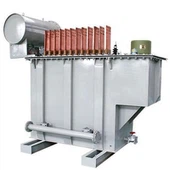
Understand Electrical Transformer Losses - Load Losses, No-Load Losses
Transformer losses are the power losses associated with the operation of the transformer and they appear as a consequence of the energy transformation process. And that comes mostly with this electrical resistance, this magnetism in transformers. not only to influence the whole efficiency of power distribution system, but it will also create heat. The transformer is not going to have a good life or good performance when it happens. Too much heat and the insulation breaks down, stuff gets old quicker, really bad it might just blow up. It is therefore important to understand these sources and nature so that we may have reliable and efficient power.
1. Load Losses: That occur when the transformer is actively providing power to a load and are connected to the electrical current going through the transformer windings
2. No-Load Losses: And these still take place even though the transformer is on but doesn't deliver energy to the load because of the core being bombarded by these alternating fields.
introduction of load losses
Load Losses, also known as Copper Losses, take place on the transformer winding because of the current that flows through it. These losses are in direct proportion to the square of the current through the transformer and hence are an important aspect of the transformers efficiency at times when it is working under heavy load. When the power that's lost as a load is generated, it generates heat, if that isn't taken care of properly, it'll make your transformer warmer and it won't last long.
Load losses are majorly because of the presence of an electric resistance in the transformer windings. When current flows through these windings, resistance is encountered, and heating takes place because of this as per Joule's law. The resistance is one example, which is why at times they are considered resistive losses. The resistive nature of the windings material is very significant for the amount of these losses, making the choice of material important for the transformer design.
Current: I mentioned that the load losses will go up with the current squared. Therefore, high currents generate very high losses. We must control current very well.
Winding Material: And winding material's electrical conductivity can make a big difference to the losses. Copper is often used because it has low resistance and great conductivity, but some transformers might use aluminium, which could change how well they work based on what they're used for and how they're made.
Winding Temperature: As the temperature of the windings increases, so does their resistance, leading to higher load losses. To avoid this effect, thermal control should be done properly for good output.
To cut back on the load losses, producers concentrate on the quality and design of the winding materials, they might use pure copper or aluminum and adjust the cross-sectional area so as to reduce resistance. Advanced manufacturing techniques like precision winding can additionally cut down on the geometric quirks that lead to higher resistance. The correct cooling system has to be ensured in order for resistance to change as per temperature, to use the oil or air cooling to cool it down.
introduction of no-load losses
We'll call core losses 'no-load losses.' These come from insides: These occur when the transformer is turned on but not supplying any load, so they are constant losses which occur for the transformer irrespective of the load conditions. No-load losses come from the magnetic qualities of the core material along with how it's designed, these show a fundamental inefficiency needs to be reduced for improvement.
No-load loss is mainly due to the alternating magnetic field within core. This one generates currents inside the core material resulting in an energy waste as heat. Material's magnetic properties like permeability and coercivity have huge effect on quantity of such losses so, be sure to pick correct material and give considerable thought to design to cut down them.
Hysteresis Losses: these are results of the alternation of the core magnetization and demagnetization To align the magnetic domains within the core material, there is a need for energy which leads to hysteresis losses and this is controlled by the coercivity of the material.
Eddy Current Losses: They are due to eddy currents flowing in loops within the core material, which is at right angles to the magnetic field. Eddy currents create resitance heating of the core and this is part of the no load loss.
Core Material: The core's kind of material can greatly change no-load losses. Those materials like silicon steel has low hysteresis loss that we choose since during one magnetization it losses little energy.
Core Design: The design and formation of the central structure and layering thickness as well as insulation can change eddy current lost. use thinner laminations and proper insulation between lams. to make these currents go down.

Frequency: The operating frequency also plays a role in no-load loss, in which higher operating frequencies will result in higher no-load losses as well. For transformers that are going to be used for special purposes, it has to be taken into account for raising efficiency, the frequency of operation.
Manufacturers attempt to cut no-load losses by employing excellent core materials with favorable properties and adopting new design approaches. And laminate the core and have less layers with higher electrical resistance to induced currents which reduces eddy current losses. And then there are advanced core designs like amorphous metal cores which can cut it further on hysteresis loss and eddy current loss as well.
Transformers have losses and they result in inefficiency and higher operational cost. These losses put out heat and that may make the transformer get too hot and possibly get broken or make it live less. And it will also cause the loss of energy to become waste and increase the environmental pollution because of the energy cost increasing to generate more electricity. So we have to manage these losses and sustain a good working of our transformer to produce a permanent source of energy.
conclusion
In order to make it more efficient, we must choose transformers made from loss reducing materials and better engineering technology. And routine maintenance and the right installation plus monitoring of transformer operations can help minimize some losses and increase efficiency as well. To carry out a real time monitoring system gives us an understanding of how a transformers works, so if it's at the risk of a loss that it's way too high we could go in there and make a change. By adopting these best practices, operators can ensure that transformers operate at optimal efficiency, reducing both costs and environmental impact.
Understanding and controlling transformer losses makes for best possible efficiency and lifespan of a transformer. With the aim of reducing load and no-load losses at will, the operator can achieve good energy saving and reliable operation. If you design them or run them or fix them, you should know transformer losses, and how to lower them, if you wish for your power distribution system to work better.
With advancement of technology more methods to reduce the losses in transformer is adopted and power distribution became more and more efficient and sustainable. Material science, design engineering, and monitoring tech keep pushing transformer performance to new heights and give us more chances to make it more efficient. Stay up-to-date and keep good practices in mind so that your transformers work at their best, giving you dependable power year after year, and help make the world better for everyone.
FAQ
Q: 1. How soon can you delivery the transformer?
A: It depends on the quantity and capacity of the transformer, normally within one month since the date drawing confirmed by buyer.
Q: 2. How long can you provide the quality warranty?
A: 24 months since the date transformer operated.
Q: 3. What payment method do you accept?
A: T/T (wire transfer) preferred, L/C both accepted.