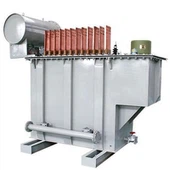
Understanding Distribution Transformers: The Quiet Heroes on Your Street
You've probably walked past them hundreds of times without giving them a second thought - that gray cylinder hanging on a utility pole or the plain green box sitting out on someone's lawn. They look like nothing special, just big metal containers, but these things are actually doing some serious work to keep your house from blowing up every time you plug something in.
Ever wonder why those huge transmission lines along the highway carry enough juice to power an entire city, while the outlet in your wall is safe enough for a little nightlight? It all comes down to voltage, which is basically electrical pressure. Just like you need high pressure to push water long distances through pipes, power companies crank up the voltage super high so electricity can travel efficiently from distant power plants to your neighborhood without losing most of it as heat.
But you can't just pipe that crazy high-pressure power straight into your house - it would be like trying to fill a water balloon with a firehose. The wiring in your home simply couldn't handle it. That's where distribution transformers come in. They act like heavy-duty pressure reducers, taking that roaring high-voltage current and stepping it down to a safe, usable level for everyday life.
How Step-Down Transformers Turn "Firehoses" into Gentle Streams
If you tried plugging your TV directly into those highway power lines, it would be game over for your appliances in about half a second. The electrical pressure is just too intense. So the transformer steps in like a translator for electricity - it takes the high-voltage "shout" from the transmission lines and turns it into a safe, quiet "whisper" that your home can actually use.
Inside that metal box, you've got coils of wire wrapped around a magnetic core. Here's the interesting part: the incoming high-voltage wires and the outgoing low-voltage wires never actually touch each other. So how does the power get through?
It happens through magnetic induction. The high-voltage side creates a changing magnetic field that reaches across the gap and induces voltage in the other coil. It's like invisible gears turning each other without making physical contact. Because the two sides are electrically isolated, that dangerous high pressure can't suddenly spike into your living room.

Pole-Mounted vs. Pad-Mounted: The Gray Can and the Green Box
Take a look down your street and you'll usually spot one of two types. In older neighborhoods with overhead lines, you'll see the classic gray cylinder mounted high up on a pole. In newer areas where power lines are buried underground, you're more likely to see a sturdy green box (called a pad-mounted transformer) sitting quietly on the grass.
Each has its trade-offs:
Pole-mounted ones are up high, so they're safer from minor flooding but more exposed to storms and falling trees.
Pad-mounted units look neater and keep the skyline clean, but utilities have to be careful about where they place them to avoid water issues.
No matter which kind you have, they both face the same big challenge: they generate a lot of heat while working.
Keeping Cool Inside the Tank
When the transformer steps down all that power, the magnetic action creates serious heat. That's why these units aren't empty inside - they're packed with coils of wire (either copper or aluminum) and filled with special mineral oil.
Copper conducts electricity really well and keeps things compact, which is great for smaller units. Aluminum is cheaper and lighter, so it's often used in the bigger ones even if the tank ends up a bit bulkier. The oil acts like a liquid armor - it washes over the hot coils, pulls the heat away, and lets the outer metal shell radiate it into the air. This oil-immersed design works so well outdoors that it's usually preferred over the dry-type (air-cooled) transformers you might find inside buildings.

How Big Is Big Enough? Understanding kVA Ratings
Every time you turn on your air conditioner or run several appliances at once, you're pulling power from that gray can or green box. Utilities measure how much a transformer can handle using "kVA" (kilovolt-amps) - basically the maximum load it can safely deliver before it starts overheating.
Most neighborhood transformers don't serve just one house. They usually share the load among four to seven homes, assuming not everyone will crank up every heavy appliance at the exact same moment. Out in rural areas, though, things are different - you'll often see a dedicated transformer serving just one farmhouse because voltage tends to drop over long distances.
Getting the size right means your lights don't dim when your neighbor vacuums the house.
Why Modern Transformers Are Better
Older transformers used to buzz loudly and run pretty hot, especially in summer. Today's models are noticeably quieter and more efficient, thanks to stricter energy standards. They waste less electricity as heat, which is good for both your bill and the environment.
Modern designs also feature better-sealed tanks that are almost completely airtight. This hermetic sealing keeps moisture out (which prevents rust), stops oil leaks, and makes the whole unit last much longer.
Single-Phase vs. Three-Phase: Why Your House Doesn't Need What a Factory Does
After the transformer steps down the voltage, the power travels a short distance to your electric meter through what's called the secondary network. Homes usually get single-phase power - basically a simple setup with just a couple of wires that's perfect for everyday appliances like lights, TVs, and refrigerators.
Big factories or commercial buildings, on the other hand, often use three-phase power. It's like adding extra lanes to the road so heavy machinery can run smoothly without overloading the system.
A Little Respect for the Neighborhood Guardians
Next time you're out walking, look at those gray cans and green boxes with fresh eyes. They're not just random metal objects - they're hardworking translators that quietly convert dangerous high-voltage power into the safe electricity we all rely on.
If you have a green box in your yard, give it some space - about ten feet is ideal so utility crews can work safely. And if you ever notice anything weird, like loud buzzing, oil leaks on the ground, or heavy rust, give your utility company a call. Spotting problems early helps keep the whole system reliable.

These silent workers might not get much attention, but they're the reason your lights stay on and your family stays safe, day after day.