Understanding Transformers: The Everyday Heroes of Power Distribution
You've probably seen them without really noticing - those chunky gray cylinders hanging quietly on wooden utility poles, humming softly to themselves. They look pretty ordinary, but these unassuming boxes are the unsung heroes of our entire power grid.
If the raw electricity coming from the grid shot straight into your house, it would be like unleashing a wild river into your living room. It would instantly fry your TV, computer, lights - pretty much everything plugged into the wall. Luckily, those metal boxes on the poles are electrical transformers. You can think of them as giant pressure valves for the local grid.
Power plants have to send electricity at ridiculously high voltages for it to survive the long journey across cities or even states. But that kind of voltage is way too intense for your home. The transformer on your street catches that roaring high-voltage flow and steps it down to a safe, gentle level you can actually use.
Just look at the bulky little brick on your phone charger - it's doing exactly the same job, but on a miniature scale. It takes the power from your wall outlet and drops the voltage one last time so your phone charges safely instead of getting zapped.
The High-Voltage Highway: Moving Power Without Losing It All
The electricity lighting up your room right now might have traveled 200 miles from a power plant. Electricity naturally produces heat when it moves, so if utilities tried to push it at normal household levels the whole way, most of it would be wasted as heat long before it reached your neighborhood.
Here's a simple way to picture it: imagine water flowing through a garden hose. Voltage is like the water pressure, and current is the actual volume of water moving. Engineers figured out that by playing with this balance, they could dramatically cut down on energy loss.
That's why power lines use such high voltage. Quick breakdown:
High current + low voltage = tons of friction and wasted heat.
Low current + super high voltage = much less heat and way more efficient long-distance travel.
The result? Electricity can cross entire states while keeping the transmission lines from overheating. Of course, you definitely don't want 500,000 volts showing up at your front door - that's where transformers step in as the essential pressure reducers.

The Invisible Bridge: How Transformers Actually Work
Here's the fascinating part: inside that humming gray box, the high-voltage wire never physically touches the wire that leads to your house. They stay completely separate.
Instead of being scattered, they're tucked into two coils set side by side-like two whispering partners leaning in. When electricity runs through the first coil, it wakes up a pulsing magnetic field, which then pulls a secret thread of electricity into the second coil. In other words, energy doesn't crawl across the gap-it leaps like a spark in the dark, hopping the space purely through the magnetic link between them. It's a clever trick based on mutual inductance and Faraday's law of induction.
Think of it like two tuning forks across a room. Strike one, and the other starts vibrating even though they never touch. Alternating current (AC) is perfect for this because it constantly pulses, expanding and collapsing the magnetic field. Direct current (DC) doesn't work as well here - it creates a steady field that can't push energy across the gap.

Step-Down Secrets: The Green Box in Your Yard
Those heavy green (or sometimes gray) boxes you see at the edge of lawns or on poles are the final safety net for your home's electronics. Power plants push electricity hard across the country using step-up transformers, while your neighborhood needs a much gentler flow. Step-down transformers make that happen so your TV doesn't explode the moment you plug it in.
The whole system works as a team. Here's the typical journey electricity takes:
Generation: Power is made and immediately stepped up to very high voltage for long-distance travel.
Transmission: It races along tall metal pylons across the countryside.
Substation: A big fenced facility steps the voltage down to a safer neighborhood level.
Local delivery: The green box near your house drops it one last time to the safe 120V (or 240V) you use every day.
The exact drop depends on the ratio of wire loops (called windings) in the two coils. More loops on the input side than the output? Voltage gets reduced proportionally - kind of like changing gears on a bicycle.
Why Transformers Hum and Get Hot
If you've ever walked past a utility pole at night, you've probably heard that low, steady buzzing sound. It's not a broken fan - it's called magnetostriction. The alternating current makes the metal core inside the transformer physically expand and shrink, tiny bit by tiny bit, 60 times a second. That vibration shakes the air and creates the familiar hum.
All that magnetic activity also creates eddy currents - little swirling loops of electricity inside the core that waste energy and turn into heat. Left unchecked, the transformer could overheat and even melt its own wiring.
To keep things cool, big utility transformers are often filled with special mineral oil that absorbs the heat, while the metal fins on the outside act like a radiator, releasing the warmth into the air.
Your Personal Shield: The Little Transformer in Your Charger
That chunky "brick" on your phone charger is actually a miniature version of the same technology. Because the two coils inside don't physically touch, it creates what engineers call galvanic isolation. If there's a dangerous power surge on the wall side, the magnetic gap stops it from jumping straight into your phone - or worse, into your hands.
This isolation is a key safety feature that protects you from nasty 120-volt shocks.
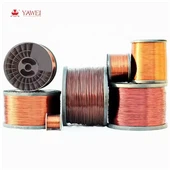
Inside both small chargers and big utility transformers, the coils are made of thin metal wire - usually copper or aluminum. Copper is better at carrying current in a small space and handles heat well, which is why it's common in compact chargers. Aluminum is cheaper and lighter, so it's often used in those larger pole-mounted transformers where size isn't as much of an issue.

Looking at the Grid Differently
Next time you're out walking, take a second look at all those wires, poles, and boxes around your neighborhood. What used to look like a random tangle is actually a carefully engineered system quietly translating massive high-pressure electricity into the safe power we use every day.
These transformers work nonstop, stepping down dangerous voltages so we can live comfortably and safely. They may not be flashy, but they're absolutely essential.
Just remember to keep a respectful distance from those utility boxes - there's some serious power humming away inside them.