The internet feels like this magical, weightless "cloud," right? But strip away the illusion, and it's all heavy stuff: concrete slabs, steel beams, miles of copper wire, and massive power-hungry machines chugging away 24/7. Every time you get a snappy AI answer, there's a real physical building somewhere burning through electricity to make it happen. And as these tools get crazier and more capable, the digital world is slamming into a very real brick wall: the hardware can't keep up.
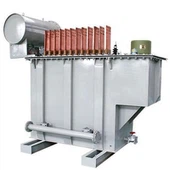
Right in the middle of that mess sits the humble electrical transformer-the big metal box that steps down crazy-high-voltage power from the grid so it doesn't fry everything inside a data center. With AI and hyperscale data centers exploding, the whole supply chain for these things is getting crushed. Lead times that used to be months are now stretching into years, and by 2026, this shortage could seriously slam the brakes on how much more AI power we can actually plug in. It's forcing everyone to face the hard truth: our digital dreams have physical limits.
Global Large Power Transformer Market Size & Demand Growth Comparison (USD Billion)
| Year | Market Size (USD Billion) | Key Growth Notes / Drivers | Approx. Annual Growth Rate | Source Highlights / Notes |
|---|---|---|---|---|
| 2020-2023 | ~5.0 - 5.7 (est. baseline) | Pre-AI boom; steady from grid upgrades and early renewables; limited large-unit data pre-2024 | ~4-6% historic | Extrapolated from Mordor/SkyQuest baselines; overall power transformer was ~25-28B |
| 2024 | ~27.5 - 28.1 | Early AI/data center surge begins; US shortages noted (demand +119% since 2019 for large units) | ~6-7% | SkyQuest (~28.1B in 2024); aligns with article's explosion theme |
| 2025 | 27.5 - 30.0 | AI/hyperscale ramps up; data centers drive high-MVA needs (e.g., substations for 100+ kW racks) | 6-7% | Mordor (~5.67B for large in 2025? Wait-some reports separate; aggregated power ~27-30B) |
| 2026 | 30.0 - 31.0 (est.) | Peak crunch year; lead times 2-3+ years; AI power demand pushes large transmission units | 6.5-7% projected | Mordor (~6.06B large in 2026); SkyQuest (~30B+); article's 2026 crisis focus |
| 2030 | 41.0 - 51.2 | Strong forecast; AI + renewables/grid modernization; large units (>100 MVA) grow fastest | CAGR 6.5-6.9% (2025-2030) | MarketsandMarkets (power overall 41.6B); SkyQuest large (~51B by 2033, ~40-45B est. 2030); Mordor (~8.5B large by 2031) |
| 2031-2033 | ~44-51 | Sustained high demand; electrification/EVs add pressure; potential easing post-crunch | 6-7% ongoing | Mordor/SkyQuest long-term; large segment benefits most from transmission needs |
Why Generative AI Gulps Way More Juice Than a Regular Google Search
We used to think of searching the web like flipping through a giant library-quick, efficient, grab the book and done. A standard Google search pulls existing info with minimal effort, so it sips power (think a quick LED bulb flick). Generative AI? Totally different beast. It doesn't just fetch stuff; it creates from scratch. Every poem, code fix, or summary means billions of calculations predicting the next word, token by token. The chips run flat-out, heat builds like crazy, and the energy bill skyrockets.
Industry folks have thrown around numbers saying a ChatGPT-style query uses roughly 10 times the electricity of a plain Google search-though newer, more efficient models have brought that down a bit (some estimates now closer to 3-5x or even less for optimized setups). Still, scale it up: millions of people querying AI every hour turns a trickle into a flood. And all that "thinking" happens on super-hot specialized chips packed dense in racks. Data centers now feel more like mini steel mills than office parks-energy density through the roof, needing industrial-scale cooling just to stop the hardware from melting.
That's where transformers come in as the unsung heroes. They take the grid's high-voltage firehose and tame it down to something the servers can handle safely.

The Grid's Quiet Workhorse: Transformers in the AI Era
Power lines carry electricity at voltages so high they'd instantly toast a data center's delicate gear. Transformers are the gatekeepers-massive, heavy boxes that step it down step by step, like slowing a highway from 100 mph to neighborhood speed. Inside a modern AI facility, they do three big jobs no software can fake:
Voltage stepping - Drop hundreds of thousands of volts to usable levels without blowing circuits.
Isolation - Shield servers from spikes, surges, or lightning hits on the main grid.
Distribution - Split the feed to thousands of racks evenly.
But here's the catch: unlike code you can duplicate infinitely, transformers are physical beasts limited by materials. Their cores need specialized grain-oriented electrical steel (GOES)-not your everyday building steel, but a fancy alloy that minimizes energy waste. Only a few mills worldwide make it in the right quality and quantity. So when AI demand surges, we're hitting a literal wall of steel supply. No amount of clever coding fixes that bottleneck.

The 2026 Crunch: Lead Times Exploding from Months to Years
Picture ordering a car and being told, "Yeah, it'll arrive in three years." That's the nightmare utilities and data center builders are living right now. Pre-AI boom, you might wait 50-60 weeks for a big transformer. Now? Easily 100-150 weeks (2-3 years) for high-voltage ones, sometimes longer. It's not just shipping-it's factories maxed out, raw materials tight, and everyone bidding against each other.
Local utilities need them to keep neighborhoods lit and connect new homes. Meanwhile, tech giants are snapping up hundreds for their next hyperscale AI campuses. Essential grid upgrades get pushed back while flashy data centers race ahead. Experts see 2026 as the flashpoint: that's when a ton of planned AI facilities want to flip the switch. If the transformers aren't there, projects stall, new connections get delayed, and grids strain harder-maybe even forcing reroutes of where these power-hungry beasts can actually land.
How AI's Mega-Racks Are Redrawing Power Maps
Peek inside: old-school data centers ran racks at 5-10 kW-like a quiet office. AI flips that. Modern GPU-packed racks can suck 100 kW or more (some projections hit 120-240 kW soon, with wilder ones eyeing 1 MW by decade's end). That's neighborhood-block power crammed into fridge-sized space.
The ripple effects are huge:
Power density jumps 10-20x over traditional setups.
Cooling shifts from fans to liquid systems (direct-to-chip or immersion) because air just can't hack it.
Footprint shrinks for compute, but support gear (cooling, power feeds) gets heavier.
Grid hookup? Forget standard commercial lines-these need dedicated high-voltage substations.
All that heat and density pushes data centers toward industrial zones with beefy power access. When public grids choke, big players start asking: why wait? Let's build our own power islands.
Bypassing the Grid Jam: Onsite Power and Tiny Nukes?
It's like trying to fill a pool with a garden hose while everyone's watering lawns-the pressure's just not there. To dodge years-long utility queues, tech firms are going behind-the-meter: onsite gas turbines, giant batteries, even micro-grids. Keeps the AI humming through blackouts or brownouts.
The real moonshot? Small modular reactors (SMRs)-compact, factory-built nuclear units the size of shipping containers, clean and steady 24/7, no weather dependency. They're years from widespread approval, but hyperscalers are betting big. Until then, it's a tough call: fast-but-dirty gas vs. slower renewables that can't always deliver constant baseload AI craves. Private power plants popping up everywhere could quietly reshape local energy landscapes-and your bill.
Keeping Tabs on Your Local Grid Drama
AI isn't some infinite digital fairy tale anymore; it's a power-hungry beast tied to scarce hardware. The transformer crunch isn't just Big Tech's headache-it's sparking overdue talks about upgrading grids everywhere, including your backyard.
Watch for these red flags in your area:
Utility rate hikes or requests tied to "industrial load growth" or new infrastructure.
Zoning fights over massive data center proposals near neighborhoods.
Reliability alerts about congestion from AI workloads.
The strain hurts, but it's also lighting a fire under modernization-smarter grids, virtual power plants coordinating home batteries, all that good stuff. Staying clued in turns worry into action for a tougher, greener energy setup.