

You've probably walked past a substation or glanced up at a utility pole without thinking twice. And chances are, you've seen one of those bright yellow high voltage signs nearby. Most people don't really notice them. But that little warning label? It actually does a lot more than you'd think.
Transformers are kind of a big deal in modern power systems. They help move electricity from power plants to homes, factories, shopping centers, office buildings-basically everywhere. Without transformers, we couldn't send power over long distances very well. Not efficiently, anyway.
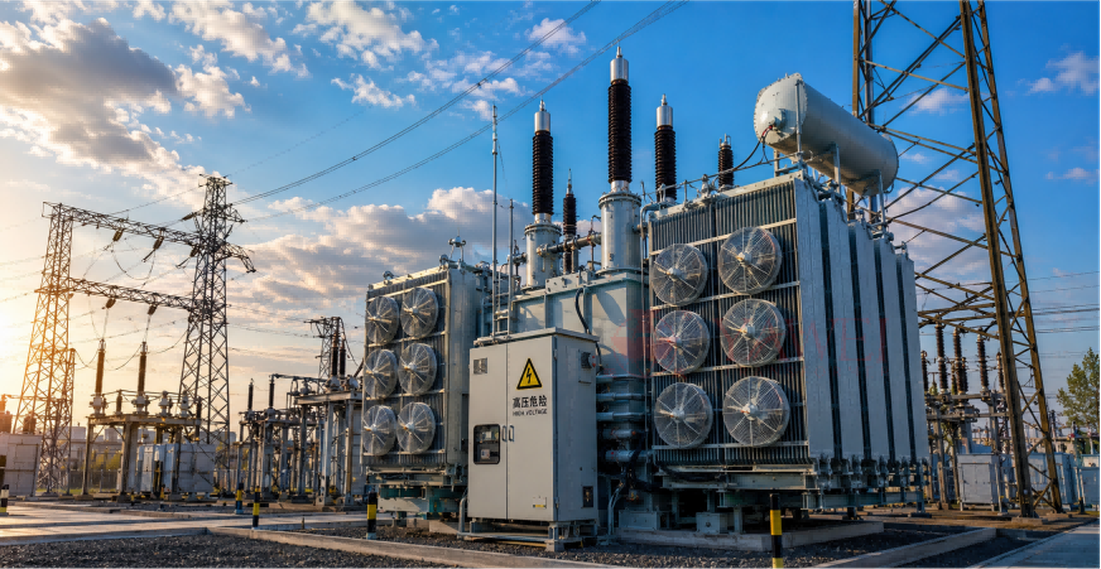
(Click the image to learn more.)
The catch? Transformers also handle seriously dangerous amounts of energy. Which is exactly why those high voltage signs matter so much.
So, What Does a High Voltage Sign Even Mean?
In short: it's telling you to back off. There's powerful electrical equipment nearby. The sign is there for workers, random pedestrians, anyone passing through-unless you're trained to be there, stay clear.
Most of these signs have a few things in common:
a lightning bolt symbol,
bright yellow or red colors,
words like "Danger High Voltage,"
and sometimes the same warning in multiple languages.
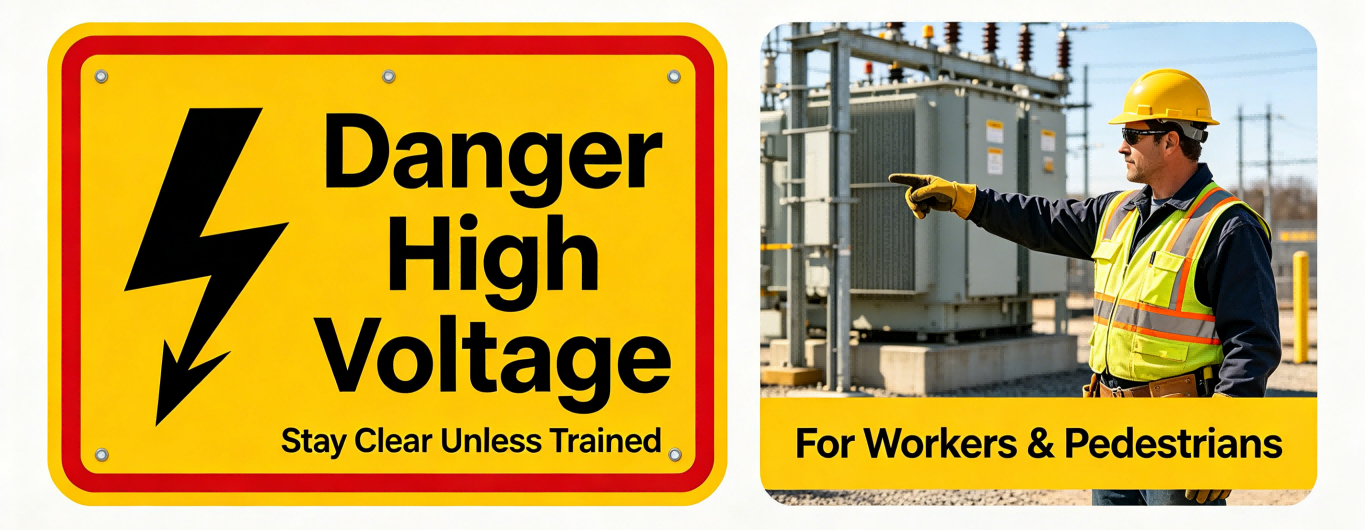
They're designed to grab your attention immediately. Because high voltage gear can cause severe burns, electric shock, or worse.
Why Transformers Specifically Need These Signs
Transformers adjust voltage up or down in the grid. Some crank it up for long-distance travel. Others lower it for safe use in homes or businesses.
And the voltages involved? They get pretty insane.

At those levels, even touching something accidentally is a really bad idea. And here's the scary part-electrical arcing can happen without you even making direct contact.
Where You'll Usually Spot These Signs
Electrical Substations
Big transformers, switchgear, lots of high-energy stuff. Signs are usually bolted to fences, gates, or the transformer housing itself.
Pole-Mounted Transformers
Those are common in neighborhoods. You've seen them-cylindrical things on poles. Familiar, yes. Safe? No. That's why the sign is there.
Pad-Mounted Transformers
Those green metal boxes you see near sidewalks or parking lots. Since they're right at ground level, visible warning labels are extra important.
Industrial Facilities
Factories, warehouses, data centers-they often have their own transformer systems. High voltage signs help workers quickly spot restricted areas.
It's More Than Just a Sticker
Some people think these signs exist just to cover legal requirements. But honestly? They're way more useful than that.
A clear high voltage sign can:
keep unauthorized people out,
remind technicians to follow safety steps,
help emergency responders recognize danger fast,
and reduce confusion during maintenance.
Simple as they look, these labels prevent real accidents.
Other Safety Stuff (But the Sign Still Comes First)
Warning signs aren't the only safety feature. Modern transformers also use:
grounding systems,
surge arresters,
protective relays,
temperature monitors,
insulated barriers,
and locked access panels.
Some big substations even use remote monitoring and arc-flash protection. Fancy stuff.
But even with all that engineering? That yellow high voltage sign is still one of the most important first lines of defense.
Weather and Wear & Tear
Transformers sitting outside get hammered by sun, rain, dust, and corrosion. Over time, those signs fade, crack, or peel off.
That's why utility companies check and replace them regularly.
Newer warning labels often come with:
UV-resistant coatings,
reflective materials,
corrosion-resistant metal,
and heavy-duty adhesives.
Makes sense, right? A sign only works if people can actually see and read it.
Wrapping It Up
A high voltage sign might seem like a tiny detail compared to all that massive equipment and complex power grids. But it plays a huge role in keeping workers, first responders, and regular people safe.
Funny how sometimes the simplest safety measures turn out to be the most important ones.


