

In today's digital economy, cloud computing essentials unlock benefits that are genuinely reshaping how businesses get things done. We're talking cost savings, yes-but also scalability, flexibility, and a whole lot of room for innovation. It's fair to say the cloud has become the backbone of modern IT strategy.
But here's the thing: behind all that seamless user experience and the promise of "infinite" resources, there's a ton of heavy-duty physical infrastructure holding it all up. I'm talking data centers-and more specifically, the unsung workhorses inside them, like transformers.
So, let's dig into this. Understanding cloud fundamentals isn't just about the shiny perks you see on the surface. It's also about the critical tech underneath-especially data center transformers-that actually make those perks possible.

Cloud Computing Essentials: Core Concepts and Service Models
Right, so cloud computing is basically on-demand access to computing resources-servers, storage, databases, networking, software, analytics-all delivered over the internet. Simple enough.
The main service models break down like this:
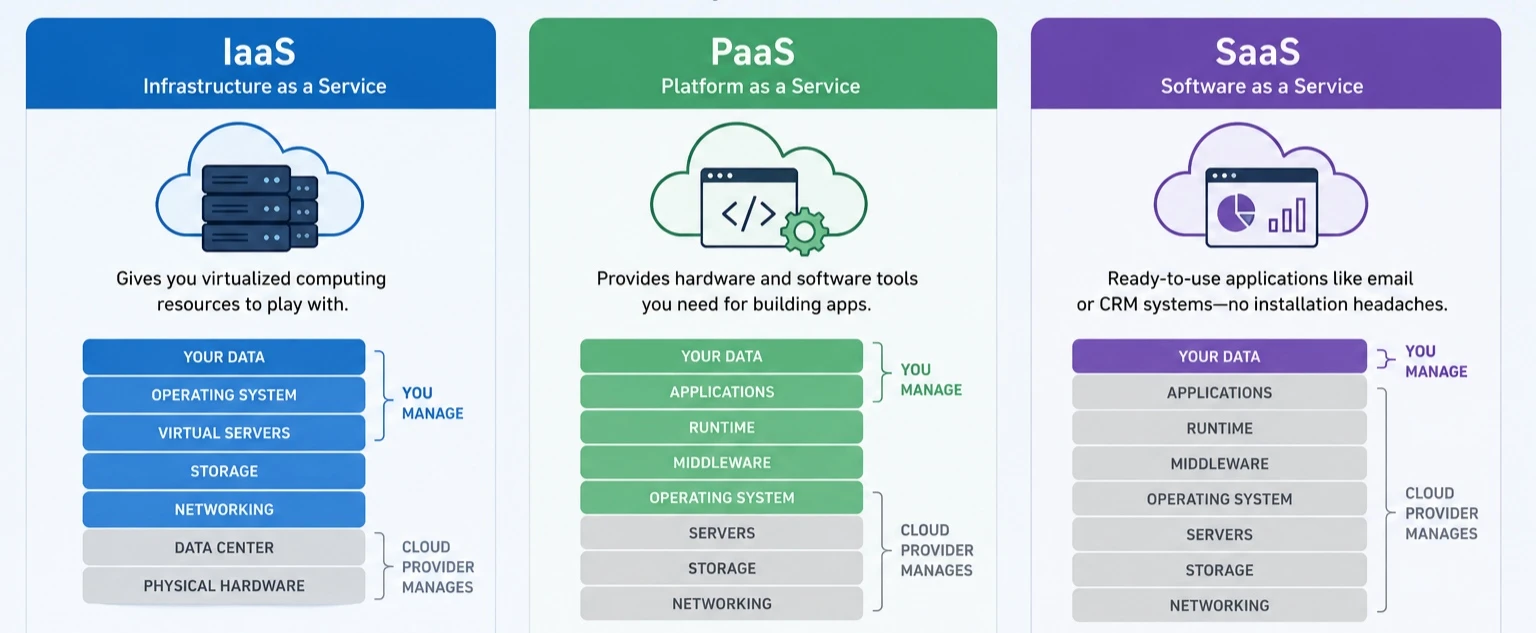
On top of that, you've got deployment choices: public, private, hybrid, or multi-cloud. What this really means for businesses is moving away from heavy upfront capital expenses on hardware, and shifting to a more flexible operational expense model. And that's a big deal.
Key Benefits: How Cloud Computing Essentials Unlock Advantages
Adopting the cloud comes with some pretty tangible wins:
Cost Savings – No more shelling out for hardware upfront. You just pay for what you actually use. Loads of companies report cutting their IT costs noticeably.
Scalability and Elasticity – Resources can ramp up or down in no time, depending on demand. So you can handle growth without overbuying capacity.
High Availability and Reliability – With global redundancy and disaster recovery, you can hit uptime levels like 99.999%. That's not too shabby.
Agility and Innovation – Development cycles speed up, and you get room to experiment with newer tech-AI, machine learning, you name it.
Sustainability – Hyperscalers are getting smarter about energy use. Their shared infrastructure often beats traditional data centers when it comes to Power Usage Effectiveness (PUE).
All of this sounds great, right? But none of it works without reliable physical infrastructure backing it up.
Data Centers: The Physical Foundation of Cloud Computing
Let's get real for a moment. The cloud runs on massive networks of  data centers.
These are the facilities packed with thousands of servers, storage arrays, and networking gear.
And with AI workloads exploding, power density per rack has jumped through the roof-from the usual 5–10 kW to 100 kW or even more in some cases.
And guess what? Electricity alone can eat up 30–40% of a data center's operating costs.
That's huge. So delivering power efficiently isn't optional-it's absolutely essential.
The Critical Role of Data Center Transformers
Here's where transformers come in. Honestly, they don't get nearly enough credit. These devices take the high-voltage electricity from the utility grid and step it down to the lower voltages that servers, cooling systems, and backup power actually need.
What do they do exactly?
Voltage transformation and electrical isolation
Power distribution and protection against surges
Optimizing efficiency to cut down on energy losses
Traditional dry-type or oil-immersed transformers have done the job for years, but things are changing fast. Hyperscale and AI-driven data centers are pushing for more. High-efficiency designs help reduce waste, and then there's the next big thing: Solid-State Transformers (SSTs).
SSTs are a real leap forward. They use power electronics-often silicon carbide or gallium nitride-to do things like:
Convert medium-voltage AC straight to low-voltage DC
Pack more power into a smaller footprint
React quickly to those dynamic AI workloads
Support 800V DC architectures (the kind favored by NVIDIA and Open Compute Project)
Play nicer with renewables and microgrids
These innovations don't just sound cool-they directly boost cloud benefits by trimming costs, improving reliability, and enabling higher density setups.

How Transformers Enable Cloud Benefits
Let's connect the dots:
Cost Optimization – More efficient transformers mean lower energy bills. Cloud providers pass some of that savings on, keeping prices competitive.
Reliability – Stable power delivery is crucial for the high availability that cloud SLAs promise. No power stability, no SLA.
Scalability – Smarter transformer tech makes it easier to expand hyperscale facilities quickly.
Sustainability – Lower energy losses and better integration with renewables help cloud providers get closer to their carbon-neutral targets.
And the demand? It's exploding. With AI growth, the market for data center transformers is projected to climb steadily through 2030 and beyond.
Industry Trends and Real-World Impact
Major players like AWS, Azure, and Google Cloud are pouring serious money into power infrastructure. And the shift toward SSTs is picking up speed-companies like Enphase, DG Matrix, and others are rolling out solutions built specifically for AI data centers.
Of course, it's not all smooth sailing. There are still supply chain bottlenecks, high upfront costs, and grid integration hurdles. But transformer innovation is steadily chipping away at those challenges.
Conclusion
So yeah, cloud computing essentials unlock benefits that drive real business impact-but those benefits don't exist in a vacuum. They rely on a sophisticated physical foundation. Data center transformers-whether tried-and-true traditional units or next-gen solid-state designs-are a vital link in delivering reliable, efficient, and scalable cloud services.
As AI and digital transformation keep accelerating, understanding the interplay between cloud concepts and the power systems underneath becomes more important than ever. Organizations that take the time to appreciate the full stack-from the software to the silicon, all the way down to the substations-will be in the strongest position to get the most out of the cloud.
FAQ
Q: How soon can you delivery the transformer?
A: It depends on the quantity and capacity of the transformer, normally within one month since the date drawing confirmed by buyer.
Q: How long can you provide the quality warranty?
A: 24 months since the date transformer operated.
Q: What payment method do you accept?
A: T/T (wire transfer) preferred, L/C both accepted.


