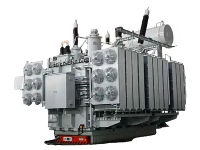
Data centers are popping up everywhere these days-cloud computing, AI training, edge stuff, you name it. And as they grow, so does the pressure to keep the power side of things safe, efficient, and rock-solid. Sure, everyone talks about servers and cooling towers and UPS systems. But transformers? They're the unsung heroes of the electrical backbone. And lately, the ventilated dry type transformer has been getting a lot of love in data center circles.

Okay, But What Actually Is a Ventilated Dry Type Transformer?
Think of it this way: instead of using oil to stay cool, this transformer uses air. Plain and simple. The windings and core sit inside a vented enclosure, and heat gets carried away by natural airflow-or sometimes a little fan assistance, depending on the setup.
The big difference? No oil. No combustible liquids floating around inside. That alone drops fire risk significantly and cuts out a whole host of environmental worries. That's why these units are such a natural fit for indoor installations and places where downtime simply isn't an option.
Why Data Centers Keep Coming Back to Them
Data centers are obsessive about continuous power-and for good reason. A blip, even a short one, can trigger outages, burn through cash, and leave a stain on your reputation that's hard to wash off. A ventilated dry type transformer checks a lot of boxes that matter to operators who lose sleep over these things.
Fire Safety You Can Actually Rely On
Let's be honest-fire is terrifying in a data center. And oil-filled transformers? They bring that risk right inside your building. With a dry type unit, there's no oil to leak, spill, or ignite. That makes them a no-brainer for:
Indoor electrical rooms
Colocation facilities
Enterprise data centers
High-rises with data floors tucked in
Less Fussing Around with Maintenance
Oil-filled transformers are high-maintenance-periodic testing, filtration, oil sampling, constant monitoring. It's a whole production. A ventilated dry type transformer? Mostly just routine visual checks and keeping the vents clean so air can flow freely. That simplicity translates into less downtime and lower operating costs over the life of the equipment. Operators appreciate that.
A Nod to the Environment
Sustainability isn't just a buzzword anymore-it's shaping decisions left and right. Since dry type transformers skip the oil entirely, there's no risk of fluid leaks contaminating soil or water, and no disposal headaches at end of life. A lot of organizations see them as the cleaner, more responsible way to go.
Where They Fit in the Power Chain
Here's the basic picture: a data center pulls high-voltage juice from the utility grid. That needs to be stepped down to something servers and cooling gear can actually use. The ventilated dry type transformer handles that step-down and feeds power to:
| System | Job Description |
|---|---|
| UPS units | Keep backup power conditioned and ready |
| PDUs | Get power out to server racks |
| Cooling gear | Run HVAC, CRAC, and liquid cooling loops |
| Lights & misc. loads | Keep the facility itself humming |
By delivering stable, stepped-down voltage, the transformer helps hold everything together-literally.
Handling the AI Power Crunch
AI workloads are a whole different beast. Training clusters packed with GPUs draw insane amounts of juice, and power densities in modern facilities are blowing past what enterprise data centers used to handle. That's where the ventilated dry type transformer really shines.
These units are showing up more and more in AI-heavy deployments  because they offer:
Solid efficiency even when loads bounce around
Reliable thermal behavior under pressure
Compact footprints that save floor space
Flexibility to fit modular, scaled-out designs
As AI keeps expanding, having transformers that can handle the heat-literally and figuratively-becomes non-negotiable.
Don't Forget the Room Around It
Air-cooled or not, you can't just drop a ventilated dry type transformer anywhere and call it done. Room design still matters-a lot. Operators need to think about:
Clear, unobstructed airflow paths
Keeping ambient temperatures in check
Dust management (it builds up faster than you'd think)
Proper clearance around the enclosure

Skimp on ventilation and you'll see efficiency drop and lifespan shrink. A little regular cleaning and monitoring goes a long way.
Dry Type vs. Oil-Filled – A Quick Snapshot
| Aspect | Ventilated Dry Type | Oil-Filled |
|---|---|---|
| Fire risk | Low | Higher |
| Indoor use | Excellent | Needs extra precautions |
| Environmental impact | Minimal | Leakage is a real concern |
| Maintenance | Pretty straightforward | More involved |
| Cooling method | Air | Oil |
| Best suited for | Indoor data centers | Often outdoors |
Both have their place, sure. But for indoor data centers? The ventilated dry type transformer has a clear edge-especially when safety and upkeep are top of mind.
What's Ahead
Cloud services, AI, edge computing-they're not slowing down. Neither is the investment in data center infrastructure. As operators chase uptime, efficiency, and greener operations, the ventilated dry type transformer is likely to become even more central to power distribution strategies. It's a practical, proven choice that balances safety, reliability, and environmental responsibility-three things modern facilities can't afford to compromise on.
Wrapping It Up
The ventilated dry type transformer has quietly earned its place as a cornerstone of today's data center power architecture. It delivers steady voltage conversion, reduces fire risk, keeps maintenance manageable, and handles the demands of high-density compute environments. All of which helps keep critical digital infrastructure running 24/7.
As data centers evolve to meet the relentless demands of cloud and AI, picking the right transformer technology will stay a key decision-one that directly impacts efficiency, resilience, and the ability to keep the lights on, no matter what.
FAQ
Q: How soon can you delivery the transformer?
A: It depends on the quantity and capacity of the transformer, normally within one month since the date drawing confirmed by buyer.
Q: How long can you provide the quality warranty?
A: 24 months since the date transformer operated.
Q: What payment method do you accept?
A: T/T (wire transfer) preferred, L/C both accepted.