What's a Hyperscale Data Center?

You've probably heard the term "hyperscale data center" thrown around. Basically, it's a massive computing facility-like, really massive-built to run huge cloud services and digital platforms. Think streaming, AI training, search engines, social media, and big enterprise cloud systems.
Companies like Google, Amazon (AWS), Microsoft (Azure), and Meta run these things all over the world.
So what makes them different? It's not just about size, honestly. It's more about how fast they can scale up. Here's what you'll typically find:
Crazy big scale: Tens of thousands to millions of servers
Modular design: Built in repeatable "blocks"
Automation-driven operations (machines running the show)
Serious focus on energy efficiency (they obsess over PUE)
Custom power and cooling systems
Direct hookup to high-voltage power grids
Unlike old-school data centers, hyperscale facilities are basically industrial power plants and computing factories rolled into one.
Why Transformers Are a Big Deal Here

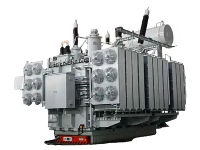
Click the image to learn more.
Hyperscale data centers chew through an insane amount of electricity-often 50 MW to 500+ MW per campus. That's like a small city's worth of power.
That electricity comes from the grid at super high voltage. You can't just feed that straight into servers-no way. Transformers step it down safely and efficiently.
How Power Flows Through a Hyperscale Data Center
Here's the typical path:

Utility Grid (110–400 kV)
→ High-voltage power transformer (steps it down)
→ Medium voltage (33 kV / 11 kV)
→ Low voltage distribution (400V / 480V)
→ UPS systems + PDUs
→ Server racks (12V–48V DC internally)
Types of Transformers You'll Find
1. Grid / Power Transformers (Step-down)
These are the big guys-literally and figuratively.
Step down from transmission voltage (e.g., 132kV, 220kV, 400kV)
Convert to medium voltage (33kV or 11kV)
Usually oil-immersed, high-capacity units (50–300+ MVA)
What they do: bulk power delivery, isolate from grid disturbances, stay efficient under heavy load.
2. Medium Voltage Distribution Transformers
These step down from 33kV → 11kV → 400/480V, feeding different buildings or data halls.
Two common types: oil-filled (outdoor substations) and dry-type (indoor, safety-critical zones).
3. Isolation Transformers
Found inside electrical rooms and UPS systems. They provide electrical isolation between the grid and IT load, reduce noise and harmonics, and improve safety for all that sensitive gear.
4. UPS Transformers
Built into UPS architectures (especially older or large-scale designs). They help stabilize voltage during switching or grid hiccups.
Quick note: Some modern UPS systems go transformerless, but hyperscale sites still use transformers in certain redundancy paths.
5. Harmonic / K-rated Transformers
Data centers create harmonic distortion-it's just what happens with server power supplies, rectifiers, and switch-mode power systems. So special transformers handle it:
Designed for non-linear loads
Prevent overheating from harmonic currents
6. Phase-shifting / Specialized Transformers (less common)
Some large campuses use these to balance load across multiple feeds, reduce grid stress, and improve redundancy design.
Why So Many Transformer Stages?
Good question. Electricity needs to be stepped down gradually:
High voltage = efficient long-distance transmission
Medium voltage = efficient distribution across the campus
Low voltage = safe for IT equipment
Each stage improves safety, adds redundancy, enables fault isolation, and reduces downtime risk.
The Big Challenge: Reliability
Hyperscale data centers aim for "five nines" uptime (99.999%). That basically means: no single transformer failure can take things down.
So they install redundant transformers (N+1 or 2N design) and build multiple independent power paths.
Cooling and Transformer Integration
Transformers in these environments usually come with:
Oil cooling systems (radiators, fans, sometimes water cooling)
Monitoring sensors (temperature, load, gas detection)
Fire suppression systems (especially indoors)
The Bottom Line
A hyperscale data center is basically a giant industrial computing factory. And transformers? They're the backbone of the whole electrical setup.
They step down grid power safely, enable multi-stage distribution, ensure redundancy and uptime, and protect sensitive IT gear from instability.
Without transformers, hyperscale computing just wouldn't be physically or economically possible. Period.