

Data Center Design: Key Electrical, Cooling, and Power Distribution Considerations
Data center design involves much more than arranging servers and networking equipment. A reliable facility needs a carefully planned electrical system, effective cooling, fire protection, physical security, and enough flexibility to support future expansion. As cloud computing, AI applications, and high-performance computing continue to grow, power capacity and energy efficiency have become particularly important.
For data center developers and engineering teams, getting the design right from the beginning can help reduce operating costs, improve reliability, and avoid expensive modifications later.
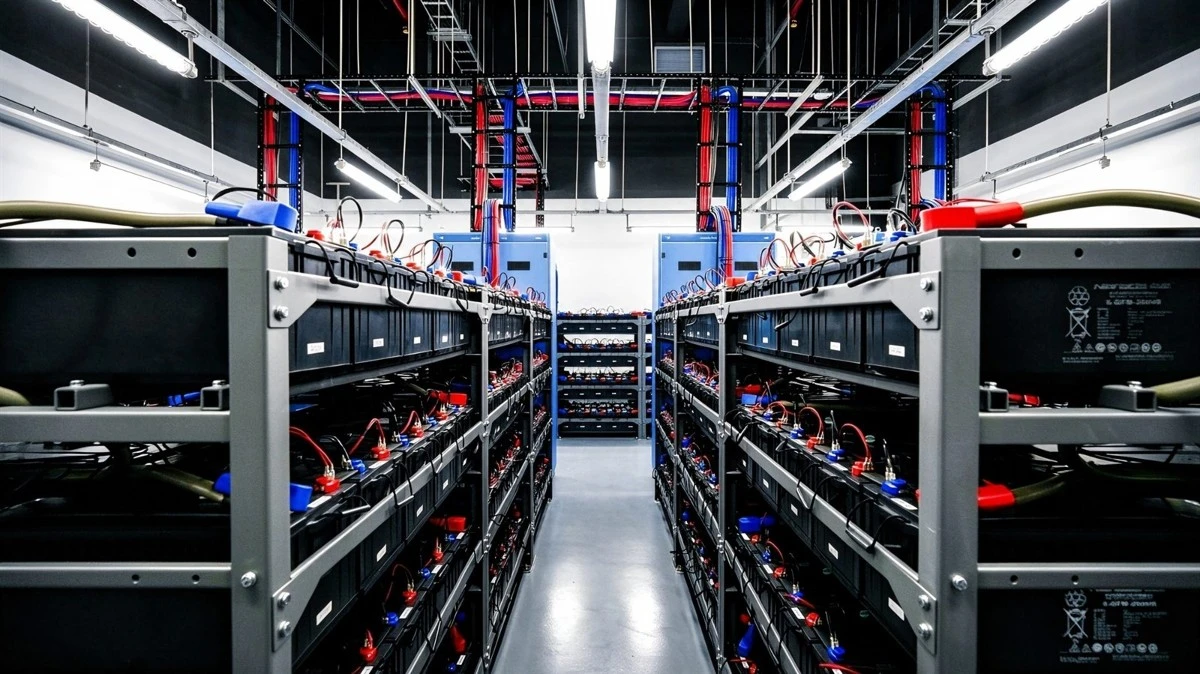
Data center design is the process of planning the physical infrastructure and technical systems required to operate IT equipment safely and continuously. It covers building layout, power supply, cooling, network connectivity, monitoring, and redundancy.
Electrical infrastructure deserves special attention because even a short power interruption can affect servers, storage systems, and business-critical applications. A well-designed data center therefore considers not only normal operating conditions but also equipment failures, maintenance requirements, and changes in future workloads.
Key design considerations include available utility power, total IT load, cooling demand, redundancy requirements, energy efficiency, and applicable local electrical standards.
Electrical Design and Power Distribution
A dependable electrical system is the foundation of data center design. The power architecture should deliver stable electricity from the utility connection to individual IT loads while allowing critical equipment to remain operational during maintenance or selected equipment failures.
A typical power distribution path may include:
Utility grid → Medium-voltage switchgear → Power transformer → Low-voltage switchgear → UPS → Power distribution unit (PDU) → Server racks
The actual configuration depends on the facility's voltage levels, capacity, backup strategy, and local requirements. Some large facilities also use onsite generators, energy storage systems, or alternative power sources.
Engineers should calculate the expected IT load and account for cooling equipment, lighting, auxiliary systems, and other building services.
Adequate capacity margins are important, but oversizing every component can increase initial costs and reduce efficiency when equipment operates at a low load.
Choosing the Right Transformer for a Data Center
Transformers are essential to data center power infrastructure because they adapt utility or distribution voltages to the levels required by downstream electrical equipment.
The right transformer depends on the incoming voltage, required capacity, installation environment, efficiency targets, and the facility's reliability strategy.
Dry-Type Transformers
A dry type transformer is often considered for indoor electrical rooms, commercial buildings, and facilities where avoiding liquid insulation is a priority. Cast resin transformers are a common option for installations that require solid insulation and reduced routine liquid-related maintenance.
When selecting a dry-type transformer, engineers should evaluate rated capacity, insulation class, temperature rise, cooling method, enclosure protection, noise, and ventilation requirements.
Oil-Immersed Transformers
Oil-immersed transformers are widely used in utility substations and outdoor power distribution systems. Their thermal performance and capacity options can make them suitable for larger power requirements, depending on the project design.
Installation planning should address fire protection, liquid containment where required, environmental regulations, clearances, and maintenance access.

Medium-Voltage and Power Transformers
Medium-voltage transformers connect the incoming distribution supply to the facility's electrical infrastructure. Larger campuses and hyperscale data centers may require multiple transformers or dedicated substations to support high power demand and operational resilience.
Transformer capacity should be selected from a detailed load study rather than IT nameplate ratings alone. Engineers should also assess harmonic loading, inrush current, voltage regulation, impedance, short-circuit withstand capability, and compatibility with UPS systems.
Cooling System Design and Energy Efficiency
Cooling is another major part of data center design. Servers, storage systems, power electronics, and other equipment generate heat continuously, and inadequate heat removal can affect equipment performance and service life.
Traditional facilities may use computer room air conditioning (CRAC) or computer room air handler (CRAH) systems. Higher-density environments increasingly consider hot-aisle and cold-aisle containment, in-row cooling, or direct-to-chip liquid cooling.

Transformer and switchgear rooms also need suitable ventilation and temperature control. Electrical equipment should be installed according to the manufacturer's thermal and environmental requirements, with sufficient clearance for maintenance.
Energy efficiency should be evaluated across the complete facility. Power Usage Effectiveness (PUE) is one commonly used metric, calculated by dividing total data center energy consumption by IT equipment energy consumption. A lower PUE generally indicates better overall infrastructure efficiency, although it does not measure every aspect of facility performance.
Redundancy and Reliability in Data Center Design
Data centers must be designed around the consequences of equipment failure and planned maintenance. Redundancy helps reduce the risk of service interruptions, but the appropriate level depends on business requirements and budget.
Common configurations include N, N+1, 2N, and 2N+1. In general, N represents the capacity required to support the intended load; N+1 adds a redundant component, while 2N provides two independently sized capacity paths.
Redundancy may be applied to transformers, switchgear, UPS modules, generators, cooling equipment, and distribution paths. However, installing duplicate equipment does not automatically eliminate every single point of failure. Protection coordination, control systems, maintenance procedures, and physical separation also matter.
Design teams should conduct failure-mode analysis and verify how the facility behaves when individual components or power paths become unavailable.
Planning for AI and High-Density Data Centers
AI training and high-performance computing are changing the requirements for data center design. Rack power density can be substantially higher than in conventional enterprise environments, increasing the demands placed on transformers, UPS systems, busways, PDUs, and cooling infrastructure.
Designers should assess current rack densities as well as realistic future requirements. This includes evaluating transformer loading, harmonic currents, cooling distribution, floor loading, cable routing, and the available space for electrical equipment.
Modular electrical rooms and phased capacity expansion can help facilities add power as demand grows. At the same time, the design must maintain safe working clearances and ensure that new equipment can be integrated without compromising existing operations.
Data Center Design Checklist
Before finalizing a data center design, the project team should review the following areas:
| Design area | Key considerations |
|---|---|
| Electrical load | IT demand, cooling load, auxiliary consumption, future expansion |
| Transformers | Capacity, voltage ratio, efficiency, insulation, cooling, installation environment |
| Power distribution | Switchgear, UPS, PDUs, busways, protection coordination |
| Redundancy | N, N+1, 2N, maintenance scenarios, failure analysis |
| Cooling | Rack density, airflow, liquid cooling, electrical-room ventilation |
| Safety | Grounding, arc-flash assessment, fire protection, emergency procedures |
| Monitoring | Power quality, temperature, alarms, energy consumption |
| Compliance | Applicable IEC, IEEE, NFPA, local codes, and project specifications |
The final design should be validated by qualified electrical and mechanical engineers against the actual site conditions and applicable regulations.
Working with a Reliable Data Center Transformer Manufacturer
Transformer selection should take place early in the engineering process, not just before equipment procurement. Early coordination helps align electrical ratings, dimensions, connection arrangements, protection requirements, delivery schedules, and installation conditions.
Jiangsu Yawei Transformer Co., Ltd. established in 1993, manufactures transformer solutions for power distribution and industrial applications. With more than 30 years of manufacturing experience, Yawei can support project discussions involving dry-type transformers, oil-immersed transformers, and customized electrical requirements.
For data center projects, procurement teams should provide the rated capacity, primary and secondary voltages, frequency, impedance, vector group, cooling requirements, installation environment, applicable standards, and expected delivery schedule when requesting a quotation.
A properly specified transformer, integrated into a well-engineered electrical system, can help create a dependable foundation for modern data center operations.
Conclusion
Effective data center design requires coordinated planning of electrical infrastructure, cooling, redundancy, safety, and future capacity.
Transformers are a particularly important part of this process because their performance and configuration influence power distribution, installation requirements, and long-term operating costs.
By evaluating the complete electrical load, selecting suitable transformer technology, and planning for maintenance and expansion, project teams can build data centers that are more reliable, efficient, and ready for changing computing demands.
Planning a data center power system? Contact Yawei Transformer to discuss transformer specifications, customized solutions, and project quotation requirements.
Q: How soon can you delivery the transformer?
A: It depends on the quantity and capacity of the transformer, normally within one month since the date drawing confirmed by buyer.
Q: How long can you provide the quality warranty?
A: 24 months since the date transformer operated.
Q: What payment method do you accept?
A: T/T (wire transfer) preferred, L/C both accepted.


