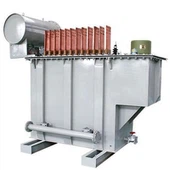
Understanding Delta Delta Transformers in Depth
A delta delta transformer is an electrical transformer arrangement where both the primary and secondary windings are connected in delta. This guide explains how the delta connection works, why it is used, where it fits best, and what practical trade-offs engineers, technicians, and students should understand before applying it.

What is a delta delta transformer?
A delta delta transformer uses a triangular winding arrangement on both sides of the transformer. In a three-phase system, each phase winding is connected end-to-end with the next, forming a closed loop that resembles the Greek letter delta. The primary side receives three-phase power through a delta connection, and the secondary side delivers three-phase power through another delta connection.
This configuration is often chosen when the load is primarily three-phase and a neutral conductor is not required. Because neither side naturally provides a neutral point, a delta delta transformer is usually not the first choice for systems that need line-to-neutral loads. Its strength is in robust three-phase power transfer, especially where continuity, motor loads, and tolerance of certain unbalanced conditions matter.
The delta connection as a foundation
In a delta connection, each winding is connected across two line conductors rather than from a line conductor to a neutral point. That means the winding voltage is equal to the line voltage. The line current, however, is related to the winding current differently than in a star or wye connection.
This relationship matters because it affects conductor sizing, protection, insulation expectations, and load calculations. A technician looking only at line measurements may miss what each winding is actually carrying. Understanding the delta connection helps prevent incorrect assumptions during design, troubleshooting, and maintenance.
A key feature of the delta loop is that it can provide a path for circulating components of current, including certain harmonic and unbalanced currents. This does not make the transformer immune to problems, but it can help stabilize performance under conditions that would be more troublesome in some other arrangements.
How the primary and secondary windings interact
Like any electrical transformer, a delta delta transformer transfers energy magnetically rather than through direct electrical contact between primary and secondary circuits. Alternating current in the primary windings creates changing magnetic flux in the core. That flux induces voltage in the secondary windings according to the transformer turns ratio.
The delta delta arrangement does not change the basic transformer principle. What it changes is how the three individual phase windings are interconnected and how line voltage, phase voltage, line current, and phase current relate to each other. In many practical systems, this makes the connection straightforward for three-phase equipment because the output remains a three-wire, three-phase supply.
Another important characteristic is that the phase shift between primary and secondary line voltages is typically zero for a standard delta delta connection, assuming matching winding orientation and proper polarity. This can be useful when transformers must operate in parallel, although parallel operation still requires careful matching of voltage ratio, impedance, polarity, and phase sequence.
Why is this configuration used?
A delta delta transformer is used because it offers dependable three-phase power transfer, handles many motor and industrial loads well, and can continue operating in some reduced-capacity conditions if one transformer in a bank is removed. It is especially useful where a neutral is unnecessary and the installation benefits from the closed delta path.
One well-known advantage is the possibility of open-delta operation in a bank of single-phase transformers. If one unit in a three-transformer delta delta bank fails or must be taken out of service, the remaining two may be able to continue supplying three-phase power at reduced capacity. This is not a substitute for proper repair, and the available load must be limited, but it can help preserve service continuity in selected applications.
The delta connection can also help with third-harmonic currents by allowing them to circulate within the delta loop rather than appearing prominently in the external line conductors. This can improve waveform behavior in some systems. However, circulating current also means extra heating can occur if the system is poorly designed, overloaded, or exposed to abnormal conditions.
Common reasons to choose this arrangement include:
Three-phase motor service where line-to-neutral loads are not required.
Industrial distribution where rugged three-wire power is more important than neutral availability.
Service continuity needs where open-delta operation may be acceptable temporarily.
Parallel transformer applications where zero phase displacement is desirable.
Systems with unbalanced loads within reasonable limits, provided protection and thermal capacity are properly evaluated.
Practical advantages in real installations
A delta delta transformer can be a strong choice for facilities with concentrated three-phase loads such as motors, pumps, compressors, and process equipment. Since these loads typically use line-to-line voltage, the absence of a neutral may not be a problem. The configuration keeps the distribution simple and focused on three-phase power delivery.
The closed delta path is also useful during unbalanced loading. When the three phases are not loaded equally, the delta arrangement can often tolerate the imbalance better than some alternatives. That said, "tolerate" does not mean "ignore." Persistent imbalance can still cause heating, voltage distortion, nuisance trips, and shortened equipment life.
From a maintenance perspective, delta delta banks made from individual single-phase units can offer flexibility. A damaged unit may be isolated, tested, replaced, or temporarily bypassed depending on the system design and operating policy. This modularity is one reason the arrangement has remained familiar in many utility and industrial contexts.
Limits and design considerations
The most obvious limitation is the lack of a neutral point. If a facility needs both three-phase power and many single-phase line-to-neutral circuits, another transformer connection may be more suitable, or an additional transformer or grounding arrangement may be required. Choosing delta delta without considering neutral needs can lead to expensive redesign later.
Grounding also deserves careful attention. A delta system can be ungrounded, corner-grounded, or grounded through specific methods depending on code requirements and engineering intent. Each approach affects fault detection, overvoltage behavior, protection coordination, and maintenance safety. These choices should be made by qualified professionals, not treated as a wiring preference.
Protection must account for the current relationships in the delta connection. Fuses, breakers, relays, and conductors should be selected with actual winding and line currents in mind. Overcurrent devices that appear correctly sized on paper may perform poorly if the underlying assumptions about phase current are wrong.
Important design checks include:
Confirm whether the load requires a neutral conductor.
Verify primary and secondary voltage ratings.
Check phase sequence and polarity before energizing.
Evaluate expected load balance and harmonic content.
Confirm grounding method and applicable electrical code requirements.
Size protection for both normal operation and fault conditions.
Consider heat, ventilation, enclosure type, and ambient conditions.
How does it compare with other transformer connections?
Compared with a wye-connected transformer, a delta delta transformer is often simpler for pure three-phase loads but less convenient for mixed single-phase and three-phase distribution. A wye connection can provide a neutral point, which is useful for line-to-neutral loads and grounding. Delta delta, by contrast, emphasizes three-wire power transfer and closed-loop phase behavior.
Compared with delta-wye arrangements, delta delta usually avoids the phase shift commonly associated with delta-wye transformer connections. That can simplify certain parallel or system-matching situations. However, delta-wye transformers are widely used where a grounded secondary neutral is needed, so the better choice depends on the system purpose rather than on one connection being universally superior.
The decision is best made by matching the transformer connection to the load profile, grounding philosophy, protection scheme, and future expansion plans. A facility that currently has only motor loads may later add control panels, receptacle loads, or equipment requiring a neutral. Planning for that possibility can prevent constraints after installation.

Best practices for selection and use
Before specifying a delta delta transformer, start with the load, not the connection. Identify whether the system serves motors, heaters, drives, lighting, controls, or a combination. Then determine voltage requirements, neutral requirements, starting currents, harmonic-producing equipment, and any need for redundancy or temporary open-delta operation.
Installation and commissioning should include careful verification. Incorrect polarity or phase sequence can damage equipment, create unsafe conditions, or prevent motors from rotating in the intended direction. Testing should be documented so future maintenance teams know how the system was configured when placed in service.
Use this quick checklist during planning:
Define the three-phase load and future expansion needs.
Decide whether line-to-neutral service is required.
Confirm that delta delta is compatible with the grounding plan.
Review transformer capacity under normal and contingency conditions.
Coordinate protective devices with available fault current.
Provide adequate cooling and access for inspection.
Label conductors and equipment clearly for maintenance.
Q: How soon can you delivery the transformer?
A: It depends on the quantity and capacity of the transformer, normally within one month since the date drawing confirmed by buyer.
Q: How long can you provide the quality warranty?
A: 24 months since the date transformer operated.
Q: What payment method do you accept?
A: T/T (wire transfer) preferred, L/C both accepted.