

how dga monitoring can prevent catastrophic transformer failure
DGA monitoring can help prevent catastrophic transformer failure by detecting gases associated with overheating, electrical discharge, and insulation deterioration before a developing fault causes severe damage. Dissolved gas analysis gives maintenance teams evidence to investigate abnormal conditions and decide when intervention is necessary. Its value comes from combining reliable measurements with timely action-not from treating a gas reading as a guarantee of safety.
How does DGA monitoring help prevent transformer failure?
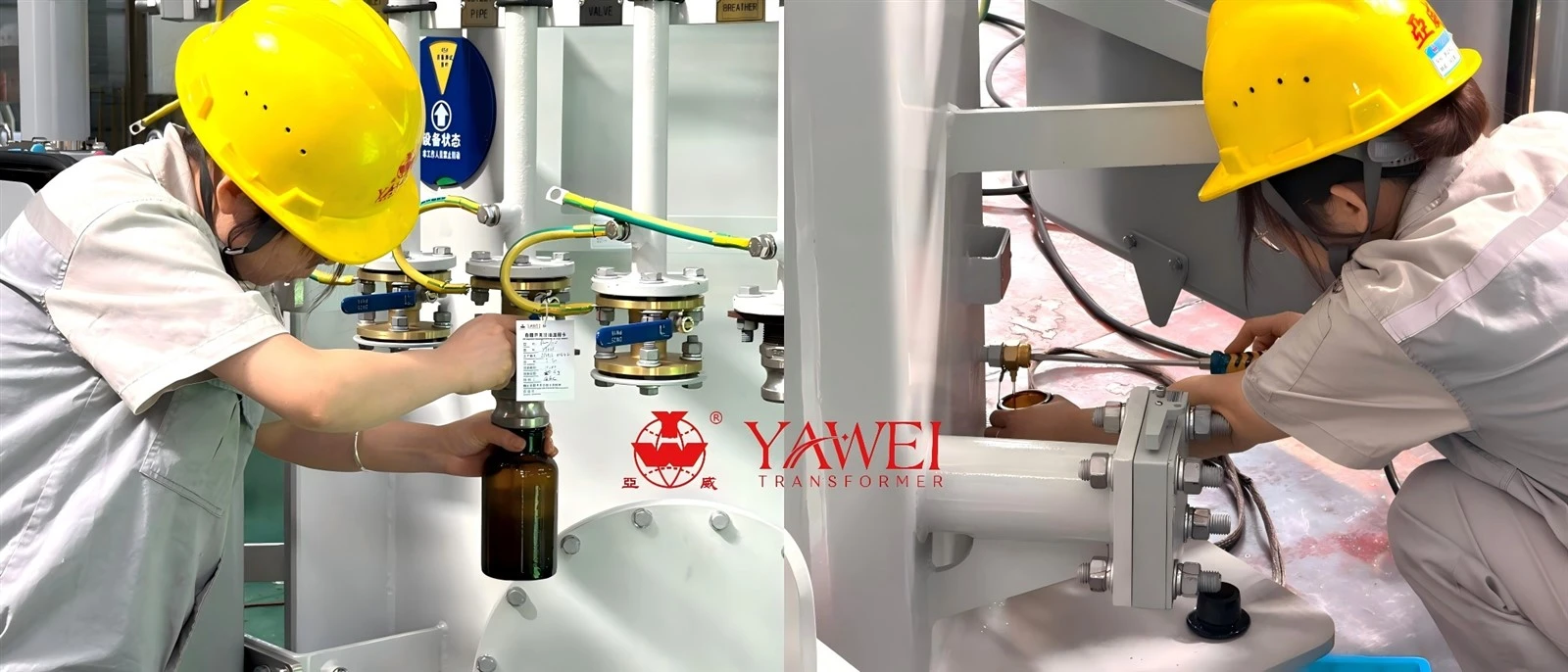
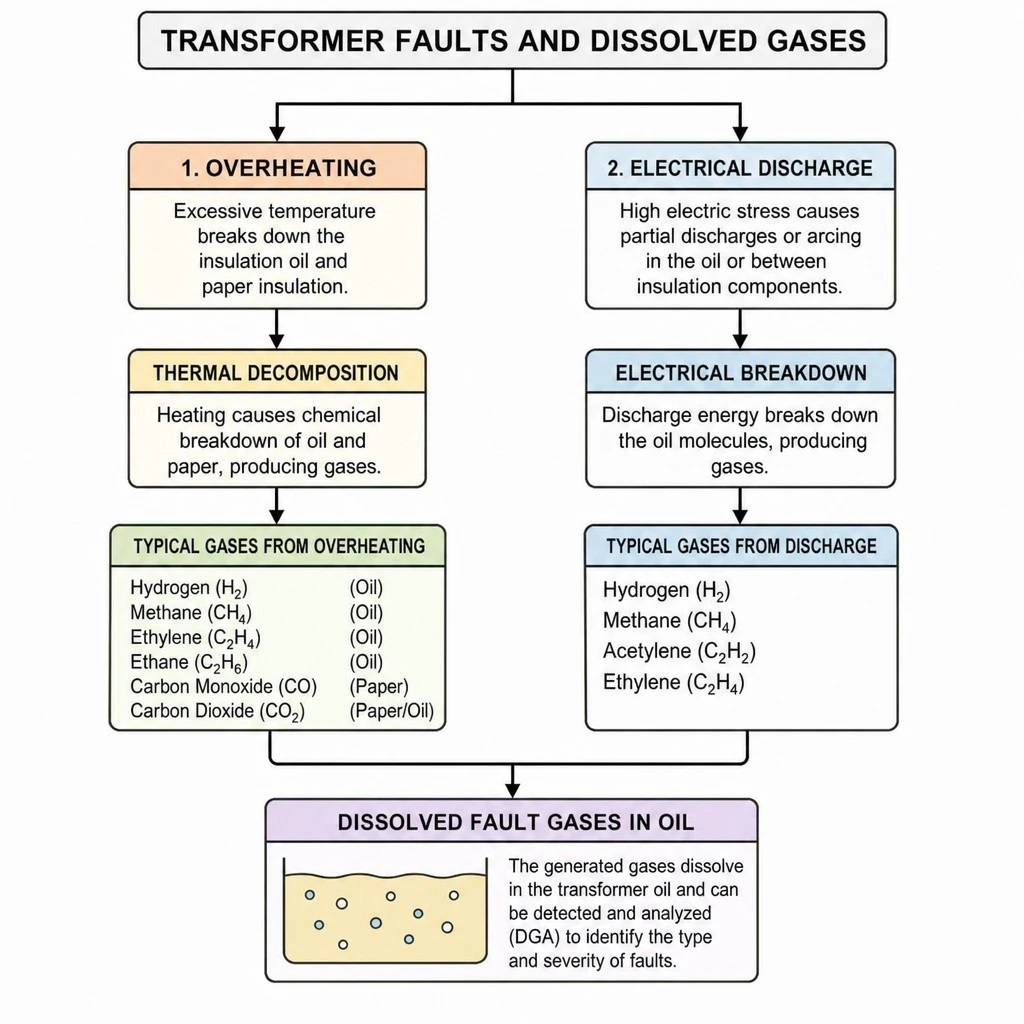
DGA monitoring measures gases dissolved in transformer insulating oil and tracks changes that may indicate internal faults. When thermal or electrical stress breaks down insulating materials, the resulting gas pattern can provide an early warning. Engineers can use that warning to investigate the cause, adjust operation, or arrange an outage before damage progresses.
The prevention pathway is straightforward: detect a change, assess its significance, and act on the underlying problem. A monitor does not repair insulation or correct a cooling defect. It provides information that supports those decisions, potentially turning an unexpected emergency into a managed maintenance event.
Research involving industrial transformers has linked DGA interpretations with findings from physical inspections. In one investigated case, long-term trending identified a progressing fault and enabled preventive maintenance. That supports DGA as a practical diagnostic tool, while reinforcing the importance of verifying its conclusions against other evidence.
The fundamentals of dissolved gas analysis
Transformer oil provides electrical insulation and carries away heat. Thermal and electrical stresses can decompose oil and solid insulation, producing gases that become useful diagnostic markers. Some gas generation also accompanies normal aging, so the presence of gas alone does not establish that failure is imminent.
Laboratory dissolved gas analysis typically involves collecting an oil sample, extracting its gases, and identifying and measuring them using gas chromatography. Results describe individual gas concentrations, commonly expressed in parts per million. Repeated measurements build the history needed to distinguish an isolated finding from an evolving condition.
Gas patterns reveal different kinds of stress
The following associations help guide transformer diagnostics. They are starting points for interpretation, not one-gas rules that prove a particular defect exists. Engineers assess the complete pattern, concentration, and trend before assigning significance.
| Gas or gas group | Common diagnostic association | Practical implication |
|---|---|---|
| Hydrogen | Partial discharge and other electrical or thermal activity | Investigate the broader pattern rather than assuming one fault type. |
| Methane and ethane | Thermal decomposition of oil | Review operating conditions and evidence of abnormal heating. |
| Ethylene | Higher-temperature oil overheating | Assess whether a thermal fault is developing or intensifying. |
| Acetylene | Arcing or high-energy electrical discharge | Obtain prompt specialist assessment, particularly when generation is increasing. |
| Carbon monoxide and carbon dioxide | Cellulose insulation deterioration or heating | Combine results with insulation history and complementary tests. |
These associations are described in transformer maintenance guidance, but gas mixtures can overlap across fault conditions. Interpretation therefore requires engineering judgment rather than a direct translation from one gas to one repair.
Why trends matter more than isolated readings
A single DGA report shows which gases were measured at one point in time. It does not establish how long they have been present, whether generation has stopped, or whether the condition is accelerating. Several comparable results provide a much stronger basis for assessing an active problem.
Concentration, rate of change, and operating context
A transformer with elevated but stable historical readings may require a different response from one showing a sudden increase. Loading, ambient conditions, through-faults, and maintenance history can help explain changes. Reviewing these factors alongside the gas trend reduces the risk of interpreting numbers without understanding the asset.
For example, consider two hypothetical units with similar hydrogen concentrations. One has remained stable across successive samples; the other has risen sharply since its previous test. The second unit warrants closer investigation because the direction and speed of change suggest a different situation, despite the similar latest readings. This illustrates why trend-based assessment matters.
Oil processing also needs to be recorded. Degassing changes measured concentrations but does not necessarily eliminate the fault that generated them. After such work, establish a new reference point while retaining the earlier history for interpretation.
Diagnostic methods support-not replace-judgment
Gas ratios and graphical approaches, including the Duval Triangle, help classify gas patterns. Some online systems incorporate these tools, allowing measurements to support preliminary fault identification rather than simply displaying concentrations. Their output remains diagnostic guidance, not a complete assessment of operational safety.
IEC 60599 provides interpretation guidance for mineral-oil-filled equipment with cellulose-based insulation. Its scope cautions against applying it uncritically to other liquid-solid insulation systems and explicitly requires engineering judgment. Alarm settings and diagnostic methods should therefore fit the transformer and insulating fluid-not just a generic software default.
Choosing laboratory testing and online monitoring
Laboratory testing and online DGA monitoring serve complementary purposes. Laboratory analysis provides detailed examination of collected samples, while installed monitors automate repeated measurements and can communicate developing changes remotely. The appropriate combination depends on the information needed and the consequences of losing the asset.
Laboratory testing provides diagnostic depth
Periodic sampling remains useful because oil can undergo a broader range of tests than an online gas monitor provides. DGA can be assessed alongside fluid condition and insulation-related markers, giving specialists more context for their conclusions. An online installation should not automatically eliminate the laboratory program.
The limitation is the interval between samples: a report describes the sample collected, not every subsequent operating condition. Additional testing may be warranted after abnormal loading, suspected faults, or protective-device indications rather than waiting for the next routine date.
Online monitoring improves visibility between samples
Online systems repeatedly measure selected gases, with some also measuring moisture. Available configurations range from hydrogen-focused warning devices to multi-gas analyzers with more extensive diagnostic capabilities. The measured gas set matters because a limited-gas warning device and a multi-gas diagnostic system do not provide identical information.
Use a requirements checklist before selecting equipment:
Diagnostic objective: Decide whether you need broad fault screening, detailed gas-pattern interpretation, or both.
Measurement coverage: Specify the gases and moisture information required for that objective.
Fluid compatibility: Confirm suitability for the actual insulating liquid.
Data access: Define how engineers will retrieve trends and receive alarms.
Verification: Establish how abnormal monitor results will be compared with laboratory findings.
These selection criteria follow from the differing measurement capabilities of online systems and the continuing role of laboratory analysis. Treat them as a specification exercise, not a search for the largest sensor count.
Turning an abnormal result into a maintenance decision
An alarm becomes useful only when someone assesses it and determines the appropriate response. Transformer maintenance guidance links abnormal gas generation with actions such as closer sampling, loading review, manufacturer consultation, and outage planning. The response should reflect the suspected fault and its progression rather than a single universal trigger.
A practical response workflow is:
Assign responsibility. Identify the person receiving the alarm and the engineer authorized to assess continued operation.
Review measurement credibility. Check instrument status, sample identity, and recent results; arrange confirmation where appropriate.
Reconstruct operating conditions. Gather loading, temperature, cooling-system, protection, and maintenance records.
Assess urgency. Consider which gases are changing, how quickly they are rising, and whether independent evidence supports the concern.
Choose and document action. Record the rationale for increased surveillance, operating restrictions, further testing, or removal from service.
Verify the outcome. After corrective work, review subsequent measurements and confirm whether abnormal generation has subsided.
This workflow is a suggested way to organize a response, not an operating instruction for a particular transformer. Define escalation responsibilities before an alarm occurs, and follow site procedures when assessing potentially dangerous equipment. Do not assume that obtaining another sample is always the safest first action.
A hypothetical overheating response
Suppose repeated results show increasing thermal-fault gases while operating records indicate unusually high temperatures. The team could investigate cooling performance and loading while arranging specialist interpretation. If findings support a cooling-related problem, corrective work can target that cause rather than merely treating the oil. Cooling problems and sustained overload are recognized sources of abnormal gas generation.
The example is illustrative, not a documented customer outcome. Its lesson is the decision sequence: use the gas trend to direct investigation, then select a response based on corroborating evidence. DGA provides the clue; transformer diagnostics establish the practical next step.
Integrating DGA with oil condition monitoring
DGA identifies evidence of thermal and electrical stress, but it does not describe every aspect of transformer health. Oil condition monitoring adds information about the fluid's insulating properties and deterioration. Tests such as moisture, dielectric strength, and acidity help assess issues that gas measurements alone cannot resolve.
Furan analysis provides additional evidence related to cellulose insulation degradation. Its interpretation also depends on factors such as insulation construction, preservation arrangements, and previous oil treatment. Carbon oxide results should therefore prompt contextual assessment rather than an unsupported estimate of remaining insulation life.
A coordinated preventive maintenance program can combine:
Gas trends: Evidence of developing thermal or electrical activity.
Oil-quality results: Information about moisture, acidity, and insulating performance.
Insulation markers: Additional insight into cellulose deterioration.
Inspection and electrical testing: Independent evidence to investigate suspected defects.
The purpose is to answer different diagnostic questions with complementary evidence. No single measurement should be expected to describe the entire insulation system or every possible failure mechanism.
What are the limits of DGA monitoring?
DGA is a condition-assessment tool, not a guarantee against transformer failure. Measurement variability, conflicting diagnostic interpretations, and incomplete operating context can complicate conclusions. Published work on an online monitoring system specifically identified unstable sampling measurements and contradictory analysis results as challenges requiring attention.
It is also important to separate a fault classification from a precise forecast. Identifying an abnormal gas pattern does not, by itself, establish the defect's exact location or a dependable countdown to failure. Interpretation guidance requires proper engineering judgment when deciding what action to take.
Set realistic expectations: monitoring should improve awareness and support intervention, not encourage operation through unresolved warning signs. A useful program must connect measurements, qualified interpretation, and a clear response process.
Building a prevention-focused monitoring program
Start by defining what the program must accomplish for each transformer. Record the available history, establish a baseline, choose appropriate laboratory and online measurements, and specify who reviews the results. Make the response plan as deliberate as the measurement plan.
For implementation, use a short readiness review:
Are historical results and maintenance records accessible together?
Are alarm recipients and escalation authorities named?
Can abnormal measurements receive timely technical review?
Is there a process for confirming findings without delaying urgent action?
Will corrective work be followed by documented reassessment?
The central lesson is simple: DGA monitoring helps prevent catastrophic damage when early evidence leads to an appropriate response. Better data is valuable, but its practical benefit depends on what happens next. Build the program around that connection-from a developing gas trend to a defensible maintenance decision.
FAQ
Q: How soon can you delivery the transformer?
A: It depends on the quantity and capacity of the transformer, normally within one month since the date drawing confirmed by buyer.
Q: How long can you provide the quality warranty?
A: 24 months since the date transformer operated.
Q: What payment method do you accept?
A: T/T (wire transfer) preferred, L/C both accepted.


