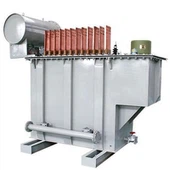
Electric Power Transmission Lines: The Backbone of Modern Power Systems
By Yawei Transformer - Your Trusted Partner in Power Transmission Solutions

Introduction: Understanding the Role of Electric Power Transmission Lines
Electricity has become an indispensable part of modern life, supporting almost every aspect of society, from residential power consumption and industrial production to transportation systems, large-scale data centers, and renewable energy development. However, producing electricity is only the first stage of the power supply process. After generation, electrical energy must be transported efficiently and reliably across long distances before it can reach end users.
Electric power transmission lines provide the essential connection between power generation facilities, substations, and distribution networks. These high-voltage systems are designed to transfer large amounts of electricity across regions while minimizing energy losses and maintaining the stability of the electrical grid.
As electricity demand continues to increase worldwide, transmission infrastructure has become more important than ever. The expansion of renewable energy projects, the rapid growth of digital infrastructure, and the increasing electrification of industries all require stronger and more reliable transmission networks.
As a professional transformer manufacturer, Yawei Transformer understands that efficient power transmission depends not only on transmission lines but also on the coordinated operation of high-performance transformers, substations, protection equipment, and grid control systems. Transformers play a critical role in increasing voltage for long-distance transmission and reducing voltage before electricity enters distribution networks, making modern power transmission economically and technically possible.
What Are Electric Power Transmission Lines?
Electric power transmission lines are specialized electrical systems designed to transport high-voltage electricity from generating stations to substations and large electricity consumers. Unlike distribution lines, which are mainly responsible for delivering electricity to residential, commercial, and smaller industrial users, transmission lines operate at significantly higher voltage levels so that large amounts of electrical energy can be transferred efficiently over long distances.
The main reason transmission systems use high voltage is that higher voltage allows the same amount of power to be transmitted with lower current. Since electrical losses increase as current increases, reducing current through voltage elevation helps minimize energy loss, improve transmission efficiency, and increase the overall capacity of the power grid.
Typical electric power transmission voltage levels include:
| Transmission Level | Typical Voltage Range | Main Application |
|---|---|---|
| Medium Voltage | 10kV–35kV | Local power networks and industrial distribution systems |
| High Voltage (HV) | 66kV–220kV | Regional power transmission |
| Extra High Voltage (EHV) | 330kV–750kV | Long-distance transmission networks |
| Ultra High Voltage (UHV) | Above 800kV | Large-scale grid interconnections and cross-regional power transfer |
The selection of transmission voltage depends on factors such as transmission distance, power capacity, grid structure, and economic considerations. Higher voltage transmission systems are generally preferred for long-distance applications because they can deliver more electricity with lower losses.
How Do Electric Power Transmission Lines Work?
The operation of electric power transmission lines involves a complete process that begins with electricity generation and continues through voltage transformation, high-voltage transportation, and final voltage reduction at substations. Each stage works together to ensure electricity can move safely and efficiently from power plants to consumers.
1. Power Generation
Electricity is initially produced at generating facilities using different energy sources, including fossil fuels, nuclear energy, hydropower, wind power, and solar energy. Generators typically produce electricity at medium voltage levels, such as 11kV to 20kV, because extremely high voltage is not practical at the generator output stage.
Before electricity enters the transmission network, its voltage must be increased to a much higher level to improve transmission efficiency and reduce power losses.
2. Voltage Step-Up Through Transformers
Step-up transformers are installed at power plants to increase generator voltage to transmission voltage levels. This voltage transformation process allows electricity to travel over long distances with reduced current and lower transmission losses.
For example:
| Stage | Typical Voltage |
|---|---|
| Generator output voltage | 11kV–20kV |
| Transmission voltage | 110kV, 220kV, 500kV or higher |
The operating principle of a transformer is based on electromagnetic induction, where the voltage ratio is determined by the relationship between the number of turns in the primary and secondary windings:
Vs/Vp=Ns/Np
Where:
Vs represents the secondary voltage.
Vp represents the primary voltage.
Ns represents the number of turns in the secondary winding.
Np represents the number of turns in the primary winding.
By increasing voltage before transmission, transformers enable power systems to transfer electricity efficiently across hundreds or even thousands of kilometers.
3. High-Voltage Electricity Transmission
After voltage is increased, electrical energy is transmitted through high-voltage transmission lines, which can be constructed in several forms depending on geographical conditions, transmission requirements, and installation environments.
The main types include:
Overhead transmission lines, which are the most widely used solution for large-scale power networks because of their economical construction and convenient maintenance.
Underground transmission cables, which are commonly applied in urban areas where space limitations and environmental considerations make overhead lines unsuitable.
Submarine power cables, which are mainly used for offshore renewable energy projects and connections between islands or different regions separated by water.
4. Voltage Reduction At Receiving Substations
When transmitted electricity reaches regional substations, transformers reduce the voltage to levels suitable for distribution networks and industrial applications. These step-down transformers are essential because most consumers cannot directly use transmission-level voltages.
At substations, transformers work together with circuit breakers, disconnect switches, protection systems, and monitoring equipment to ensure electricity can be delivered safely and reliably.
The complete electricity transmission process can therefore be summarized as:
Power Plant → Step-Up Transformer → Electric Power Transmission Lines → Substation Transformer → Distribution Network → End Users
Main Components Of Electric Power Transmission Lines
A reliable transmission system consists of several interconnected components, each responsible for ensuring efficient electricity transfer, mechanical stability, and operational safety.
1. Conductors
Conductors are the primary components that carry electrical current through transmission lines, and their design directly influences transmission efficiency, mechanical strength, and long-term reliability. The most commonly used conductor materials include Aluminum Conductor Steel Reinforced (ACSR), aluminum alloy conductors, and copper conductors.
Among these options, ACSR is widely used in high-voltage transmission projects because it combines the excellent conductivity and lightweight characteristics of aluminum with the mechanical strength of a steel core. This structure allows transmission lines to maintain reliable performance over long distances while withstanding mechanical stresses caused by wind, temperature changes, and environmental conditions.
The advantages of commonly used transmission conductors include:
| Conductor Type | Main Characteristics |
|---|---|
| ACSR | High mechanical strength, good conductivity, suitable for long-distance transmission |
| Aluminum Alloy Conductor | Lightweight design with improved corrosion resistance |
| Copper Conductor | Excellent conductivity, mainly used in special applications requiring high electrical performance |
2. Transmission Towers
Transmission towers provide mechanical support for overhead conductors and maintain safe clearance between high-voltage lines, the ground, buildings, and other structures. Their design must consider transmission voltage, conductor weight, weather conditions, terrain characteristics, and mechanical loading requirements.
Common transmission tower types include:
| Tower Type | Application |
|---|---|
| Suspension Tower | Used mainly on straight transmission routes where mechanical stress is relatively balanced |
| Tension Tower | Installed at line direction changes or locations with higher mechanical loading |
| Terminal Tower | Used near substations or connection points between transmission sections |
A properly designed tower system ensures that conductors remain stable and maintain safe operating distances throughout the entire service life of the transmission network.
3. Insulators
Insulators are essential components in electric power transmission  lines because they prevent electrical current from flowing from conductors into transmission towers and the ground while also providing mechanical support for overhead conductors. Since transmission lines operate under high voltage conditions and are exposed to changing outdoor environments, insulators must maintain reliable electrical performance while withstanding mechanical stress, pollution, moisture, and temperature variations.
Modern transmission systems commonly use porcelain insulators, glass insulators, and composite polymer insulators. Porcelain and glass insulators have been widely adopted for decades because of their excellent insulation characteristics and proven long-term durability, while composite polymer insulators are increasingly popular in modern grid projects due to their lightweight structure, strong pollution resistance, and improved performance in harsh environmental conditions.
The main functions of transmission line insulators include maintaining electrical isolation between high-voltage conductors and supporting structures, providing sufficient mechanical strength to withstand conductor loads and external forces, and ensuring stable transmission system operation under different weather conditions such as heavy rain, strong wind, and temperature fluctuations.
4. Transformers
Transformers are among the most important pieces of equipment in electric power transmission systems because they make efficient long-distance electricity transportation possible. Without transformers, power plants would have to transmit electricity at relatively low voltages, resulting in extremely high current levels and significant energy losses across transmission networks.
In a typical transmission system, transformers perform two primary functions: increasing voltage before electricity enters transmission lines and reducing voltage when electricity reaches substations or distribution networks.
Step-up transformers are installed at power generation facilities where they increase generator output voltage to high-voltage or extra-high-voltage levels suitable for transmission. By increasing voltage and reducing current, these transformers significantly decrease transmission losses and allow large amounts of electricity to be transported over long distances.
The main benefits of step-up transformers include:
| Function | Description |
|---|---|
| Voltage Increase | Raises generator voltage to transmission levels such as 110kV, 220kV, 500kV, or higher |
| Loss Reduction | Reduces current flow and minimizes power losses during transmission |
| Higher Transmission Capacity | Enables more electrical power to be transferred through existing transmission infrastructure |
Step-down transformers are installed at receiving substations to reduce high transmission voltages to safer levels suitable for distribution systems and end users. These transformers ensure that electricity can be delivered efficiently to residential communities, commercial buildings, industrial plants, and infrastructure facilities.
Typical applications include:
Utility substations
Industrial power systems
Commercial buildings
Renewable energy facilities
Smart grid networks
Yawei Transformer provides reliable oil-immersed transformers and dry-type transformers designed for utility transmission systems, renewable energy projects, industrial applications, and modern distribution networks.
Types Of Electric Power Transmission Lines
Electric power transmission lines can be classified according to their installation method, voltage level, and application environment. Each type has different advantages and limitations depending on project requirements.
1. Overhead Transmission Lines
Overhead transmission lines are the most widely used  transmission method worldwide because they provide a practical and economical solution for transferring large amounts of electricity across long distances. These systems use conductors supported by transmission towers, allowing utilities to construct extensive power networks across different geographical areas.
The major advantages of overhead transmission lines include:
Lower construction costs compared with underground alternatives
Easier inspection and maintenance access
Suitability for long-distance and high-voltage transmission projects
Because of these advantages, overhead transmission lines remain the primary choice for utility grid expansion, renewable energy connections, and regional power transmission networks.
2. Underground Transmission Lines
Underground transmission lines are installed beneath the ground  surface and are commonly used in urban areas, densely populated regions, and locations where visual impact or environmental restrictions limit the use of overhead infrastructure.
Compared with overhead systems, underground transmission cables provide better protection against extreme weather conditions and reduce the visual impact of power infrastructure. However, they require higher initial investment and more complex maintenance procedures because locating and repairing underground faults can be more challenging.
Underground transmission systems are commonly applied in:
City power networks
Industrial areas with limited space
Environmentally sensitive locations
Airport and infrastructure projects
3. High-Voltage Direct Current (HVDC) Transmission Lines
High-voltage direct current (HVDC) transmission technology is  designed for extremely long-distance electricity transfer and large-scale power exchange between different regions. Compared with traditional alternating current transmission systems, HVDC can achieve lower transmission losses over very long distances and is particularly suitable for applications involving remote energy resources.
HVDC transmission is widely used for:
Offshore wind farm connections
Cross-border electricity transmission
Large-scale renewable energy projects
Underwater power transmission systems
As renewable energy development continues to expand, HVDC technology has become increasingly important for connecting remote wind and solar resources with major electricity consumption centers.
Importance Of Electric Power Transmission Lines In Renewable Energy Development
The rapid growth of renewable energy has created new challenges and opportunities for global transmission infrastructure. Unlike traditional power plants that are often built near existing grid infrastructure, many renewable energy projects are located in remote areas where natural resources are abundant but electricity demand is relatively low.
For example, large solar farms are frequently constructed in areas with strong solar radiation, while offshore wind farms are located far from coastal cities. Electric power transmission lines provide the necessary connection between these renewable energy sources and areas with high electricity consumption.
Key renewable energy transmission applications include:
| Application | Transmission Requirement |
|---|---|
| Offshore Wind Farms | Long-distance submarine cables and high-voltage transmission systems |
| Solar Power Plants | High-capacity grid connections for large-scale electricity transfer |
| Battery Energy Storage Systems | Stable connection between storage facilities and power networks |
| Hybrid Renewable Projects | Flexible transmission solutions for multiple energy sources |
Reliable transformers are also essential in renewable energy projects because they regulate voltage levels, improve grid compatibility, and ensure stable electricity delivery from renewable generation facilities.
Common Challenges Facing Electric Power Transmission Systems
Although modern transmission networks have become highly advanced, they still face several challenges caused by increasing electricity demand, aging infrastructure, and the transition toward renewable energy.
1. Power Losses During Transmission
Electrical resistance within conductors naturally causes energy losses when electricity travels over long distances. Although high-voltage transmission significantly reduces these losses, improving efficiency remains an important goal for modern power systems.
Common solutions include:
Increasing transmission voltage levels
Using advanced conductor materials
Installing high-efficiency transformers
Improving grid monitoring and control systems
2. Aging Transmission Infrastructure
Many power transmission networks around the world were built decades ago and require modernization to meet current electricity demands. Aging equipment can reduce system reliability and increase the risk of failures.
Modernization programs often include:
Smart grid technologies
Digital substations
Advanced protection systems
High-efficiency transformer upgrades
Real-time monitoring equipment
These improvements help utilities increase transmission reliability while supporting future electricity growth.
3. Increasing Electricity Demand
Global electricity consumption continues to rise due to the rapid development of:
Data centers and artificial intelligence infrastructure
Electric vehicle charging networks
Industrial automation
Renewable energy systems
These trends require stronger transmission capacity and more flexible grid management solutions.
Transformers with higher efficiency, improved cooling systems, and advanced monitoring capabilities are becoming increasingly important for supporting these growing demands.
4. Maintaining Grid Stability
A stable transmission network must continuously maintain proper voltage levels, frequency control, and reliable power supply. Fluctuations caused by renewable energy generation, sudden load changes, or equipment failures can affect grid performance.
Advanced transformer technologies, digital monitoring systems, and modern grid control solutions help improve system stability by supporting voltage regulation and efficient power management.
The Relationship Between Electric Power Transmission Lines And Power Transformers
Although electric power transmission lines provide the physical pathway for transporting electricity, transformers are the key equipment that allows this process to operate efficiently and economically.
The complete power transmission process can be summarized as:
Power Generation → Step-Up Transformer → Electric Power Transmission Lines → Substation Transformer → Distribution Network → End Users
Step-up transformers increase voltage before transmission, reducing current and minimizing energy losses, while step-down transformers reduce voltage at substations to ensure electricity can be safely distributed to consumers.
Without transformers, modern high-voltage transmission systems would not be practical because electricity losses would become too high and long-distance power delivery would become significantly less efficient.
Yawei Transformer provides advanced transformer solutions for:
Utility transmission networks
Renewable energy projects
Industrial power systems
Substation applications
Smart grid infrastructure
Why Choose Yawei Transformer For Transmission Projects?
Yawei Transformer specializes in providing reliable transformer solutions designed for modern transmission and distribution applications. With extensive manufacturing experience and advanced production technology, Yawei Transformer supports customers worldwide with customized products that meet different voltage levels, capacity requirements, and operating environments.
High Reliability And International Standards
Yawei transformers are manufactured according to internationally recognized standards, including:
IEC 60076
IEEE C57 series
These standards ensure that transformer products meet strict requirements for electrical performance, safety, durability, and operational reliability.
Comprehensive Product Range
Yawei Transformer provides a wide range of transformer solutions, including:
Oil-immersed power transformers
Dry-type transformers
Distribution transformers
Renewable energy transformers
Substation transformers
These products are suitable for applications ranging from utility grids and renewable energy projects to industrial facilities and commercial power systems.
Customized Engineering Solutions
Different transmission and distribution projects require different technical solutions. Yawei Transformer provides customized engineering services, including:
Voltage level customization
Capacity optimization
Special application design
Project-specific technical support
Through flexible engineering capabilities, Yawei Transformer helps customers develop reliable power solutions for complex electrical environments.
Frequently Asked Questions (FAQ)
Electric power transmission lines are designed to transfer high-voltage electricity from generating stations to substations and large electricity consumers over long distances while minimizing energy losses.
Transmission lines operate at high voltage because increasing voltage reduces current for the same power level, which helps decrease electrical losses and improve transmission efficiency.
Common transmission voltage levels include 110kV, 220kV, 330kV, 500kV, and higher voltage levels such as ultra-high voltage transmission above 800kV.
Transmission networks rely on multiple pieces of equipment, including transformers, circuit breakers, disconnect switches, protection devices, monitoring systems, and substations.
Transformers support transmission systems by increasing voltage before electricity enters transmission lines and reducing voltage before electricity reaches distribution networks and end users.
Conclusion
Electric power transmission lines are the foundation of modern electricity networks because they enable efficient power transfer between generation facilities, substations, industries, and communities. As electricity demand continues to increase and renewable energy adoption accelerates, reliable transmission infrastructure will become increasingly important for building stronger and more sustainable power systems.
Transformers will continue to play a central role in this development by improving transmission efficiency, supporting renewable energy integration, and maintaining grid stability.
With advanced manufacturing capabilities and professional engineering experience, Yawei Transformer is committed to providing high-quality transformer solutions that support the future development of global electric power transmission systems.
FAQ
Q: How soon can you delivery the transformer?
A: It depends on the quantity and capacity of the transformer, normally within one month since the date drawing confirmed by buyer.
Q: How long can you provide the quality warranty?
A: 24 months since the date transformer operated.
Q: What payment method do you accept?
A: T/T (wire transfer) preferred, L/C both accepted.