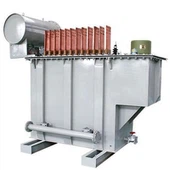
If you've ever wondered how electricity makes it from a power plant to your home-especially over long distances-the answer is partly hiding in plain sight. A high voltage power transformer is one of the most important machines in the entire electrical world. These transformers move power efficiently between circuits, while also raising or lowering voltage levels as needed. And honestly, without them, modern power grids wouldn't work the way we rely on today.

Click the image to learn more.
High voltage transformers often run in ranges like 69 kV up to 765 kV (and sometimes even higher for ultra-high-voltage systems). Their main job is simple in concept:
Step voltage up for long-distance transmission so current stays lower (which helps reduce losses-yes, the classic Joule's law matters here: P = I²R).
Step voltage back down at substations so the power becomes safe and usable for consumers.
In other words, they're the bridge between "generation" and "real life."
How It Works (And What's Inside)
At the heart of every high voltage transformer is electromagnetic induction, discovered by Michael Faraday. When alternating current flows through the primary winding, it creates a changing magnetic field in the core. That changing magnetic field then induces voltage in the secondary winding.

The turns ratio between the two windings basically tells you how much the voltage will change.
Today's high voltage transformers are engineered with several key parts:
Core: Usually built from silicon steel laminations or sometimes amorphous metal, mainly to reduce hysteresis and eddy current losses.
Windings: Often made from copper or aluminum, carefully insulated and built to handle extreme electrical stress.
Insulation system: Typically oil-impregnated paper, newer synthetic materials (like ester fluids), or dry-type systems designed to prevent dielectric breakdown.
Tank and cooling system: High voltage transformers generate plenty of heat. Many are oil-filled with cooling using radiators, forced oil, or forced air.
Bushings and tap changers: Bushings connect the transformer to the grid, while on-load tap changers (OLTC) help regulate voltage even when the transformer is carrying load.
One more thing utilities really care about is efficiency. Modern high voltage transformers can reach over 99% efficiency, but even tiny losses add up to huge energy waste across large power networks. So manufacturers keep improving designs using simulations and finite element analysis-because every fraction of a percent counts.
Types of High Voltage Power Transformers
Transformers aren't all built the same way, and engineers usually classify them based on their role and construction.
You'll commonly hear about:
Power transformers (for high voltages and large capacities)
Distribution transformers (for lower voltage networks)
Autotransformers (useful when voltage ratios can be achieved more cost-effectively)
Phase-shifting transformers (help manage power flow in complex grids)
Converter transformers (important for HVDC links)
Then there are also the cooling and insulation approaches, such as:
Oil-immersed designs (still the mainstream for high voltage, because they handle heat and insulation well)
Dry-type transformers (increasingly used in cities or places where fire safety and reduced oil spill risk matter)
Gas-insulated transformers (GIT) (using SF6 or alternative gases-often a fit for space-constrained installations)

Why They Matter More Than Ever for Renewables
Renewable energy is growing fast, and that changes the whole transmission picture. Solar and offshore wind often produce electricity far away from where people actually use it. So the grid needs long-distance transmission-and that's where high voltage transformers step in again.
In many renewable projects, transformers help take voltage from generators up to transmission levels such as 220 kV, 500 kV, or more.
And when it comes to moving massive amounts of power efficiently over very long distances, HVDC systems really shine. That's where specialized converter transformers come into play.
Countries have been pushing the envelope too. For example, China has deployed ultra-high-voltage systems-UHV AC up to around 1,000 kV and UHV DC around ±800 kV-showing just how far transmission technology is willing to go.
Manufacturing, Testing, and Quality Checks (No Guesswork Allowed)
Building a high voltage transformer isn't casual work-it's precision engineering.
Factories use heavy-duty winding equipment, vacuum drying processes, and oil treatment systems. After manufacturing, each transformer typically goes through strict factory acceptance testing. That can include:
power frequency withstand tests
impulse voltage tests
partial discharge checks
temperature rise testing
Standards also play a big role. International guidelines like IEC 60076 and IEEE C57 set expectations for design, testing, and performance, helping ensure these transformers can handle things like lightning surges, switching transients, and short-circuit forces over their expected 30–40 year lifespan.
Maintenance: Keeping Them Healthy for the Long Run
Even though high voltage transformers are built tough, they still need attention. The good news is that modern monitoring makes it easier to catch trouble early.
Utility teams often use:
Dissolved Gas Analysis (DGA) to detect early internal issues by analyzing gases in the insulating oil
Thermal imaging to spot hotspots
Vibration analysis for mechanical concerns
Electrical testing to confirm health and performance

And today, more tools are becoming "smart." With IoT sensors and even digital twin concepts, many utilities can monitor condition in near real time. Predictive maintenance can help estimate remaining life and plan replacements-so fewer transformers fail suddenly and create expensive, disruptive outages.
That's the goal, anyway. Nobody wants an unexpected breakdown.
The Challenges Ahead (And What's Next)
The transformer industry isn't without headaches.
Some common issues include:
Aging transformer fleets in older grids (many are approaching end-of-life)
Supply constraints for key materials, like grain-oriented electrical steel and copper
Environmental pressure pushing for biodegradable fluids and SF6-free alternatives
But innovation is moving too. Some of the future possibilities include:
Superconducting transformers, which could reduce both size and losses dramatically
Nanomaterial-enhanced insulation to boost performance and durability
3D-printed components to improve manufacturing flexibility
"Smart transformers" that blend transformer functions with power electronics for better grid control-especially useful as renewables and EV charging keep increasing
So yeah, the future is looking active, not stagnant.
Final Thoughts
At the end of the day, the high voltage power transformer is one of those "out of sight, out of mind" technologies-until you realize the entire grid depends on it. It quietly supports everything from remote generation sites to city substations, helping keep electricity reliable, efficient, and scalable as demand grows.
As the world leans harder into clean energy and grid resilience, investing in better high voltage transformer technology isn't just helpful-it's essential. And whether we like it or not, these transformers will remain right at the center of how modern electrical systems evolve.