

How Do Nuclear Power Plants Work? A Complete Guide to Nuclear Energy and Transformers
Nuclear power plants generate electricity by using heat from nuclear reactions to produce steam, drive turbines, and operate electrical generators. Unlike coal-fired power plants, nuclear facilities do not burn fossil fuels to produce heat. Instead, they rely on controlled nuclear fission, a process that releases substantial energy from atomic nuclei.
Understanding how do nuclear power plants work helps explain not only how nuclear energy is converted into electricity, but also why reliable power transformers, electrical distribution systems, and high-voltage equipment are essential to nuclear power generation.
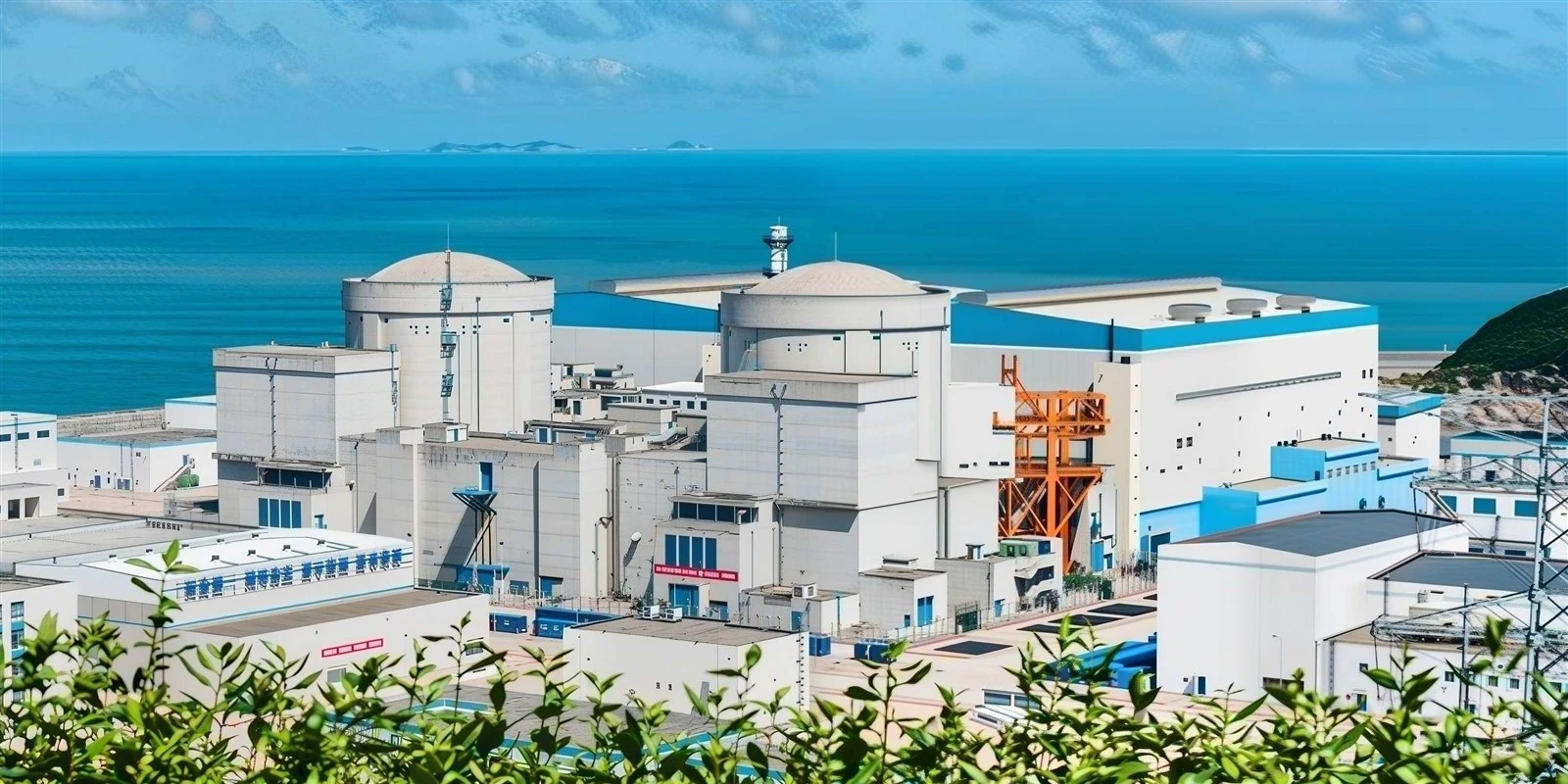
How Do Nuclear Power Plants Work?
Most commercial nuclear power plants operate using nuclear fission. Inside the reactor, uranium fuel atoms split when struck by neutrons, releasing heat and additional neutrons. These neutrons can trigger further fission reactions, creating a controlled chain reaction.
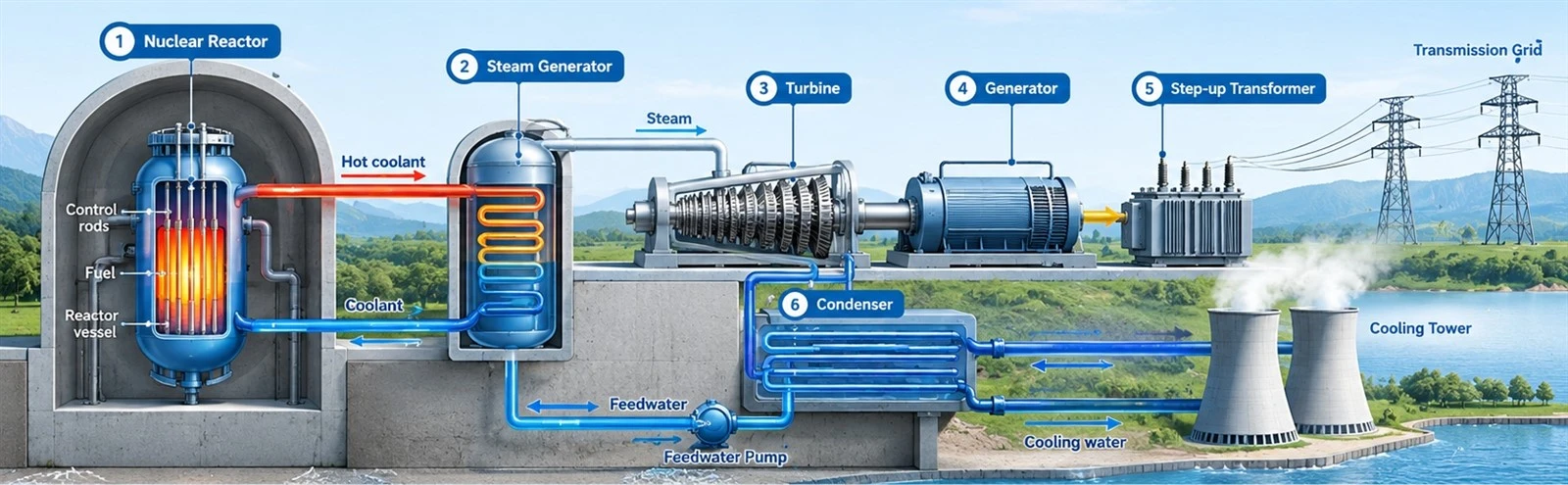
The heat generated in the reactor is transferred to a coolant, usually water. Depending on the reactor design, this heated water either produces steam directly or transfers heat to a separate water circuit. The resulting steam drives a turbine connected to an electrical generator.
The generator converts mechanical energy into electrical energy through electromagnetic induction. The electricity then passes through transformers and switchyard equipment before entering the transmission grid.
Although reactor designs vary, the basic process follows the same principle: nuclear energy → thermal energy → mechanical energy → electrical energy.
The Main Components of a Nuclear Power Plant
Several interconnected systems work together to maintain safe and reliable electricity generation.
Nuclear Reactor
The reactor is the heart of the facility. It contains nuclear fuel, control rods, a coolant system, and structures designed to maintain a controlled fission reaction. Control rods regulate the reaction by absorbing neutrons, while the coolant carries heat away from the reactor core.
Steam Generator and Turbine
In a pressurized water reactor (PWR), the reactor heats water in a primary circuit. A steam generator transfers this heat to a secondary circuit, producing steam without normally mixing the two water supplies.
In a boiling water reactor (BWR), water boils inside the reactor vessel, and the resulting steam flows toward the turbine.
The steam spins the turbine blades, converting thermal energy into mechanical rotation.
Electrical Generator
The turbine drives a generator that produces electricity. The generator output voltage depends on the plant's design, but it is generally lower than the voltage required for long-distance transmission.
A generator step-up transformer increases this voltage, helping reduce current and transmission losses when electricity travels over high-voltage lines.
Condenser and Cooling System
After passing through the turbine, steam enters a condenser, where it cools and returns  to liquid water. Cooling may be provided by a cooling tower, a body of water, or another engineered cooling system. The water is then recirculated through the appropriate circuit.
Transformers and Switchyard
Transformers are essential to the plant's electrical infrastructure. They raise generator voltage for grid transmission and reduce voltage where necessary for plant auxiliary equipment and electrical distribution.
The switchyard connects the generating station to the transmission network through circuit breakers, disconnectors, protection systems, and high-voltage conductors.
How Electricity Flows From a Nuclear Plant to the Grid
Once the generator produces electricity, several electrical systems work together to deliver it to consumers.
The main power path typically follows this sequence:
Nuclear reactor → steam turbine → generator → generator step-up transformer → switchyard → transmission grid
The generator step-up transformer increases the voltage to the level required by the connected transmission network. Depending on the project, the grid connection may operate at 115 kV, 230 kV, 345 kV, 500 kV, or another regional transmission voltage.
Higher transmission voltage allows the same amount of power to be transferred at a lower current, reducing resistive losses in transmission conductors.
Nuclear plants also require electricity to operate pumps, cooling systems, instrumentation, control equipment, and other auxiliary loads. Unit auxiliary transformers and station service transformers provide power to these systems, while emergency power supplies support essential loads if normal power sources become unavailable.
Because nuclear facilities must maintain stringent reliability and safety requirements, transformer selection involves more than voltage and capacity. Engineers must also consider short-circuit withstand capability, insulation performance, thermal behavior, protection coordination, redundancy, and applicable standards.
Why Are Transformers Important in Nuclear Power Plants?
Transformers support both electricity export and the internal operation of a nuclear generating station.
A generator step-up transformer connects the generator to the high-voltage transmission network. Its design must accommodate the plant's rated output, operating voltage, cooling requirements, and expected electrical stresses.
Auxiliary transformers supply power to plant equipment during normal operation. Depending on the electrical arrangement, separate station service transformers or standby sources may provide additional supply paths.
Transformers used in nuclear power projects must be selected according to their specific duty and safety classification. Not every transformer in a nuclear facility is safety-related; however, equipment serving designated safety systems may be subject to additional qualification, testing, documentation, and quality-assurance requirements.
Key considerations include rated power, voltage ratio, impedance, temperature rise, cooling method, insulation system, overload capability, and installation environment. Protection and monitoring systems are also important for detecting abnormal temperatures, electrical faults, and other operating problems.
For project owners, EPC contractors, and electrical engineers, choosing a transformer manufacturer with appropriate engineering capabilities and manufacturing quality controls can help reduce commissioning risks and support long-term operational reliability.
Nuclear Power Plant Efficiency and Safety
Nuclear power plants can generate large amounts of electricity continuously, although output may change during maintenance, refueling, or operational adjustments. Their thermal efficiency depends on reactor technology, steam conditions, and the overall conversion system.
Safety relies on multiple layers of protection, including reactor control systems, cooling systems, containment structures, redundant electrical supplies, and emergency procedures. Reliable electrical equipment is particularly important because many essential systems depend on continuous power.
Transformers, switchgear, protective relays, and backup power equipment must be integrated into the plant's electrical design. Regular inspection, condition monitoring, oil testing where applicable, and preventive maintenance help identify developing faults before they cause equipment failure.
Yawei Transformer Solutions for Power Infrastructure
Jiangsu Yawei Transformer Co., Ltd., established in 1993, is a transformer manufacturer serving power infrastructure and industrial applications. As a subsidiary of Yawei Group, the company offers transformer solutions across different voltage levels and application requirements.
For nuclear power projects, transformer specifications must be developed around the plant's electrical architecture, load requirements, grid connection, and applicable nuclear quality and safety requirements. Equipment intended for safety-related applications requires particular attention to project-specific qualification and documentation.
Yawei's transformer engineering and manufacturing capabilities can support discussions for suitable power transformation and distribution equipment. Project teams should confirm the required ratings, standards, testing scope, and qualification requirements with the manufacturer during the technical evaluation process.
Conclusion
Understanding how do nuclear power plants work starts with the controlled release of nuclear energy and follows its conversion into steam, mechanical rotation, and electricity. Transformers then play a critical role in delivering generated power to the transmission grid while supplying the plant's internal electrical loads.
For nuclear facilities, reliable transformer performance depends on correct engineering, suitable equipment selection, rigorous quality control, and maintenance throughout the operating life of the installation.
FAQ
Q: How soon can you delivery the transformer?
A: It depends on the quantity and capacity of the transformer, normally within one month since the date drawing confirmed by buyer.
Q: How long can you provide the quality warranty?
A: 24 months since the date transformer operated.
Q: What payment method do you accept?
A: T/T (wire transfer) preferred, L/C both accepted.


