

GSU Transformer: Complete Guide to Generator Step-Up Transformers
Electricity generated in a power plant is not usually ready to be sent directly into the transmission grid. Most generators produce power at a medium voltage level, commonly around 6.6 kV to 35 kV, while transmission systems operate at much higher voltages, such as 110 kV, 220 kV, 345 kV, 500 kV, or even higher.
This is where a GSU transformer (Generator Step-Up Transformer) comes into play. A GSU transformer increases the voltage produced by the generator so that electricity can travel long distances more efficiently with lower transmission losses.
Although it may look like just another large transformer, a GSU transformer has a much more demanding job. It operates continuously under heavy loads and must handle high temperatures, short-circuit forces, and strict reliability requirements. A failure of a GSU transformer can interrupt an entire power plant, so reliability is always a top priority.
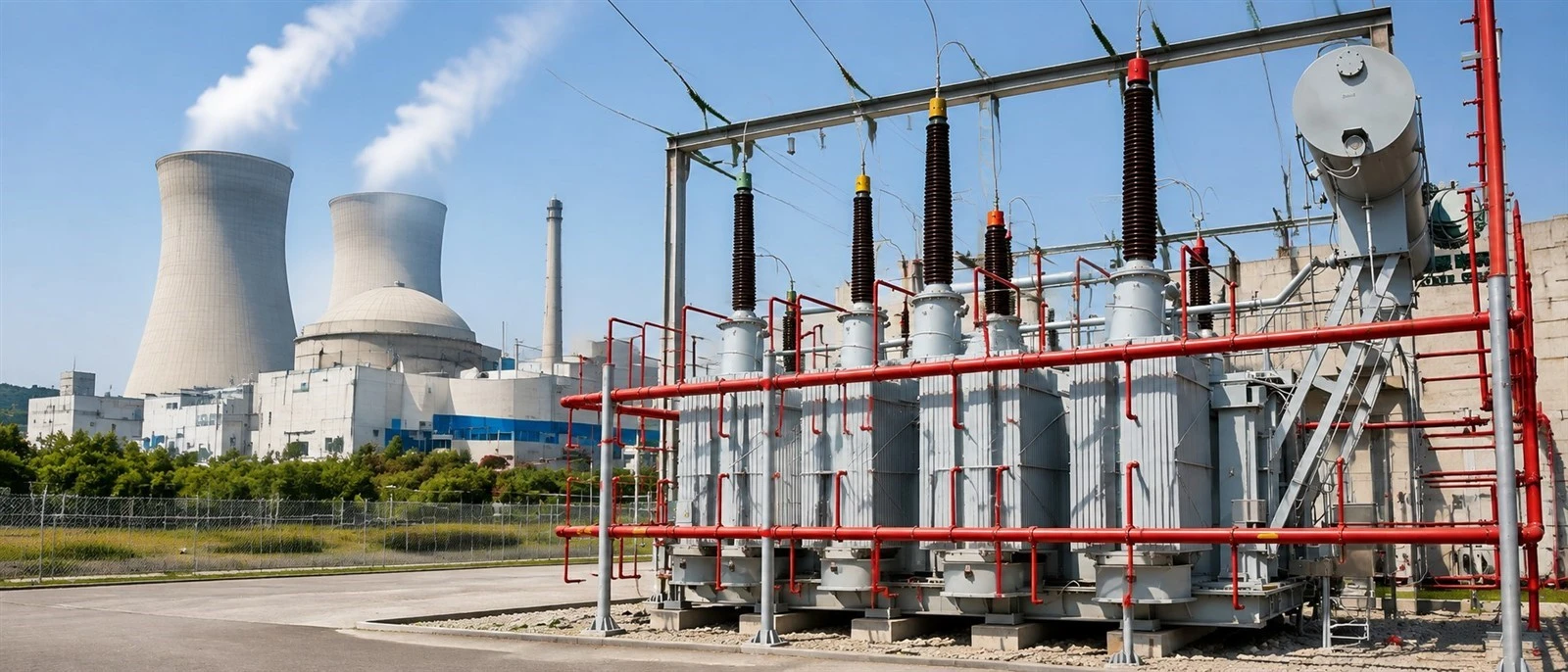
For utilities, EPC contractors, and power project developers, choosing the right generator step-up transformer is a key part of building a stable and efficient power system.
What Is a GSU Transformer?
A GSU transformer, short for Generator Step-Up Transformer, is a high-capacity power transformer installed between a generator and the transmission grid. Its main purpose is to increase the generator output voltage before electricity enters the high-voltage transmission network.
Power generators typically produce electricity at medium voltage because generating directly at transmission voltage is not practical for most applications. However, transmitting electricity at lower voltage would require much higher current, leading to greater energy losses.
By stepping up the voltage, the GSU transformer reduces current flow while allowing electricity to be transmitted more efficiently. This simple but important function makes it one of the most critical pieces of equipment in a power generation facility.
A typical power flow arrangement is:

Generator → GSU Transformer → Switchyard → Transmission Grid → End Users
GSU transformers are widely used in:
Hydropower plants
Battery energy storage projects
How Does a GSU Transformer Work?
The working principle of a GSU transformer is based on electromagnetic induction, the same basic principle used in other power transformers.
Inside the transformer, the generator supplies electrical energy to the low-voltage winding. The alternating current creates a changing magnetic field inside the transformer core. This magnetic field then induces voltage in the high-voltage winding.
The voltage increase depends on the ratio of turns between the primary and secondary windings.
For example:
| Equipment | Voltage Level |
|---|---|
| Generator Output | 13.8 kV |
| GSU Transformer Output | 230 kV |
| Transmission Network | 230 kV |
By increasing voltage from the generator level to the transmission level, the GSU transformer helps reduce I²R losses during power transmission. In simple terms, higher voltage means lower current, and lower current means less energy wasted as heat.
Where Are GSU Transformers Used?
Thermal and Gas Power Plants
In conventional power plants, generators produce large amounts of electricity that must be delivered to the grid. The GSU transformer acts as the bridge between the generator terminals and the high-voltage transmission system.
Since many thermal power plants operate continuously for decades, these transformers are designed for long service life, strong insulation performance, and reliable cooling.
Nuclear Power Plants
Nuclear facilities require extremely dependable electrical equipment. A GSU transformer used in a nuclear power plant must meet strict safety and reliability requirements because stable power transmission is essential for plant operation.
Hydropower Stations
Hydropower plants are often located far away from cities and industrial areas. GSU transformers allow electricity generated by turbines to be transmitted efficiently over long distances.
Renewable Energy Projects
The growth of renewable energy has created new demand for GSU transformers. Large wind farms, solar farms, and hybrid energy projects all rely on step-up transformers to connect generation equipment with the grid.
Renewable projects can also have unique requirements, so transformer designs are often customized based on project capacity, grid conditions, and operating environment.
Key Specifications of GSU Transformers
GSU transformers are among the largest transformers used in electrical power systems. Their design depends on generator capacity, grid voltage, installation conditions, and project requirements.
| Parameter | Typical Range |
|---|---|
| Rated Capacity | 50 MVA – 1000+ MVA |
| Generator Voltage | 6.6 kV – 35 kV |
| Transmission Voltage | 110 kV – 765 kV |
| Phase Type | Three-phase or single-phase bank |
| Cooling Type | ONAN / ONAF / OFAF |
| Insulation System | Oil-paper insulation |
| Frequency | 50 Hz or 60 Hz |
| Standards | IEC 60076 / IEEE C57 |
Most large GSU transformers use oil-immersed designs. Transformer oil provides both electrical insulation and cooling, which is especially important when handling hundreds of megavolt-amperes of power.
Cooling Methods Used in GSU Transformers
Heat management is one of the biggest challenges in large power transformers. If a transformer operates at excessive temperatures for a long time, insulation aging can accelerate and reduce service life.
Different cooling methods are selected depending on transformer size and operating requirements.
| Cooling Type | Description |
|---|---|
| ONAN (Oil Natural Air Natural) | Oil circulates naturally inside the transformer and heat is released through radiators using natural air circulation. |
| ONAF (Oil Natural Air Forced) | Cooling fans improve heat dissipation and allow the transformer to handle higher loads. |
| OFAF (Oil Forced Air Forced) | Oil pumps and cooling fans are used for stronger cooling performance in large-capacity transformers. |
Large GSU transformers often use multiple cooling stages so they can maintain stable temperatures under different load conditions.
GSU Transformer vs Power Transformer
A GSU transformer is a type of power transformer, but its role is more specialized. The biggest difference is that it connects directly to a generator and must handle the operating characteristics of power generation equipment.
| Feature | GSU Transformer | General Power Transformer |
|---|---|---|
| Main Function | Connect generator to transmission grid | Transfer power between electrical networks |
| Installation Location | Power generation plant | Substation or grid network |
| Operating Condition | Usually continuous high load | Variable loading conditions |
| Low Voltage Side | Generator output voltage | Distribution or transmission voltage |
| Main Design Focus | High reliability and thermal performance | Efficiency and voltage regulation |
| Capacity | Usually very large | Wide range of ratings |
Because of their critical role, GSU transformers are usually designed with extra attention to mechanical strength, thermal performance, and fault withstand capability.
GSU Transformer Protection and Maintenance
A GSU transformer is a major investment, and proper protection and maintenance are necessary to keep it operating reliably.
Modern protection systems usually include differential protection, overcurrent protection, Buchholz relay protection, temperature monitoring, and pressure relief devices.
Regular maintenance helps identify problems before they become serious failures.
| Maintenance Item | Purpose |
|---|---|
| Transformer Oil Testing | Checks insulation quality and oil condition |
| Dissolved Gas Analysis (DGA) | Detects overheating, arcing, and internal faults |
| Insulation Resistance Testing | Evaluates insulation condition |
| Temperature Monitoring | Prevents excessive thermal stress |
| Visual Inspection | Identifies oil leaks or mechanical issues |
Among these methods, transformer oil testing and DGA are especially valuable because they can reveal internal problems at an early stage, often before visible damage occurs.
How to Choose a GSU Transformer Manufacturer?
Selecting a reliable GSU transformer manufacturer is an important step in any power generation project. These transformers are custom-designed, expensive, and expected to operate for several decades.
When evaluating a supplier, several factors should be considered.
Manufacturing capability is one of the first things to check. Large GSU transformers require advanced production equipment, experienced engineers, and strict quality control throughout manufacturing.
Testing capability is also essential. A qualified manufacturer should provide comprehensive factory testing, including:
| Test | Purpose |
|---|---|
| No-load Loss Test | Measures core losses |
| Load Loss Test | Evaluates winding losses |
| Temperature Rise Test | Confirms cooling performance |
| Insulation Test | Verifies insulation strength |
| Partial Discharge Test | Checks insulation defects |
| Factory Acceptance Test (FAT) | Confirms transformer performance before delivery |
Compliance with international standards such as IEC 60076 and IEEE C57 is also important, especially for international projects.
Future Development Trends of GSU Transformers
As electricity demand continues to rise and renewable energy projects expand, GSU transformers are becoming even more important.
One major trend is the need for higher-capacity transformers. Large power plants and renewable energy projects require equipment capable of handling increasing power output.
Another trend is digital monitoring. Modern GSU transformers are increasingly equipped with sensors and online monitoring systems that provide real-time information about temperature, oil condition, and operating status.
Energy efficiency is also receiving more attention. Improvements in transformer core materials, winding designs, and cooling systems are helping reduce losses and improve overall performance.
Conclusion
A GSU transformer (Generator Step-Up Transformer) is a vital component that connects power generators with high-voltage transmission networks. By increasing generator voltage, it allows electricity to be transmitted efficiently while reducing energy losses.
From traditional thermal and nuclear power plants to modern wind and solar projects, GSU transformers provide the reliability needed for large-scale electricity generation.
For utilities, EPC contractors, and power developers, selecting a properly designed generator step-up transformer from an experienced manufacturer can make a significant difference in system reliability, operating efficiency, and long-term project performance.
Q: How soon can you delivery the transformer?
A: It depends on the quantity and capacity of the transformer, normally within one month since the date drawing confirmed by buyer.
Q: How long can you provide the quality warranty?
A: 24 months since the date transformer operated.
Q: What payment method do you accept?
A: T/T (wire transfer) preferred, L/C both accepted.


