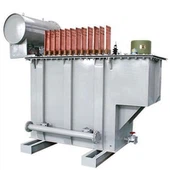
Understanding Power Transformers vs Distribution Transformers
Power transformers and distribution transformers are both essential electrical transformer types, but they serve different roles in the U.S. electric power system. A power transformer moves large amounts of electricity through transmission or substation networks, while a distribution transformer delivers usable power closer to homes, businesses, and industrial loads. The best choice depends on where the equipment sits in the system, how much load it must carry, and how transformer efficiency is evaluated over time.

Which transformer fits your application?
Choose a power transformer when the job involves high-capacity bulk power transfer, utility substations, generation interconnection, or large industrial infrastructure. Choose a distribution transformer when the goal is to step voltage down for end-use delivery, such as feeding a neighborhood, commercial building, campus, plant, or service area.
A simple way to frame the power transformer vs distribution transformer decision is to ask whether the equipment is supporting the grid backbone or serving the final customer load. Power transformers are usually selected for system capacity, voltage transformation, reliability, and grid stability. Distribution transformers are usually selected for local load profile, installation environment, lifecycle losses, and service continuity.
Key fit summary:
Power transformer: Best for substations, transmission networks, generating stations, and heavy industrial systems.
Distribution transformer: Best for utility distribution circuits, commercial service, residential neighborhoods, and localized load centers.
Main decision point: Bulk power movement versus final voltage delivery.
Efficiency focus: High-load performance for power units, all-day operating losses for distribution units.
Core differences that affect selection
Although both devices rely on electromagnetic induction, their operating priorities are not the same. A power transformer is built for larger system duties, often at high voltage and high capacity, where failures can affect wide areas of service. A distribution transformer is built for repeated, everyday service closer to customers, where quiet operation, dependable local delivery, and low standby losses matter.
Compare them by the criteria that usually drive real-world decisions:
System role
Power transformer: Transfers bulk electrical energy between voltage levels in transmission, subtransmission, or major substation systems.
Distribution transformer: Steps voltage down from distribution lines to service levels used by buildings, equipment, or localized networks.
Operating load pattern
Power transformer: Commonly designed around heavier, more consistent loading, though actual utility loading varies by system demand.
Distribution transformer: Often experiences variable load throughout the day, including light-load periods, peak demand windows, and seasonal changes.
Installation location
Power transformer: Typically found in utility substations, power plants, switching stations, and large industrial yards.
Distribution transformer: Commonly installed on poles, pads, vaults, or inside commercial electrical rooms, depending on local utility and code requirements.
Design priority
Power transformer: Prioritizes capacity, voltage regulation, system protection coordination, cooling, and long-term reliability.
Distribution transformer: Prioritizes practical service delivery, compact installation, low no-load losses, safety, and maintainability.

Which option is more efficient in everyday operation?
Transformer efficiency depends on the load profile, not just the nameplate. A power transformer can be highly efficient when operating near its intended load range, while a distribution transformer must remain efficient even when customer demand is low because it may stay energized all day and all year.
For comparison, think about two categories of losses:
No-load losses: Energy used whenever the transformer is energized, even if little power is being delivered. This is especially important for a distribution transformer because many units sit online continuously across utility service areas.
Load losses: Energy lost when current flows through the transformer under demand. This becomes more important as loading increases, especially in large power transformer applications.
Practical implication:
If the transformer will operate near heavy load for long periods, evaluate full-load and high-load performance carefully.
If the transformer will spend many hours lightly loaded, pay close attention to no-load losses.
If the load changes dramatically by season, shift, or customer behavior, use a realistic load profile instead of judging by capacity alone.
This is why transformer efficiency is not a one-size-fits-all number. In U.S. commercial and utility planning, the most economical transformer is often the one that balances purchase cost, losses, maintenance, site conditions, and expected service life.
Cost, maintenance, and installation considerations
Power transformers usually require more planning because they are larger assets connected to critical infrastructure. Site preparation, oil containment where applicable, protection systems, cooling equipment, testing, transportation, and outage coordination can all influence the project. For utilities and large facilities, the procurement process may also involve detailed engineering review and coordination with applicable IEEE, ANSI, NEMA, and utility standards.
Distribution transformers are generally more common and more standardized, but selection still matters. A pad-mounted transformer outside a retail center has different needs than a pole-mounted unit on a residential feeder or a dry-type unit inside a commercial building. Local utility requirements, National Electrical Code considerations, grounding, clearances, accessibility, and environmental exposure all affect the final specification.
Decision factors to review before choosing either type:
Voltage transformation needed: Identify primary and secondary voltage requirements.
Load size and profile: Estimate peak demand, average demand, and future growth.
Installation environment: Consider indoor, outdoor, pole, pad, vault, or substation placement.
Cooling and insulation type: Match the design to safety, reliability, and site constraints.
Loss evaluation: Compare no-load and load losses based on actual expected use.
Maintenance access: Plan for inspection, testing, replacement logistics, and utility coordination.
Compliance requirements: Align with local codes, utility standards, and project specifications.

Strengths and trade-offs of each transformer type
A power transformer is the better fit when the electrical system needs strong capacity and stable voltage transformation at the utility or industrial backbone level. Its main advantage is its ability to handle large power flows as part of a coordinated network. The trade-off is that it typically involves more engineering, space, capital planning, and specialized maintenance.
A distribution transformer is the better fit when the equipment must serve everyday loads closer to the customer. Its main advantage is practical deployment across buildings, neighborhoods, and local service points. The trade-off is that small efficiency differences can matter over time because so many distribution units remain energized continuously.
Quick recommendation:
Choose a power transformer if the project involves transmission, substation capacity, generation output, or heavy industrial power movement.
Choose a distribution transformer if the project involves stepping power down for facility service, neighborhood delivery, or localized customer loads.
Review both carefully if the project sits at the boundary between utility service and private electrical infrastructure, such as a large manufacturing plant, data center, hospital campus, or university system.

Final decision summary
The power transformer vs distribution transformer comparison comes down to role, scale, and operating pattern. Power transformers support high-capacity movement of electricity across the grid or major facility infrastructure. Distribution transformers bring that electricity down to usable levels for customers and equipment.
For most U.S. projects, the right answer starts with the electrical one-line diagram and the load study. Once voltage, capacity, location, duty cycle, and efficiency goals are clear, the correct transformer type becomes much easier to specify. When in doubt, coordinate with a qualified electrical engineer, the serving utility, and applicable code authorities before final equipment selection.
Q: How soon can you delivery the transformer?
A: It depends on the quantity and capacity of the transformer, normally within one month since the date drawing confirmed by buyer.
Q: How long can you provide the quality warranty?
A: 24 months since the date transformer operated.
Q: What payment method do you accept?
A: T/T (wire transfer) preferred, L/C both accepted.