

Power Transformer and Distribution Transformer: Types, Applications, and Selection Guide
Transformers are a key part of almost every modern electrical system. From utility substations and industrial plants to commercial buildings, renewable energy projects, and EV charging infrastructure, the right transformer helps move electrical energy safely and efficiently from one voltage level to another.
A power transformer, distribution transformer, dry type transformer, or pad mounted transformer may look similar at first, but each is designed for a different operating environment and electrical application. Understanding these differences makes transformer selection much easier.
This guide explains the main transformer types, their applications, construction methods, and the factors engineers and procurement teams should consider when choosing a transformer.
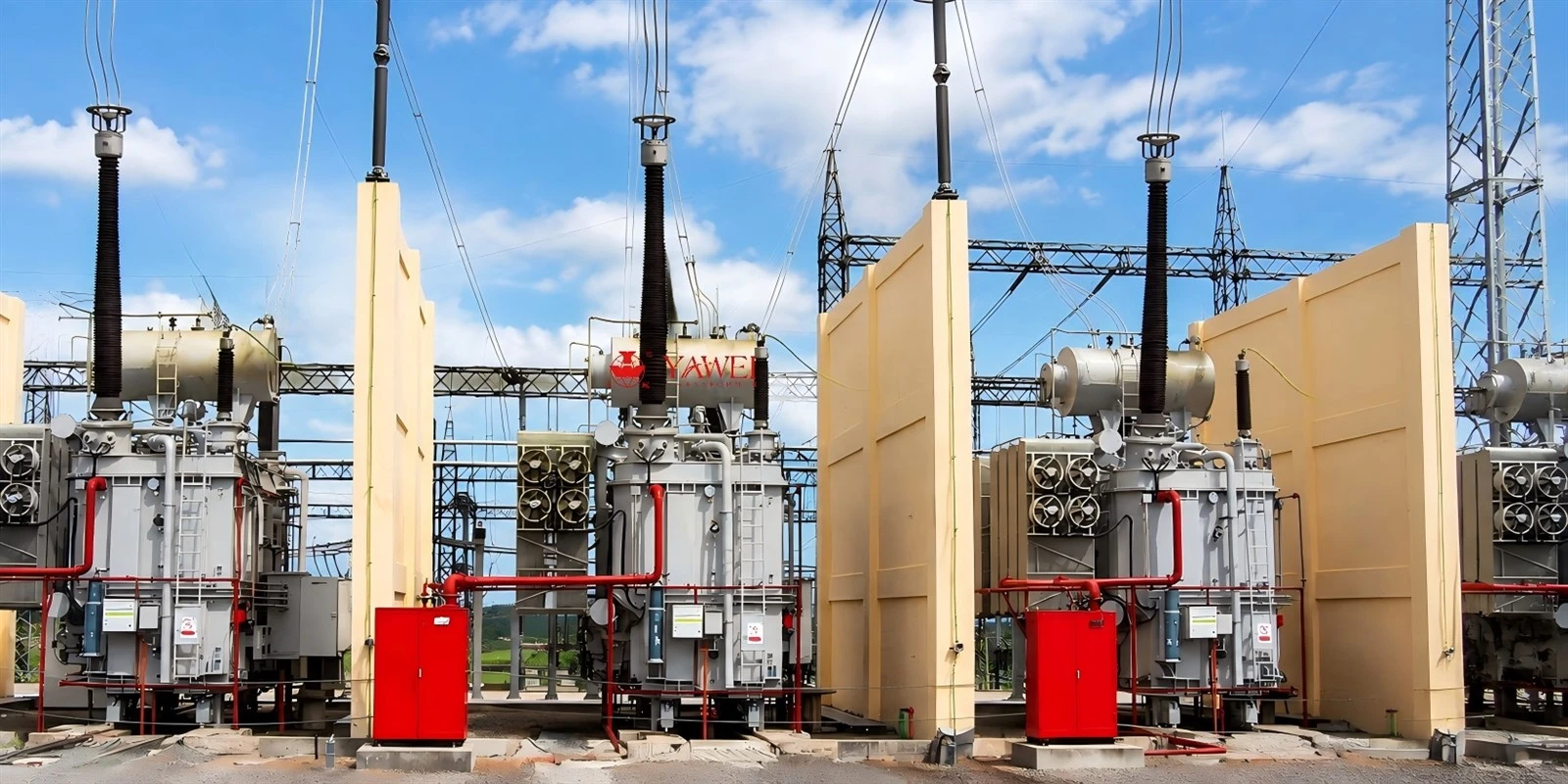
What Is a Power Transformer?
A power transformer is an electrical device used to transfer electrical energy between circuits while changing voltage and current levels through electromagnetic induction.
Power transformers are commonly installed in high-voltage transmission and substation systems. They are designed for relatively high power ratings and are typically optimized for efficient operation when connected to electrical grids.
A typical transmission system may use a step up transformer at a generating station to increase voltage for long-distance transmission. At the receiving end, a step down transformer reduces the voltage to levels suitable for distribution and end users.
Depending on the project, a power transformer may be an oil immersed transformer with an on-load or off-load tap changer, cooling equipment, bushings, protection devices, and monitoring accessories.
Power Transformer vs. Distribution Transformer
Although both transformers change voltage, their operating conditions and applications are different.
| Feature | Power Transformer | Distribution Transformer |
|---|---|---|
| Main application | Transmission and substations | Local power distribution |
| Typical location | Power plants and major substations | Utility networks, buildings, industrial sites |
| Power rating | Generally higher | Generally lower |
| Load operation | Often designed around higher loading and system efficiency | Frequently energized continuously |
| Voltage | Medium/high/extra-high voltage | Medium voltage to low voltage |
| Common construction | Oil immersed | Oil filled or dry type |
| Installation | Substation or outdoor facility | Pole, pad, indoor or compact substation |
A distribution transformer is generally closer to the final electricity consumer. It reduces medium-voltage electricity to a usable low-voltage supply for buildings, factories, commercial facilities, and other loads.
What Is a Three Phase Transformer?
A three phase transformer is designed for three-phase electrical systems. Instead of using three independent single-phase transformers, a three-phase transformer can integrate the three phases into one transformer assembly.
Three-phase systems are widely used in industrial facilities, commercial buildings, utilities, data centers, renewable energy projects, and large EV charging installations.
A three phase distribution transformer is particularly common in medium-voltage distribution systems. Typical voltage combinations depend on the local grid and project requirements, such as medium-voltage primary voltage with 400 V, 415 V, 480 V, or 690 V secondary voltage.
The correct transformer specification depends on:
Rated capacity
Primary and secondary voltage
Frequency
Vector group
Impedance
Insulation level
Cooling method
Installation environment
Required efficiency
Tap-changing requirements
Dry Type Transformer
A dry type transformer uses air or another solid insulation system rather than liquid insulation. Because there is no transformer oil inside the main insulation system, dry transformers are often considered for indoor installations and locations where reducing liquid-related fire or environmental concerns is important.
Dry type transformers are widely used in: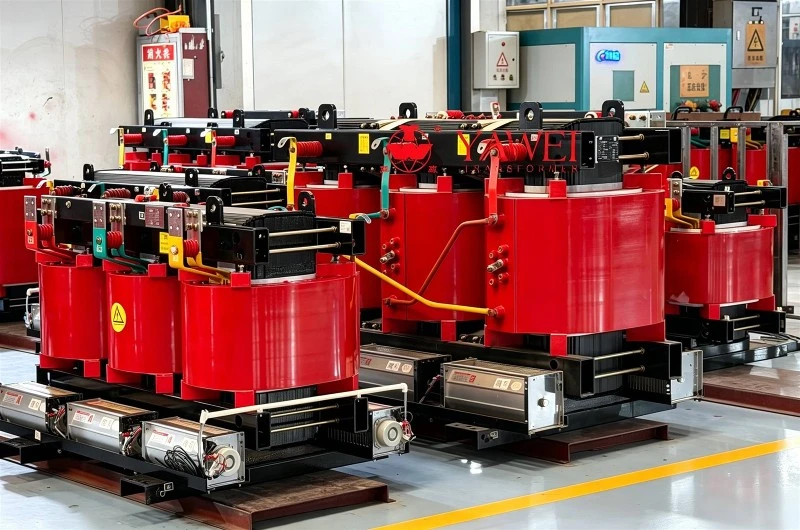
Commercial buildings
Hospitals
Data centers
Industrial plants
Metro and railway facilities
Renewable energy systems
Underground facilities
High-rise buildings
A dry type distribution transformer can be used to reduce medium voltage to low voltage while providing a compact and relatively low-maintenance solution.
Cast Resin Transformer
A cast resin transformer is a type of dry type transformer in which the windings are encapsulated with epoxy resin. The resin provides electrical insulation and helps protect the windings from moisture, dust, and environmental contamination.
This makes cast resin transformers suitable for demanding indoor and industrial environments.
Cast Coil Transformer
The term cast coil transformer is also used for dry-type transformers with resin-encapsulated windings. Depending on the manufacturer and regional terminology, cast coil and cast resin may describe closely related transformer construction methods.
For a project specification, however, engineers should check the exact winding construction, insulation system, temperature class, cooling method, and applicable standards rather than relying only on the product name.
Oil Immersed Transformer and Oil Filled Transformer
An oil immersed transformer uses insulating liquid around the core and windings for electrical insulation and heat transfer.
The term oil filled transformer is also commonly used to describe liquid-filled transformer designs.
Compared with many dry-type designs, oil-filled transformers can provide effective heat dissipation and are widely used for outdoor distribution and substation applications.
Common applications include: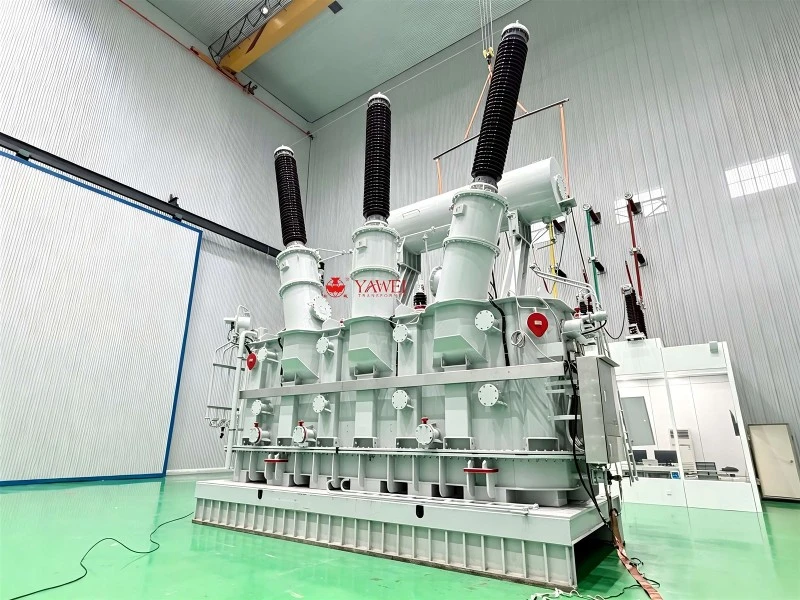
Utility substations
Industrial substations
Renewable energy projects
Commercial distribution
Power generation
Large electrical infrastructure
Modern insulating liquids can include conventional mineral oil as well as alternative fluids selected for specific environmental, fire-safety, or performance requirements.
Transformer oil also needs appropriate monitoring and maintenance. Depending on the equipment and service conditions, oil testing may include dielectric strength, moisture, acidity, dissolved gas analysis, and other diagnostic measurements.
Pad Mounted Transformer
A pad mounted transformer is a ground-level transformer installed inside a secure enclosure, normally on a concrete pad.
Pad-mounted transformers are commonly used where overhead distribution lines are replaced by underground cables. Medium-voltage cables enter the transformer enclosure, the transformer reduces the voltage, and low-voltage cables then supply the customer or facility.
Typical applications include: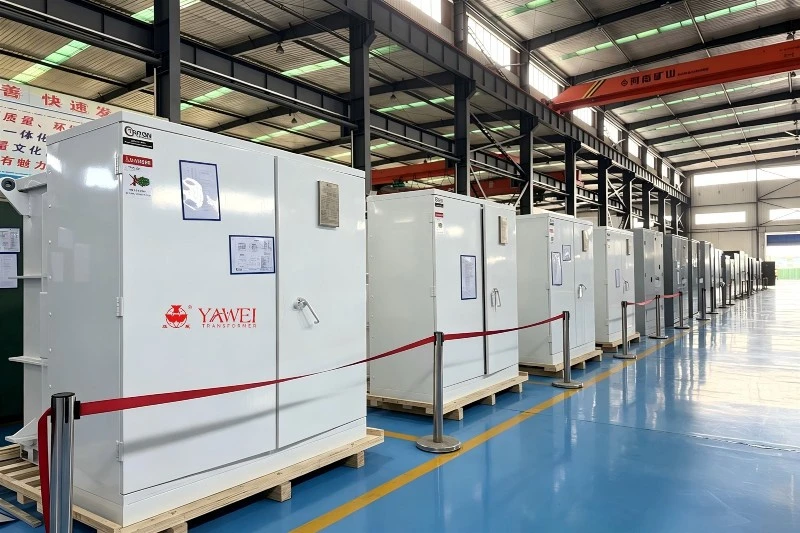
Residential developments
Commercial buildings
Shopping centers
Industrial parks
Data centers
Solar projects
EV charging infrastructure
A pad mounted transformer can be designed as an oil filled transformer and may incorporate dead-front or live-front construction, depending on the application and local requirements.
Pole Mounted Transformer
A pole mounted transformer is installed on a utility pole and is commonly used in overhead electrical distribution systems.
The transformer reduces medium-voltage electricity from an  overhead distribution line to a lower voltage suitable for customers.
Pole-mounted transformers are particularly common in traditional residential and rural distribution networks because they can be installed directly along existing overhead infrastructure.
Compared with pad-mounted equipment, pole-mounted transformers have different requirements for mechanical support, clearances, wildlife protection, weather exposure, and maintenance access.
Medium Voltage Transformer
A medium voltage transformer connects medium-voltage electrical systems with other voltage levels.
The exact definition of medium voltage varies somewhat between standards and markets, but common distribution systems include voltages such as 6 kV, 10 kV, 11 kV, 13.8 kV, 20 kV, and 33 kV.
Medium-voltage transformers are widely used in:
Utility distribution → Industrial plants → Commercial buildings → Renewable energy → EV infrastructure → Data centers
A medium voltage transformer can be oil filled or dry type depending on capacity, installation location, fire-safety requirements, environmental conditions, and project specifications.
High Voltage Transformer
A high voltage transformer is designed for systems operating at higher voltage levels and requires specialized insulation, clearances, bushings, testing, and protection.
High-voltage transformers are commonly installed in transmission substations and large power infrastructure.
At a generating station, a transformer may function as a step up transformer, increasing generator voltage before electricity enters the transmission network. At a receiving or distribution substation, a step down transformer reduces voltage for subsequent distribution stages.
High-voltage transformer design requires careful consideration of insulation coordination, lightning impulse withstand, switching impulse withstand, short-circuit strength, cooling, tap changing, and transformer protection.
Substation Transformer
A substation transformer is installed within an electrical substation to  transfer power between different voltage levels.
A typical power network may look like this:
Power generation → Step-up transformer → High-voltage transmission → Receiving substation → Step-down transformer → Distribution network → Customers
Substation transformers can range from medium-sized distribution equipment to very large power transformers used in transmission networks.
The final specification is normally determined by the utility or project engineer based on system voltage, capacity, fault level, load profile, network configuration, and future expansion requirements.
Unit Substation
A unit substation combines major substation components into an integrated assembly. A typical arrangement may include a medium-voltage switchgear section, transformer, and low-voltage switchgear or distribution equipment.
This approach can simplify installation and reduce the amount of separate field equipment required.
Unit substations are frequently used in:
Manufacturing plants
Commercial facilities
Data centers
Mining operations
Infrastructure projects
Large buildings
Industrial distribution systems
For industrial applications, the unit substation can be engineered around the facility's specific load requirements rather than selecting the transformer separately from the rest of the electrical distribution system.
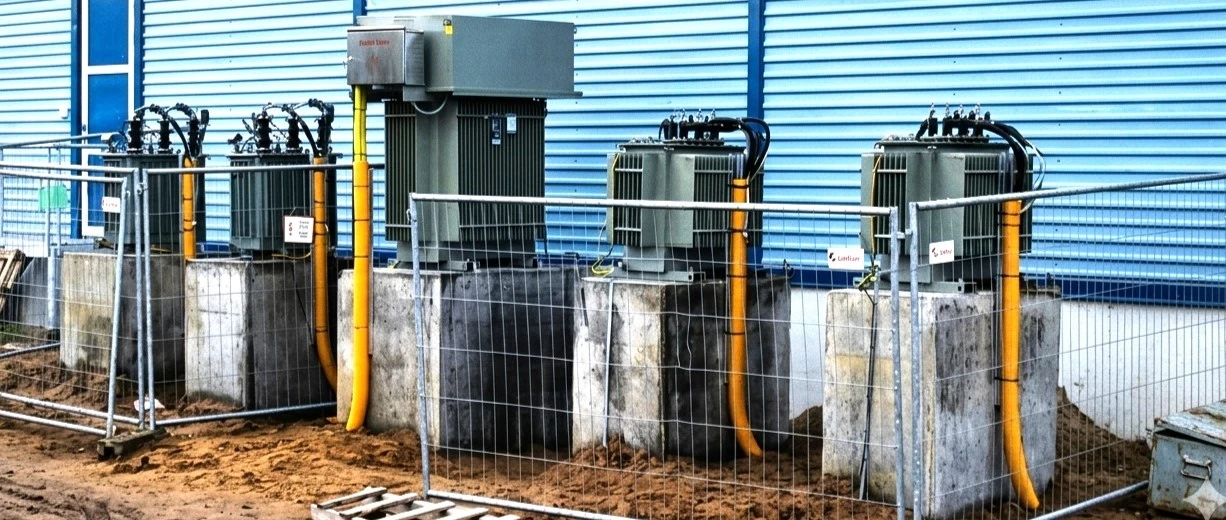
Grounding Transformer
A grounding transformer, sometimes called an earthing transformer, provides a neutral point for systems that otherwise do not have a suitable neutral connection.
It can be used to establish a grounding reference and provide a controlled path for zero-sequence current during ground faults.
Grounding transformers are often used in medium-voltage networks, industrial power systems, renewable energy plants, and other electrical systems where grounding arrangements need to be carefully controlled.
The grounding transformer should be selected together with the project's grounding system, protection scheme, fault-current requirements, and neutral grounding equipment.
Isolation Transformer
An isolation transformer provides electrical isolation between the primary and secondary circuits while maintaining the required voltage relationship.
The primary and secondary windings are electrically separated, which can help reduce the direct transfer of certain disturbances between connected circuits.
Isolation transformers are used in applications where electrical separation is important, including sensitive equipment, industrial control systems, medical facilities, and specialized power supplies.
An isolation transformer may also be combined with shielding or other design features where the project requires additional control of electrical noise or transient disturbances.
How to Choose the Right Transformer
Transformer selection should start with the electrical system rather than the transformer name.
For procurement teams and electrical engineers, several specifications are particularly important.
| Parameter | Why It Matters |
|---|---|
| Rated power | Determines how much load the transformer can supply |
| Primary voltage | Must match the upstream electrical system |
| Secondary voltage | Must match the downstream equipment |
| Frequency | Usually 50 Hz or 60 Hz depending on the market |
| Phase | Single-phase or three-phase |
| Impedance | Influences fault current and voltage regulation |
| Insulation level | Important for system voltage and transient conditions |
| Cooling | Determines thermal performance |
| Tap range | Helps compensate for voltage variations |
| Installation | Indoor, outdoor, pole, pad, or substation |
| Ambient temperature | Affects transformer thermal design |
| Noise requirements | Important for buildings and sensitive sites |
| Efficiency | Affects operating costs over the transformer life |
| Applicable standards | Ensures compliance with project requirements |
The choice between an oil immersed transformer and a dry type transformer, for example, should consider much more than purchase price.
Installation conditions, fire protection, maintenance requirements, environmental regulations, loading, available space, and total cost of ownership can all influence the final decision.
Transformer Applications Across Modern Power Systems
Today's transformers are no longer limited to traditional utility distribution.
Large industrial facilities may use three phase transformers and unit substations to distribute power throughout production lines. Data centers may require dry-type or cast resin transformers designed around high-density electrical loads and strict reliability requirements.
Solar and wind projects commonly use transformers to raise the output voltage before electricity enters a collection or transmission system.
Battery energy storage systems also require specially engineered transformer solutions.
EV charging infrastructure presents another growing application. High-power charging stations can create substantial electrical loads, making appropriate medium-voltage distribution and transformer capacity essential.
In each case, transformer selection needs to match the actual electrical architecture rather than relying on a standard model without reviewing the project requirements.
Why Transformer Manufacturing Quality Matters
Transformer performance depends on many details that are not always visible from the nameplate.
Core material and construction influence no-load losses. Winding design affects load losses, short-circuit strength, and temperature rise.
Insulation materials influence dielectric performance and service life. The tank, cooling system, bushings, tap changer, protection devices, and accessories all contribute to overall reliability.
Manufacturing quality control is therefore important from raw material inspection through assembly and final testing.
For larger transformers, factory testing can include winding resistance, turns ratio, impedance, dielectric tests, temperature-rise testing, no-load and load-loss measurements, and other tests required by the applicable standards and project specification.
Transformer Manufacturer for Global Power Projects
Jiangsu Yawei Transformer Co., Ltd. is a transformer manufacturer serving utility, industrial, renewable energy, commercial, and infrastructure applications.
Yawei Transformer manufactures a broad range of transformer products, including power transformers, distribution transformers, dry type transformers, oil immersed transformers, pad mounted transformers, medium voltage transformers, high voltage transformers, unit substations, and customized transformer solutions.
Transformer configurations can be developed according to project requirements covering voltage, capacity, cooling method, insulation system, installation environment, connection group, tap changing, and applicable standards.
For EPC contractors, utilities, electrical contractors, and industrial procurement teams, providing the complete technical specification before quotation can help reduce design changes and shorten the equipment-selection process.
Final Thoughts
There is no single transformer design that fits every electrical system.
A power transformer may be required for a high-voltage transmission substation, while a distribution transformer may be better suited to a local utility network. A pad mounted transformer can serve underground distribution, while a pole mounted transformer is commonly used for overhead networks. Indoor projects may specify a dry type transformer, including a cast resin transformer or cast coil design.
For larger systems, engineers may need a substation transformer, unit substation, grounding transformer, or isolation transformer as part of a more complete electrical distribution architecture.
The most important step is to match the transformer to the actual system voltage, load profile, environment, installation method, protection requirements, and applicable standards.
If you are sourcing a transformer for a utility, industrial, renewable energy, data center, EV charging, or commercial project, provide the required voltage, capacity, frequency, phase, installation conditions, and technical standards. A transformer manufacturer can then develop a suitable configuration and quotation around the project requirements.
Q: How soon can you delivery the transformer?
A: It depends on the quantity and capacity of the transformer, normally within one month since the date drawing confirmed by buyer.
Q: How long can you provide the quality warranty?
A: 24 months since the date transformer operated.
Q: What payment method do you accept?
A: T/T (wire transfer) preferred, L/C both accepted.


