Innovations in Electric Power Distribution Systems
Electric power distribution is the part of the grid that delivers usable electricity from substations to homes, businesses, campuses, factories, and public infrastructure. Today's power distribution systems are changing quickly because they must handle two-way power flows, renewable generation, electric vehicles, battery storage, extreme weather risk, and higher customer expectations for reliability.
This guide explains how the electric power distribution system works, what innovations are reshaping it, and how engineers, utilities, facility owners, and energy teams can think about modernization in practical terms.

What is changing in electric power distribution systems?
Electric power distribution systems are moving from mostly passive networks into active, data-rich platforms that can monitor conditions, isolate faults, balance distributed energy resources, and support cleaner electrification. Traditional distribution networks were designed mainly to move electricity in one direction, from the transmission grid to end users. Modern systems increasingly need to manage power that can move in multiple directions, including from rooftop solar, batteries, microgrids, and other local generation sources back into the grid.
This shift affects planning, equipment selection, operating procedures, protection settings, cybersecurity, and customer service. A distribution feeder that once served predictable loads may now include solar inverters, EV chargers, controllable building loads, and storage systems that change the feeder's electrical behavior throughout the day. Innovation in electric power distribution engineering is therefore not just about adding digital devices. It is about rethinking how the grid senses, decides, protects, and adapts.
The most important changes include:
More distributed energy resources connected at the edge of the grid.
Greater use of sensors, communications, and automation.
Advanced software for forecasting, control, and outage management.
New electric power distribution equipment designed for flexibility and resilience.
Stronger focus on cybersecurity, interoperability, and data quality.
Planning methods that account for electrification, climate risk, and customer participation.

The basic structure of an electric power distribution system
To understand innovation, it helps to start with the fundamentals. Electric power transmission and distribution are connected parts of the same power delivery chain, but they operate at different scales. Transmission systems move large amounts of electricity over long distances at high voltages, while distribution systems reduce voltage and deliver power locally to end users.
A simplified electric power distribution diagram usually begins with a transmission line feeding a distribution substation. At the substation, transformers step voltage down to distribution levels. From there, feeders carry electricity through overhead lines, underground cables, switches, reclosers, capacitor banks, voltage regulators, and service transformers before reaching individual customers.
A typical distribution flow
A practical, simplified sequence looks like this:
Generation or bulk supply sends power into the transmission network.
Transmission lines move power over longer distances at high voltage.
Distribution substations step the voltage down and connect the bulk grid to local circuits.
Primary distribution feeders carry electricity through neighborhoods, commercial districts, or industrial zones.
Distribution transformers reduce voltage again for customer use.
Secondary distribution circuits deliver power to panels, meters, and end-use equipment.
Customers and local resources consume, produce, store, or manage electricity depending on their equipment.
In older designs, this flow was easy to represent as a one-way path. In modern networks, an electric power distribution diagram may show multiple interacting resources, including distributed solar, battery energy storage systems, EV charging stations, building management systems, smart meters, and microgrid controllers. The diagram becomes less like a straight line and more like a connected operating ecosystem.

Why distribution is becoming more complex
The distribution grid is where many energy trends become real operational challenges. A utility may approve new EV charging loads, connect customer solar systems, support new commercial developments, and maintain aging electric power distribution equipment all on the same feeder. Each change can affect voltage, thermal loading, short-circuit current, power quality, and protection coordination.
Complexity also comes from timing. A circuit can behave very differently on a mild spring day than during an evening peak, a heat wave, a storm restoration event, or a period of high solar output and low local demand. The grid must remain safe and reliable across all of these conditions, not just under average operation.
Smart grid technology is making distribution more visible
For much of its history, distribution operation depended on limited field measurements, customer outage calls, periodic inspections, and engineering models. Smart grid technology changes that by adding more visibility across feeders, substations, transformers, and customer connection points. With better data, operators can detect problems earlier, plan upgrades more accurately, and restore service more efficiently.
Visibility begins with measurement. Smart meters, line sensors, fault indicators, power quality monitors, transformer monitors, and substation devices can provide information on voltage, current, loading, outages, and equipment condition. When those measurements are connected through secure communications and integrated into operational systems, they support more responsive decision-making.
Advanced metering and edge data
Advanced meters do more than record energy use for billing. They can help identify outage locations, voltage issues, reverse power flow, and abnormal usage patterns. For customers, meter data can support energy management and more accurate insight into how electrification changes demand.
At the grid edge, data can also come from inverters, EV chargers, building controls, and distributed storage systems. The challenge is not simply collecting more information. Utilities and energy managers need systems that can filter, validate, organize, and act on that information without overwhelming operators.
Distribution automation
Distribution automation uses sensors, controls, switches, reclosers, and software to respond to grid conditions with less manual intervention. One common application is fault location, isolation, and service restoration. When a fault occurs, automated devices can help isolate the affected section and restore power to customers on healthy sections of the circuit.
Automation can also support voltage control, load balancing, capacitor switching, and feeder reconfiguration. The benefit is not only faster action. It is more consistent action, especially during events when field crews and control room teams are managing many issues at once.
Operational software platforms
Modern power distribution systems often depend on software platforms that combine real-time data, network models, outage information, and forecasting. These may include distribution management systems, outage management systems, energy management tools, geographic information systems, and distributed energy resource management systems.
The value of software depends heavily on model quality. If the network model is outdated or field data is incomplete, even sophisticated tools can produce weak recommendations. Innovation therefore includes better data governance, asset records, connectivity models, and workflows for keeping system information current.
How do distributed energy resources affect the grid?
Distributed energy resources affect the grid by changing where power is produced, when power is consumed, and how voltage and protection systems behave. Solar panels, batteries, backup generators, controllable loads, and EV chargers can reduce strain in some situations, but they can also create new planning and operating challenges. The goal is not to block these resources; it is to integrate them so they support reliability, safety, and efficient use of infrastructure.
Distributed energy resources are often connected directly to the electric power distribution system rather than to the high-voltage transmission network. That means local feeders must handle more variable conditions. A feeder may experience low net load during sunny hours, high demand when EV charging begins, or changing power flows when batteries charge and discharge.
Two-way power flow
Traditional distribution protection and voltage regulation were often designed around power flowing from the substation outward. With local generation, power can flow back toward the substation or across neighboring sections of the network. This can affect voltage profiles, regulator operation, and protection coordination.
Engineers must evaluate whether existing devices can detect faults correctly under different operating conditions. They may also need to review inverter settings, interconnection requirements, transformer loading, and feeder hosting capacity. In this context, electric power distribution engineering becomes a dynamic planning discipline rather than a one-time design exercise.
Batteries and flexible loads
Battery storage can help absorb excess local generation, reduce peak demand, and support backup power strategies. However, batteries must be controlled carefully so they respond to real grid needs rather than simply shifting problems from one hour to another. The same is true for flexible loads such as managed EV charging, thermal storage, and building control systems.
When coordinated well, flexible resources can become operating assets. They can help flatten peaks, reduce local congestion, and improve resilience for critical facilities. When uncoordinated, they may add stress at exactly the wrong time.
Microgrids and local resilience
Microgrids combine generation, storage, controls, and loads in a defined local area that can sometimes operate independently from the main grid. They are especially relevant for campuses, hospitals, military sites, remote communities, industrial facilities, and critical public services. A microgrid does not remove the need for distribution planning, but it changes the relationship between local assets and the broader grid.
The key technical issue is control. A microgrid must manage voltage, frequency, protection, synchronization, and load priorities. For the utility or facility owner, the business case also needs to account for resilience, energy cost management, emissions goals, and maintenance obligations.
Innovations in electric power distribution equipment
Modernization depends on physical infrastructure as much as software. Electric power distribution equipment must withstand field conditions, interrupt faults safely, manage voltage, support communication, and operate for long service periods. Newer equipment increasingly combines electrical performance with sensing, automation, and digital integration.
Intelligent switches and reclosers
Switches and reclosers have long been used to sectionalize circuits and protect feeders. Intelligent versions add communications, remote control, monitoring, and programmable behavior. This allows operators to change circuit configurations, respond to faults, and manage maintenance more efficiently.
For example, an automated recloser can detect a temporary fault, attempt restoration, and communicate its status to control systems. When coordinated with other field devices, it can help reduce the number of customers affected by an outage. The practical benefit is a more responsive distribution network that can adapt during abnormal conditions.
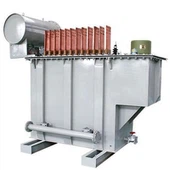
Advanced transformers
Distribution transformers remain essential, but monitoring and design improvements are changing how they are managed. Sensors can track loading, temperature, and other indicators that help identify stress before failure. In areas with high EV adoption, solar generation, or dense development, transformer visibility becomes especially valuable.
There is also interest in solid-state and hybrid transformer concepts that use power electronics to provide more controllable voltage and power flow. These technologies are not a simple replacement for every conventional transformer. Their role depends on cost, application, reliability expectations, and the value of added control.

Voltage regulation and reactive power devices
Voltage is one of the most important operating concerns in electric power distribution. Regulators, capacitor banks, smart inverters, and power electronics can help maintain voltage within acceptable ranges as load and generation fluctuate. Better voltage management can improve power quality and reduce unnecessary stress on equipment.
Smart inverters are particularly important because they can do more than convert DC power to AC power. With appropriate settings and coordination, they may support reactive power control, voltage ride-through, and other grid-support functions. Their value depends on standards, interconnection rules, communication capability, and utility operating practices.
Underground and resilient infrastructure
Many modernization plans include stronger poles, covered conductors, underground cables, sectionalizing devices, flood-aware equipment placement, and improved vegetation management. These measures are not always described as digital innovation, but they are central to resilience. A highly automated system still depends on physical assets that can survive local risks.
Undergrounding can reduce exposure to wind, trees, and some weather impacts, but it can also make faults more difficult and time-consuming to locate and repair. The best approach depends on terrain, soil, urban density, cost, criticality, and local hazard patterns. Resilience planning works best when it combines engineering analysis with practical field experience.
Planning and engineering for modern power distribution systems
Modern distribution planning requires a broader view than traditional load growth forecasting. Engineers still evaluate peak demand, voltage drop, thermal limits, fault current, and protection coordination. But they also need to consider electrification scenarios, distributed generation, flexible demand, climate exposure, customer programs, and data from actual field operation.
Hosting capacity analysis
Hosting capacity analysis estimates how much distributed generation or load a feeder can accommodate before upgrades or operational changes may be needed. This analysis can help utilities guide interconnections, prioritize investments, and communicate grid constraints. It can also help developers understand where new projects may be easier or harder to connect.
A useful analysis considers local equipment limits, voltage behavior, protection impacts, and different operating conditions. Because circuits change over time, hosting capacity is not permanent. It should be updated as new loads, resources, and upgrades are added.
Scenario-based forecasting
The future load on a feeder may depend on EV charging behavior, building electrification, industrial activity, weather patterns, and customer-owned energy resources. Scenario planning helps engineers compare possible futures instead of relying on one forecast. This makes investment decisions more resilient to uncertainty.
A practical scenario process might include:
Define the planning area and time horizon.
Identify known projects, customer requests, and asset constraints.
Develop low, medium, and high adoption cases for EVs, solar, storage, and electrified heating.
Model impacts on feeders, substations, transformers, and protection systems.
Compare traditional upgrades with non-wires alternatives where appropriate.
Prioritize investments based on risk, reliability, customer impact, and flexibility.
Protection coordination in an active grid
Protection systems must isolate faults quickly while avoiding unnecessary outages. Distributed generation and inverter-based resources can change fault current levels and directions. This can require updated settings, new relay schemes, or additional monitoring.
Protection coordination also needs to account for intentional islanding, microgrid operation, and automatic switching. A setting that works for one feeder configuration may not work after automation reconfigures the circuit. For this reason, protection studies and automation design should be developed together rather than treated as separate projects.
Cybersecurity and interoperability are now core requirements
As electric power distribution becomes more digital, cybersecurity becomes inseparable from reliability. Sensors, controllers, meters, communications networks, and operational software expand the number of connection points that must be protected. A modern distribution system needs secure architecture, clear access controls, monitoring, patch management, incident response planning, and disciplined vendor management.
Interoperability is equally important. Many utilities and facility owners operate equipment from multiple vendors, installed across many years. If devices cannot communicate clearly or data formats are inconsistent, the system becomes harder to manage. Open standards, well-documented interfaces, and careful integration planning can reduce lock-in and improve long-term flexibility.
Important cybersecurity and interoperability practices include:
Segment operational technology networks from general business networks where appropriate.
Use strong identity and access management for devices, users, and vendors.
Maintain accurate inventories of field devices, software, firmware, and communication links.
Require secure configuration and update procedures for connected equipment.
Test integrations before relying on automated control in live operation.
Train operators and field teams on both cyber procedures and practical system impacts.
Plan for manual fallback modes if digital systems are unavailable.
These practices may sound administrative, but they directly affect grid performance. A control system that cannot be trusted, updated, or recovered safely is not a strong foundation for automation.
What should utilities and facility teams prioritize?
Utilities and facility teams should prioritize modernization steps that improve visibility, reduce operational risk, and create flexibility for future load and generation changes. The right sequence depends on existing assets, reliability needs, budget, regulatory requirements, and local growth patterns. In most cases, the best approach is incremental and evidence-based rather than a single large technology leap.
A practical modernization roadmap often begins with the data foundation. Without accurate asset records, feeder models, and operating data, teams may struggle to choose the right electric power distribution equipment or justify upgrades. Once visibility improves, automation, DER integration, and advanced planning tools become more valuable.
A practical prioritization checklist
Use this checklist to organize early decisions:
Map the existing system clearly. Maintain an accurate electric power distribution diagram for substations, feeders, switching points, protection devices, transformers, and major customer connections.
Identify constrained assets. Look for overloaded transformers, voltage problem areas, aging cable sections, limited substation capacity, and circuits with repeated outages.
Improve measurement first. Add monitoring where it will support planning, operations, or maintenance decisions.
Review protection settings. Confirm that protection still works as distributed resources, automation, and feeder configurations change.
Plan for EV and electrification growth. Consider where charging and new electric loads are most likely to appear.
Coordinate DER interconnection. Align technical requirements, inverter settings, and operating procedures.
Strengthen resilience. Address physical risks such as storms, heat, flooding, vegetation, and access constraints.
Build cybersecurity into every project. Treat security as part of system design, not a final add-on.
Choose scalable platforms. Avoid tools that solve one immediate issue but cannot integrate with future systems.
Measure outcomes. Track reliability, asset loading, outage response, power quality, and customer impacts after upgrades.
Non-wires alternatives
Non-wires alternatives use resources such as energy efficiency, demand response, storage, distributed generation, or managed charging to defer or reduce the need for traditional infrastructure upgrades. They are not always the right answer, but they can be valuable when a specific constraint occurs during limited hours or under predictable conditions.
For example, a feeder with a short-duration peak may not always require the same solution as a feeder that is overloaded for long periods.
Flexible load control or storage may help in one case, while reconductoring, transformer replacement, or a new feeder may be more appropriate in another. The best decision comes from comparing performance, reliability, cost, operational complexity, and long-term adaptability.
Customer-side technology is becoming part of the distribution system
The customer side of the meter is no longer separate from distribution planning. Buildings, factories, homes, and campuses increasingly contain equipment that can affect grid operation. Solar inverters, batteries, EV chargers, smart thermostats, backup generators, and energy management systems can all change load shape and power quality.
For customers, this creates opportunities and responsibilities. A commercial building can use energy management to reduce peak demand, support backup power, and participate in utility programs where available. A fleet operator planning EV charging may need to coordinate with the utility early to avoid delays, unexpected upgrade needs, or poor charger performance.
For utilities, customer technology creates a need for better communication and interconnection processes. Customers need clear requirements, realistic timelines, and guidance on how their equipment interacts with the grid. Utilities need visibility and control options that respect customer needs while protecting system reliability.
The future distribution grid is flexible, data-driven, and resilient
The future of electric power distribution is not defined by one device or software platform. It is defined by a more flexible operating model that combines physical infrastructure, digital intelligence, customer resources, and disciplined engineering. The distribution grid must remain safe and dependable while adapting to new loads, new generation patterns, and new expectations.
A strong modernization strategy connects the basics with the innovations. Accurate diagrams, well-maintained equipment, sound protection coordination, and clear operating procedures still matter. Smart sensors, automation, DER management, and advanced analytics add value when they strengthen those fundamentals rather than distract from them.
For teams working in electric power distribution engineering, the practical path forward is to build visibility, model the system honestly, prioritize high-value upgrades, and design for change. Power distribution systems will continue to evolve, but the core objective remains steady: deliver electricity safely, reliably, efficiently, and with enough flexibility to support the energy needs of tomorrow.
Q: How soon can you delivery the transformer?
A: It depends on the quantity and capacity of the transformer, normally within one month since the date drawing confirmed by buyer.
Q: How long can you provide the quality warranty?
A: 24 months since the date transformer operated.
Q: What payment method do you accept?
A: T/T (wire transfer) preferred, L/C both accepted.0