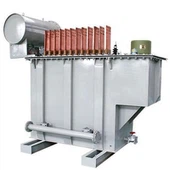
Pad-Mounted Transformers: What That Green Box in Your Yard Actually Does
You've probably walked past one of those green metal boxes in someone's front yard or along the neighborhood easement a hundred times without giving it a second thought. It just sits there quietly. But honestly, that unassuming thing is the main reason your lights come on, your fridge stays cold, and your TV doesn't go boom when you plug it in.
In older parts of town you still see power lines strung overhead on poles. Newer neighborhoods, though, bury almost everything. Those buried lines carry seriously high voltage-way too much to send straight into your house. That's where the pad-mounted transformer steps in. Think of it as the electrical version of a pressure-reducing valve on your water line: city water comes blasting through big mains at crazy pressure so it reaches every street, but if that same force hit your kitchen faucet, it'd wreck the pipes. The transformer takes the "high-pressure" electricity (usually around 13,000 volts in the distribution lines) and quietly steps it down to the normal 120/240 volts your home actually uses.

The "Silent Translator" That Keeps Things Safe
Picture plugging your phone charger straight into the thick cables running under the street-yeah, not just a fried phone, but a proper disaster. The transformer prevents exactly that. Inside its steel box, coils and magnetic fields drop the voltage instantly and without any noise (no fans whirring). You flip a switch, you get steady, safe power-no surges, no drama.
Homes usually run on single-phase power, which is fine for everyday stuff like toasters, TVs, and lights. It's kind of like one person pedaling a bike-there are tiny dips in the "power stroke," but you barely notice. Commercial places, though-think coffee shops with big espresso machines, apartment buildings with elevators, or anywhere with heavy motors-often need three-phase power. That's more like three cyclists pedaling in perfect sync: smooth, constant delivery, no weak spots.
The size of the box matters too. They're rated in kVA (kilovolt-amperes), basically how much load they can handle. A typical 25 kVA unit might comfortably serve four or five good-sized houses. Try to run a whole supermarket off it and the thing would overheat and trip pretty fast. That's why some green boxes are small and boxy (usually residential single-phase) while others are noticeably bigger and wider (commercial three-phase).
Why the Box Is Built Like a Safe
These things sit where kids play, dogs sniff, and lawnmowers zoom by, so safety is non-negotiable. The cabinet is heavy steel with recessed hinges and a special penta-head bolt-only the utility's weird five-sided wrench can open it. No regular screwdriver or pliers is getting in.
A lot of newer residential units are "dead-front" design. Older or industrial ones might be "live-front," where opening the door exposes buzzing terminals (scary if you're not trained). Dead-front keeps all the high-voltage connections hidden behind thick insulated boots-even if someone somehow gets the door open, there's still no exposed live metal waiting to bite.
The green paint isn't just for looks; it's a tough, corrosion-resistant coating that stands up to rain, snow, sprinklers, and years of weather so rust doesn't eat through the steel and let water or critters inside.
The Oil Inside: Transformer's Built-in Heat Sink
All that voltage-stepping-down creates heat-lots of it. Instead of noisy fans, most pad-mounted units are filled with special mineral oil (some newer ones use biodegradable vegetable-based fluid). The oil does three big jobs:
Soaks up heat from the coils and carries it to the steel walls, where outside air cools everything down (passive, quiet, reliable).
Acts as a way better insulator than air-prevents sparks and arcs even though the high-voltage parts are packed close together.
Keeps moisture and oxygen away from the metal internals so nothing corrodes.
Because it relies on natural airflow, you can't block the box with dense bushes or pile stuff against it.
The 10-Foot Rule (and Why It Actually Matters)
Utility companies have pretty strict clearance rules, and they're not just being picky:
Front (the padlock & warning label side): Keep at least 10 feet clear. That's the "work zone." Lineworkers stand there and use long insulated "hot sticks" (8-foot poles) to operate switches and fuses safely from a distance.
Sides and back: At least 3 feet so air can flow and keep the oil from getting too hot.
If a storm knocks out power and crews need to get in there fast, they shouldn't have to stop and chainsaw your rose bushes first. Also, never dig anywhere near it without calling 811 first-those high-voltage cables spread out underground in several directions, sometimes only a foot or two down.

What's Normal Noise vs. Call-the-Utility Noise
A steady, low hum is totally normal-it just means the transformer is doing its job (like your fridge compressor). Crackling, popping, or anything that sounds like fireworks or snapping wood? That's bad. Get away and call it in right away.
Also keep an eye out (from a distance) for oil leaks on the pad or grass, deep rust holes, or a door that looks tampered with/unlocked. Minor surface rust is usually fine, but anything that looks like it's letting water in is worth reporting.
Quick Homeowner Cheat Sheet
That green box isn't just random yard clutter-it's quietly keeping your whole house from turning into an electrical hazard. Simple habits make a big difference:
Observe – Glance at it every season. Check for obvious damage, leaks, rust, or an open/tampered door.
Respect the space – 10 ft in front, 3 ft on the sides. No planting, no storing stuff, no kid hide-and-seek fortress.
Protect – Remind everyone (especially kids) that it's not a toy or a bench. It's serious business inside.
Once you understand what's going on in there, walking past that box feels different. It's not an eyesore anymore-it's actually kind of impressive. Quiet, tough little guardian making sure your normal life just… works.