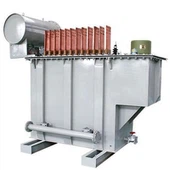
How Power Transformers Work: The Complete Guide to Electromagnetic Induction and Voltage Transformation
As we all know that power transformers are vital in modern electrical systems. They enable efficient power distribution across vast distances like we can see in our daily life.So, understanding how they work is crucial for anyone in electrical engineering.
This guide explores the principles of electromagnetic induction and voltage transformation.
In this article, We will delve into the components and operation of power transformers.Learn about the history and evolution of these essential devices.
And find out what are the different types of transformers and their applications.
In the next step, exploring the importance of efficiency and energy conservation in transformer design.
Finally, we will discuss future trends and environmental considerations in transformer technology.

What Are Power Transformers?
Power transformers are crucial in electricity distribution networks as heart to the human body. The most important thing is that they play the role in changing voltage levels between circuits, helping electricity travel efficiently over distances.
Primarily, they consist of two coils of wire, known as windings, wrapped around a core. This setup allows transformers to operate on the principle of electromagnetic induction.
The main function of these devices is voltage transformation. This means they can either step-up or step-down the voltage level based on the needs of the power grid.
Power transformers come in many forms and can handle large voltage levels. They are essential for high-voltage power transmission.
Key components of power transformers include:
Primary and secondary windings
Magnetic core
Insulating materials

If you want to know more about the power transformer, you can click here!
The History and Evolution of Power Transformers
The journey of power transformers began in the late 19th century. Pioneers like Nikola Tesla and George Westinghouse were instrumental in their development.
These early transformers were simple yet effective. They laid the foundation for the sophisticated designs we see today.
As technology advanced, transformers evolved significantly. Notable improvements included better core materials and innovative cooling systems.
Modern transformers are highly efficient and incorporate cutting-edge technology. They have become integral to smart grid systems worldwide.
Key historical milestones include:
Invention by pioneers in the 19th century
Improvements in materials and designs
Integration into smart grid technologies
Core Principles: Electromagnetic Induction and Voltage Transformation
Power transformers rely on core principles of physics, primarily electromagnetic induction. This principle allows transformers to transfer electricity efficiently.
Voltage transformation is another crucial role of transformers. It facilitates the transmission of power over long distances without excessive losses.
In this section, we'll delve deeper into the science behind these principles. Understanding them is key to grasping how transformers work effectively.
Key concepts to explore include:
Electromagnetic induction
Voltage transformation
The relationship between the two
Electromagnetic induction occurs when a changing magnetic field induces an electric current. This phenomenon is the cornerstone of transformer function.
Voltage transformation involves adjusting voltage levels between high and low. It ensures safe and efficient energy distribution.
Understanding these processes uncovers the magic behind everyday electricity use. With this insight, you'll appreciate the engineering marvels of transformers even more.
Faraday's Law and Lenz's Law Explained
Faraday's Law is the foundation of electromagnetic induction. Simply put, it says that when a magnetic field changes, it induces a voltage in any nearby circuit.
Lenz's Law takes it one step further: the induced current will always flow in a direction that opposes the change that created it - almost like nature's way of resisting the disturbance.
Together, these two laws explain exactly how transformers work. They're the reason a transformer can step voltage up or down and transfer electrical energy from one circuit to another without any direct electrical connection.
Mutual Inductance and Magnetic Flux
Mutual inductance is one of the key ideas here-it basically describes how one coil can create a voltage in a nearby coil.
Another important term is magnetic flux. Think of it as a way to measure how much magnetic field is actually passing through a coil. And yes, it matters a lot, because it strongly affects the level of inductance you end up with.
Together, these factors shape how efficient a transformer is, and they also influence how it should be designed. If you understand how they work (even loosely), you can usually make smarter choices to improve transformer performance.
Primary concepts include:
Voltage induction in adjacent coils (Mutual inductance)
The importance of magnetic field strength (Magnetic flux)
Effects on transformer design and efficiency

Transformer Construction and Key Components
Power transformers are basically built from a few key parts: the core, the windings, the insulation, and the enclosure. And honestly, each one has its own job, so nothing is really "optional" here.
The core is usually made from laminated steel. That layered design helps cut down losses from eddy currents, which is a big deal for efficiency. Then you've got the windings-typically copper or aluminum-that carry current and generate the electromagnetic fields needed for the transformer to work.
Next comes the insulation. Its main purpose is to prevent short circuits, and it also helps protect the windings from voltage spikes. Finally, the enclosure is there to shield the transformer from the outside world-things like weather and other environmental factors.
So, in short: core for efficiency, windings for electromagnetic action, insulation for safety, and an enclosure for protection.
Key components include:
Core: Laminated steel
Windings: Copper or aluminum
Insulation: Protective materials
Enclosure: Protective casing
These components work together to ensure efficient energy transfer. Understanding them clarifies how transformers operate. Knowledge of each part enhances maintenance and design.

Core Types: Laminated, Shell, and Core
In today's industry market, transformer cores come in different types. They typically include laminated, shell, and core-type designs.
In my opinion, laminated cores reduce energy losses. They consist of thin steel sheets. This design can minimize eddy currents.
Shell-type transformers usually enclose windings inside the core. They offer better protection. Core-type transformers expose windings for easy cooling.
Next is the Key features of core types:
Laminated: Thin steel sheets
Shell: Enclosed windings
Core: Exposed windings
Each type offers specific benefits depending on the application.
Windings: Primary and Secondary
Maybe Transformers have primary and secondary windings is a common sense for us. And these coiled wires create magnetic fields.
The primary winding connects to the input power source. It receives electrical energy. The secondary winding delivers transformed voltage to the output.
Copper is a common choice for windings. It offers low resistance and high conductivity.By the way, aluminum is also used due to its lighter weight.
Here are the key points on windings:
Primary: Input connection
Secondary: Output delivery
Materials: Copper or aluminum
Windings are crucial for voltage transformation and energy transfer.
Insulation, Cooling, and Enclosures
Due to the existence of electricity, insulation is vital for transformer reliability. It prevents electrical short circuits. Materials vary from oil to solid composites.
Because of heat producing in the operating of the transformer, so cooling systems are essential for maintaining transformer performance. Common methods include oil immersion and air cooling.
Enclosures protect transformers from environmental hazards. They prevent moisture and dust ingress. So we can say that enclosures can also provide a safety barrier.
Here are the Key elements:
Insulation: Prevents short circuits
Cooling: Manages heat
Enclosures: Provides protection
Together, these elements ensure transformer safety and efficiency.
How Power Transformers Operate: Step-by-Step Process
We should know that understanding how power transformers work involves a systematic process.
In details, initially, electricity enters the primary winding of the transformer. This winding connects to an incoming power source. It creates a magnetic field around the core.
And then the magnetic field induces voltage in the secondary winding. This is made possible through electromagnetic induction. Voltage is either stepped up or down, depending on the winding ratio.
In briefly speaking Key steps involve:
Input of electrical energy: Entering the primary winding.
Creation of a magnetic field: Within the core.
Induction of voltage: In the secondary winding.
Output of transformed voltage: Directed to the load.
Throughout this process, transformers aren't working alone: Proper insulation and cooling systems keep overheating at bay. The enclosure adds a layer of environmental protection.
Step-Up vs. Step-Down Transformers
According to the applications of the transformer, we can verify the transformer into two types: Step-up and step-down transformers, they are designed to perform different functions. Each serves a distinct role in voltage transformation.
Step-up transformers , as the name to say, they increase voltage levels. They are useful in long-distance power transmission. High voltage reduces energy loss over distances.
In contrast, step-down transformers decrease voltage levels. They make electricity safe for home or commercial use.
Here are the Key differences between the two :
Step-Up Transformers:
Increase voltage
Ideal for power transmission
Step-Down Transformers:
Decrease voltage
Suitable for local distribution
We should recognize that these roles are essential for efficient electrical systems.
Single-Phase and Three-Phase Transformers
According to the construct, transformers can be classified into single-phase or three-phase. Their design aligns with specific power needs.
Single-phase transformers usually used in supplying power to residential areas. They are simpler and often used in low power applications.
And Three-phase transformers are robust. They cater to industrial and commercial demands. They are efficient for high power requirements.
Key features:
Single-Phase Transformers:
Used in households
Simplified structure
Three-Phase Transformers:
Industrial use
Greater efficiency and power
Although they are different in size, function and ect. But Each type offers unique benefits for various applications.
Voltage Transformation: The Role of Turns Ratio
In fact, voltage transformation in transformers hinges on the turns ratio. This ratio is crucial for determining voltage changes. So understanding it helps in designing efficient transformers.
The turns ratio is the ratio of windings in the primary to secondary coils. If the primary has more turns, it reduces voltage (step-down). Conversely, more turns in the secondary increase voltage (step-up).
Here is a simple formula clarifies this concept:
Turns Ratio (TR) = Number of Turns in Primary Winding / Number of Turns in Secondary Winding
Interpreting the turns ratio:
A high TR means a step-down transformer.
A low TR indicates a step-up configuration.
Careful calculation ensures energy is transferred efficiently. This plays a significant role in matching voltage levels to system requirements.
In our daily life, when we use transformers while using the turns ratio is to achieve precise voltage adjustments. So this adaptability is essential in power distribution networks.
Types of Power Transformers and What They're Actually Used For
Power transformers come in all shapes and sizes, and they're pretty much the unsung heroes of the electrical world. They pop up everywhere from massive power plants to your neighborhood substation. At the end of the day, they're mainly grouped by what job they do-whether that's moving electricity long distances or stepping it down for everyday use.
These things are critical for getting power where it needs to go without wasting too much energy along the way. Pick the wrong type, and you're looking at higher losses, bigger bills, or even reliability headaches. So yeah, knowing the differences really matters when you're choosing one.
Transmission vs. Distribution Transformers
Transmission transformers are the big beasts built for high-voltage work. They take huge amounts of power and shove it hundreds of miles across the grid with minimal fuss. You'll spot them by their massive size, sky-high voltage ratings, and tough-as-nails construction that laughs in the face of storms and heavy loads.
Distribution transformers, on the other hand, are the ones you see on utility poles or tucked away in pad-mount boxes near houses and shops. Their whole job is to drop the voltage from those transmission lines down to safe, usable levels-like 120/240 V or 277/480 V. They're smaller, more efficient at lower loads, and designed to sit quietly in neighborhoods without drawing much attention.
Special-Purpose and Auto-Transformers
Then you've got the custom crowd: special-purpose transformers. These are the problem-solvers made for weird industrial jobs-think arc welding machines, battery chargers, or big rectifiers in factories. They're built to order, can handle harsh environments, and usually come with extra safety tricks baked in.
Auto-transformers are a bit different again. Instead of two separate windings, they use just one shared coil for both stepping up and stepping down. That makes them lighter, cheaper, and surprisingly efficient when you only need a small voltage tweak. They're not for everything, but when the job fits, they save you space and money.
Efficiency, Losses, and Why It All Matters
Nobody wants a transformer that guzzles energy, right? Efficiency is a big deal because even small losses add up fast in big systems. Transformers lose power mainly as heat-some in the core, some in the copper windings. The better you control those losses, the cooler it runs, the longer it lasts, and the less you spend on electricity (plus you're being kinder to the planet).
Core losses happen because of the magnetic stuff going on inside the iron-even when there's no load. Copper losses (or I²R losses) kick in as soon as current starts flowing and get worse the harder you push the transformer. Good design, quality materials, and smart cooling are what separate a decent unit from a real energy saver.
Keeping Things Cool: Thermal Management
Heat is the enemy. Too much of it and insulation starts breaking down, oil degrades, and suddenly your transformer is on borrowed time. That's why cooling systems exist. Big ones usually swim in mineral oil that carries heat away to radiators (ONAN cooling is super common). Smaller units might just rely on air blowing over fins. Either way, the goal is the same: keep temperatures in check so the thing keeps running smoothly for decades.
Monitoring, Protection, and Day-to-Day Maintenance
Modern transformers aren't just "set it and forget it" anymore. Sensors keep an eye on oil quality, winding temperatures, and load levels so you catch problems before they turn into disasters. Buchholz relays, pressure relief valves, and overcurrent protection are like the built-in bodyguards.
Routine checks-testing insulation, sampling oil, inspecting cooling fins-still matter, but a lot of folks are moving toward predictive maintenance. Spot a weird trend in the data and you can fix it during the next planned outage instead of dealing with a surprise blackout.

Common Faults and How to Fix Them
Even the best transformers can throw tantrums. Overheating, insulation breakdown, or a shorted winding are the usual suspects. The trick is catching them early. Most operators keep fault logs, do regular visual inspections, and run electrical tests. A little detective work usually gets things back online without too much drama.
Safety Devices That Actually Work
Safety isn't optional. The Buchholz relay is famous for spotting gas bubbles in oil-filled units (a sure sign something's cooking inside). Add pressure relief devices and solid overcurrent protection, and you've got a pretty good safety net that keeps minor issues from becoming major headaches.
Power Transformers in Today's World
These days transformers are everywhere in the grid-regulating voltage, balancing loads, and making sure power gets to your fridge, factory, or EV charger without drama. With smart-grid tech, many now have built-in monitoring that talks back to control centers in real time. That means faster fixes and way less wasted energy.
Fitting In With Renewables
Solar farms and wind turbines spit out power that's all over the place voltage-wise. Transformers are what smooth everything out so it plays nice with the main grid. Without them, integrating clean energy would be a nightmare. They're basically the translators between "green but unpredictable" and "steady and reliable."
Looking Ahead: Greener and Smarter
The industry is finally getting serious about the environment. We're seeing more biodegradable oils, quieter designs, and super-efficient cores that slash losses. On the horizon? Smart transformers with AI monitoring that can predict failures weeks in advance and adjust on the fly. It's all heading toward a cleaner, more resilient power system-one transformer at a time.
Wrapping It Up
At the end of the day, understanding power transformers isn't just textbook stuff-it's what lets engineers keep the lights on, cut energy waste, and push the grid toward a greener future. Whether you're sizing one for a new factory or just curious how electricity actually reaches your outlet, knowing the basics makes all the difference. They're not flashy, but they're absolutely essential.