

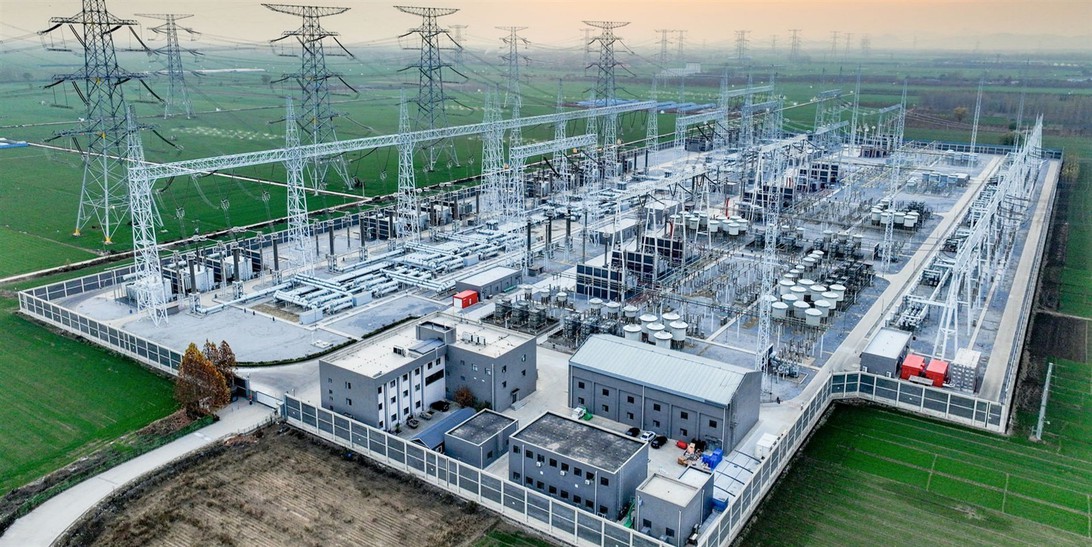
Click the image to learn more.
Let's be real-if there's one piece of equipment that keeps the lights on, it's the electrical substation transformer. You don't hear much about them, but without these things, electricity from power plants would never make it to your home, your office, or that little corner store down the street.
These transformers have a pretty simple job on paper: step voltage up or down. But in reality? They're absolute beasts. Built to handle massive power loads, survive harsh weather, and run non-stop for decades without complaining.
You'll find them in utility substations, solar or wind farms, industrial plants, and city power grids. Basically, wherever electricity needs to go from one voltage level to another, a substation transformer is there doing the heavy lifting.
So, What Exactly Is an Electrical Substation Transformer?
In plain English: it's a big, heavy transformer sitting inside a  substation, and its main gig is adjusting voltage levels in the power grid. It works through electromagnetic induction-fancy term, I know-but all you really need to remember is that it transfers power between circuits without changing the frequency.
Usually, you'll find these transformers sitting right between high-voltage transmission lines and local distribution systems. Take a typical example: transmission lines might carry power at 220kV or 110kV. But your house? It needs something like 400V. The transformer bridges that gap. Safely. Efficiently. Day after day.
Key Specs You'll See on a Substation Transformer
When engineers go shopping for a substation transformer (yes, "shopping" is kind of accurate), they look at a whole bunch of technical specs.
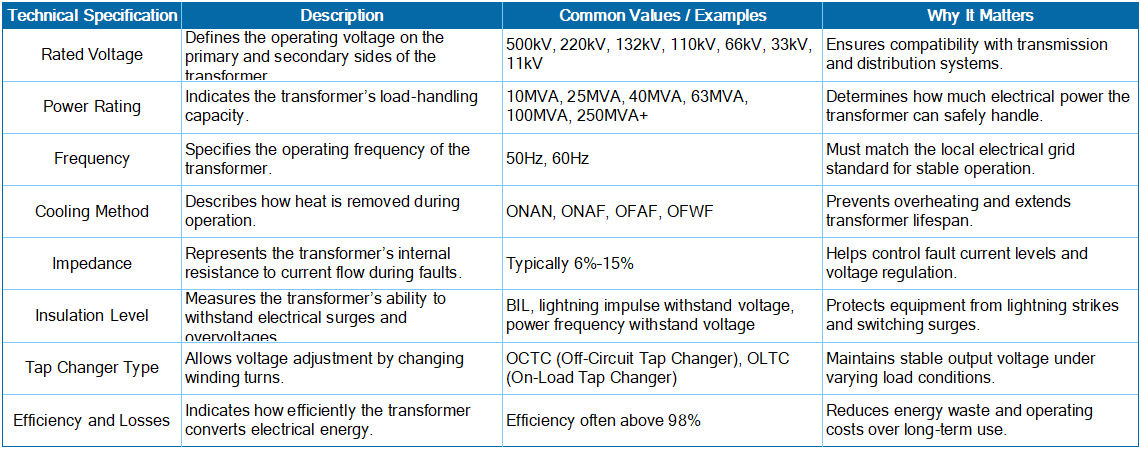
All of these decide how the transformer will behave, how safe it is, and whether it'll play nice with the rest of the power system.
What Types of Transformers Show Up in Substations?
Not all substations are the same. Some need big muscle. Others just need something small and reliable. Here's the rundown.
Step-Up Transformers
These take relatively low voltage from a power plant-say 11kV or 22kV-and crank it way up, like 132kV or 220kV, for long-distance travel. You'll mostly see these at generating stations. Their job? Cut down on power loss during transmission.
Step-Down Transformers
Way more common in everyday life. They take that high transmission voltage and bring it back down to safer levels for homes, factories, and offices. Found in city substations, industrial parks, residential neighborhoods-you name it.
Power Transformers
These are the heavy hitters. High MVA ratings, continuous full-load operation, super efficient. Usually come with advanced cooling systems. You'll find them in major transmission substations.
Distribution Transformers
Smaller, lower voltage, lower capacity. These are the last stop before electricity reaches you. They're designed to handle loads that go up and down throughout the day-not constant full blast like power transformers.
Auto Transformers
Interesting one. Instead of two separate windings, they use a single winding. That means they're smaller, cheaper, and more efficient. Perfect when the voltage ratio isn't huge-like stepping 220kV down to 132kV.
Dry-Type Transformers
No oil inside. Uses air for cooling and insulation. Safer in certain spots like indoor substations, commercial buildings, underground setups, or anywhere fire is a real concern. Downside? They're usually limited to lower voltage applications compared to oil-filled units.
Why You Should Care About Substation Transformers
Look, modern power grids live or die by  how well these transformers perform. One fails, and suddenly thousands-or millions-of people are sitting in the dark. No pressure, right?
That's exactly why utilities pour serious money into maintenance and monitoring. We're talking:
Thermal cameras watching for hot spots
Regular oil testing (yes, transformer oil tells a story)
Partial discharge analysis
Online condition monitoring systems
And with everything going renewable-solar, wind, you name it-plus smart grids spreading everywhere, transformer tech is evolving faster than ever.
Wrapping It Up
Bottom line: the electrical substation transformer isn't glamorous, but it's absolutely essential. Step up, step down, doesn't matter-without these machines, you can't move power efficiently from point A to point B.
Understanding the specs-voltage, cooling, impedance, insulation-helps you pick the right one. And knowing the different types? That's how you design a substation that's not just reliable today, but ready for whatever tomorrow throws at it.
As the world builds out more power infrastructure, these transformers will stay right at the heart of it all. Quietly doing their job. Keeping the lights on.


