Power Transformers: The Quiet Heroes Keeping Your Lights On
You've probably walked by those big green metal boxes in someone's yard a hundred times and barely noticed them. They just sit there, maybe giving off a low hum now and then, looking like part of the scenery. But honestly, without those unassuming things, the electricity coming from a power plant miles (or hundreds of miles) away would either arrive uselessly weak or way too dangerous to plug anything into.
Think about how electricity actually gets to your house. Power plants are usually nowhere near cities-think remote spots with hydro dams, wind farms, coal, gas, whatever. Sending power that far is tricky because electricity loses strength over long distances, kind of like water pressure dropping in a really long hose.
Voltage is basically the "pressure" that pushes electricity along. To make it travel hundreds of miles without fading to almost nothing, utilities crank it way up-often to hundreds of thousands of volts. High voltage = less loss, simple as that.
But then it shows up near your neighborhood... and suddenly that insane pressure is the last thing you want hitting your kitchen outlets. Your toaster, phone charger, fridge-they'd get fried instantly, or worse.
That's where the transformer comes in and saves the day. It steps the voltage way down to something safe and usable-like 120V or 240V depending on where you live. It's the grid's pressure regulator, making sure the power is strong enough to run your dryer but tame enough not to blow up your laptop.

Why We Can't Just Send Normal Household Voltage Across the Country
If utilities tried pushing 120 volts from a distant power plant all the way to your town, most of it would get eaten up along the way. The wires themselves create resistance (think friction in a pipe), turning energy into useless heat. Plus the voltage would drop so much after just a few miles that you'd barely get a flicker at the end.
So right at the power plant they use "step-up" transformers to boost the voltage sky-high-sometimes 300 kV, 500 kV or more. It's like putting the power into overdrive so it can cruise long distances with minimal losses. Engineers call this long-haul part "transmission." Those huge metal towers crisscrossing the countryside? That's the interstate highway of electricity.
Closer to home it's a different story-that's the "distribution" stage. The power has to get tamed again before it reaches your street.
The Invisible Magic: How Transformers Actually Work (No Moving Parts!)
Put your ear to a transformer and you'll hear that steady hum, but nothing's spinning or pumping inside. No gears, no pistons. Yet it moves massive amounts of power across a tiny gap using... basically magnetism.
It's the same idea behind wireless phone chargers. Inside there's a primary coil that gets the incoming high-voltage electricity. That current creates a changing magnetic field-expanding and collapsing 60 times a second (or 50, depending on your country). That pulsing field reaches across to the secondary coil nearby (they never touch), and boom-the electrons in the second coil start moving too. Electricity jumps the gap without any wires connecting them.
This trick is thanks to Faraday's law of electromagnetic induction, discovered back in the 1830s. One coil "talks" to the other purely through magnetism. Pretty cool when you think about it.
Of course it's not 100% perfect-some magnetic field leaks out, turning into wasted heat. That's why engineers obsess over minimizing "flux leakage."
What's Inside the Box: Steel, Copper (or Aluminum), and Smart Design
To keep that magnetic field focused and efficient, the core isn't a solid chunk of steel. It's made of thousands of super-thin steel sheets stacked together-like pages in a book. Why? A solid core would create swirling eddy currents that waste energy as heat. The laminations break those loops up, so the magnetism goes where it's supposed to instead of cooking the transformer.
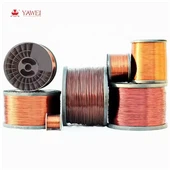
Wrapped around that core are the windings-coils of wire. Usually copper because it's the best conductor, keeps things compact, and runs cooler... but it's expensive and heavy. For bigger, ground-mounted units, aluminum is common-cheaper, lighter, though you need more of it to handle the same current.
The voltage change is all about the number of turns in each coil. More turns on the high-voltage side, fewer on the low-voltage side = step-down. It's basically simple math: turns ratio = voltage ratio.
Keeping It Cool: Oil vs. Air
All that energy transfer creates serious heat. Big transformers often sit in a tank of special mineral oil that soaks up the heat from the coils and core, then passes it to cooling fins on the outside. The oil isn't just for cooling-it's also a great electrical insulator, preventing sparks and arcs inside.
Some places can't have big tanks of oil (think indoor spots, high-rises, schools, malls, or environmentally sensitive areas). Those use dry-type transformers-air-cooled with special resins and vents. They're usually bigger, run hotter, but way safer when fire or leaks are a real concern.
That Classic Hum – It's Not a Problem (Usually)
The low buzz you hear is magnetostriction-the steel core actually expands and contracts tiny amounts as the magnetic field flips back and forth. It vibrates the whole tank like a giant speaker cone. Normal, steady hum = healthy. Sudden loud rattling, clanking, or irregular buzzing? That could mean loose parts, insulation issues, or overload-time for the utility crew to check it out.
Tap Changers: Keeping Your Voltage Steady
Power demand changes all day-morning coffee rush, evening AC blast, factory startup. Voltage sags or spikes can wreck appliances. So many transformers have tap changers that automatically (or sometimes manually) adjust the number of turns in the coil to keep output voltage rock-steady.

When Things Go Wrong: Bushings and Safety
Those ribbed gray insulators sticking out the top? Bushings. They're the high-voltage entry/exit points and unfortunately one of the most common failure spots-cracking from age, lightning, pollution buildup, etc. When they fail, you can get arcing, oil leaks, or even a blown transformer.
If you ever see oil running down the side, smoke, an open door, or weird noises, stay way back-at least 30–40 feet-and call the utility or emergency services right away.

Bottom Line
Next time you pass one of those green boxes or hear that faint hum from a pole-mounted unit, you'll know what's really going on inside: two coils quietly trading energy through an invisible magnetic bridge, taming wild high-voltage power so your phone charges, your fridge runs, and your lights stay on.
They're tough, reliable pieces of equipment... but they handle seriously dangerous energy. Treat them with respect-don't climb on them, don't dig nearby, keep plants clear for access-and if something looks off, let the pros handle it.
That's the transformer story in a nutshell. Pretty neat how something so ordinary keeps modern life running smoothly, right?