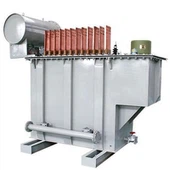
A single-phase power transformer is basically that everyday hero in electrical systems-it quietly steps voltage up or down so we can actually use electricity without frying our gadgets or wasting power over long distances.
In simple terms, it's a device that takes single-phase AC power (the kind most homes get) and changes the voltage level while keeping the frequency the same. No moving parts, no magic-just clever use of magnets and coils.
What It Actually Is
Picture two coils of wire (one primary, one secondary) wrapped around a shared iron core. The primary coil connects to your incoming power source, and the secondary goes to whatever needs the adjusted voltage. The core is usually made of thin laminated silicon steel sheets stacked together-this cuts down on energy losses from eddy currents and hysteresis.
It's way simpler and cheaper than three-phase versions, which is why it's perfect for stuff that doesn't need massive power.

How It Works (Without Getting Too Textbook-y)
It all boils down to electromagnetic induction (thanks, Faraday). Here's the quick flow:
You feed alternating current into the primary winding.
That AC creates a constantly changing magnetic field in the core.
The magnetic field "links" to the secondary winding and induces a voltage there-no direct electrical connection between the two coils.
The output voltage depends on the turns ratio: more turns on secondary = higher voltage (step-up); fewer = lower (step-down).
Super efficient because there's almost no energy lost as heat or mechanically-most good ones run at 95-99% efficiency.
(If you're visual, think of classic diagrams: primary coil on one side of the core, secondary on the other or concentric, with flux lines looping through the iron.)

Main Parts
Core - the magnetic highway, laminated to keep losses low.
Primary winding - gets the input power.
Secondary winding - delivers the transformed power.
Insulation - keeps everything from shorting out (very important for safety).
Sometimes you'll see extras like taps for voltage adjustment or cooling fins/oil for bigger units.

Common Types
Step-down - Most common in homes: takes high grid voltage (like 11kV) down to 120/240V for outlets and appliances.
Step-up - Used sometimes in transmission or specific setups to boost voltage.
Isolation transformers - Mainly for safety, they separate circuits electrically while transferring power magnetically.
Where You See Them in Real Life
Pretty much everywhere single-phase power is the norm:
Residential - Pole-mounted or pad-mounted transformers outside homes, stepping down utility voltage for lights, fridges, AC units, TVs, etc.
Light commercial - Small shops, offices, restaurants for lighting, computers, HVAC, small machinery.
Rural areas - Often the go-to for farms or remote spots where three-phase isn't practical.
Renewables - In solar setups, they help match inverter output to home/grid voltage.
Street lighting or small control systems.
Basically, if it's not a big factory with heavy motors, single-phase transformers are probably handling it.

Single-Phase vs. Three-Phase (Quick Comparison)
Single-phase is simpler, cheaper, and fine for lower power (homes, small businesses). Three-phase handles way more load smoothly, better efficiency for big motors/industry, but it's more complex and expensive. Homes usually get single-phase; factories get three-phase.
| Parameter | Single-Phase Transformer | Three-Phase Transformer | Notes / Typical Advantage |
|---|---|---|---|
| Phases | 1 phase | 3 phases | Three-phase provides balanced power delivery |
| Typical Power Capacity (kVA range) | Up to ~250 kVA (commonly 5–167 kVA for distribution) | From ~15 kVA up to several MVA (commonly 100–5000+ kVA) | Three-phase handles much higher loads |
| Power Delivery for Same Conductor Size | Lower (baseline) | ≈1.732× higher power (√3 advantage) | Three-phase more efficient in conductor utilization |
| Efficiency (at full load, ≈100 kVA example) | ~94.5–96% | ~96–98% | Three-phase usually 1–2% higher |
| Core Losses (no-load, example at 100 kVA) | Higher (e.g., ~850 W) | Lower (e.g., ~700 W) | Better core flux utilization in three-phase |
| Copper Losses (load, example at 100 kVA) | Higher (e.g., ~1200 W) | Lower (e.g., ~950 W) | Reduced I²R losses per kVA in three-phase |
| Total Losses (example) | Higher (e.g., ~2050 W) | Lower (e.g., ~1650 W) | Leads to lower operating cost over time |
| Material Usage (Copper / Conductor) | More copper per kVA | Less copper per kVA (≈57–75% of single-phase equivalent) | Three-phase saves conductor material |
| Material Usage (Core / Iron) | Less efficient flux path | More efficient (shared core for 3 phases) | Three-phase often more compact per kVA |
| Size & Weight (same kVA) | Larger and heavier | Smaller and lighter | Especially noticeable above 50–100 kVA |
| Cost (initial purchase) | Lower | Higher (but often lower per kVA at larger ratings) | Single-phase cheaper for small units |
| Installation & Maintenance | Simpler, easier to handle & replace | More complex, but one unit vs. three single-phase bank | Three-phase often preferred for large systems |
| Power Factor & Stability | Lower / more pulsating power | Higher / smoother, more constant power | Better for motors & heavy loads |
| Typical Applications | Residential homes, small shops, rural distribution, pole-mounted, light commercial, solar inverters | Industrial plants, factories, large commercial buildings, motors >10 HP, heavy machinery, urban distribution | Single-phase for low power; three-phase for high power |
| Voltage Ripple / Pulsation | More noticeable (pulsating) | Very low (near constant) | Three-phase better for sensitive equipment |
Picking the Right One & Keeping It Happy
When choosing:
Check needed voltage in/out and power rating (kVA).
Think about environment (indoor/outdoor, dusty, humid?).
Size/space limits.
Maintenance is straightforward: regular visual checks, clean bushings, monitor oil if it's oil-filled, watch for overheating or weird noises. Follow safety rules-high voltage inside, so don't mess around without proper training.
Looking ahead, we're seeing "smart" transformers with sensors for remote monitoring, better materials for even higher efficiency, and compact designs for renewables/microgrids.
In short, single-phase power transformers are the reliable, no-fuss workhorses keeping our homes and small businesses powered safely and efficiently. They're not flashy, but without them, everyday life would be a lot dimmer (literally). If you have a specific setup or question about one, feel free to share more details.