Understanding Transformers in the Power Grid (The Ones You See Every Day)
You know those grey metal cylinders up on utility poles, or the big green boxes tucked in people's yards? They've been there your whole life, usually making that low, constant hum. Most people never think twice about them-but these quiet little (or not-so-little) things are actually doing something super important 24/7. They're transformers, and without them our whole modern electrical setup just wouldn't work.
Picture electricity like water in pipes for a second. To move it long distances from a power plant without losing almost everything along the way, you need crazy high "pressure"-that's voltage. The really big transmission lines carry voltages so high they're way too dangerous (and way too much) to send straight into your house. It's like trying to hook a fire hose up to your kitchen tap-total mismatch.
So here's what actually happens: way back at the power plant, they crank the voltage way up (we're talking hundreds of thousands of volts sometimes) so the electricity can zip across hundreds of miles without wasting most of its energy as heat in the wires. That's the first big job for a transformer: the "step-up" kind right at the plant.
Then, as the power gets closer to cities and neighborhoods, it has to come back down-step by step-because you can't plug your phone or toaster into that monster voltage. That's where bigger setups called substations come in, and the smaller transformers on your street finish the job.

Why Not Just Send Normal Household Voltage Everywhere?
Ever wonder why power companies don't just generate electricity at 120/240 volts and send it directly to your house? Simple: it'd mostly disappear as heat before it got very far. Low voltage = high losses over distance, kind of like a tired runner fading in a marathon.
The trick is to blast it down the "interstate" at super-high voltage-much less energy lost that way. Those huge metal lattice towers you see marching across fields or along highways? That's the backbone of the long-haul electrical highway. Transformers are what get the power onto that highway…and then safely get it back off again for the rest of us.
The Step-Up at the Power Plant
Electricity fresh out of a generator isn't quite ready for the long haul-it's at medium voltage. So right there at the plant they use a step-up transformer to jack it way up. Magnets inside do the magic, boosting it hundreds of times higher so it can travel efficiently without melting the lines.
Substations: The Big Sorting Hubs
Once that high-voltage power has cruised hundreds of miles, it hits the edge of a city and lands at a substation-those fenced-off yards full of equipment that look kind of intimidating. Think of it like a major mail-sorting facility: huge incoming loads get broken down and routed to the right places.
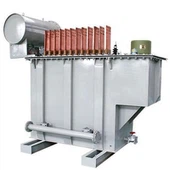
The giant transformers inside are the main workers-they step the voltage down from "interstate" levels to something more like "main city streets" (still pretty high, but manageable for distributing around town). Then a bunch of switches, breakers, and lines split the power off toward malls, hospitals, neighborhoods, factories, you name it. It's organized chaos, but it keeps everything flowing smoothly.

Those Neighborhood Transformers-the Final Step
Even after the substation, the voltage is still too high for your house. That's where the local transformers come in-the ones you actually see (or hear) near you.
If you've got overhead lines, look up: those grey cylinders on the poles are pole-mounted transformers. One usually serves a handful of houses on your block, dropping the voltage to the familiar 120/240 V.
Underground lines? Check for a green metal box sitting on a concrete pad in someone's yard or a green space. Same job, different look-pad-mounted transformer.
Because they're so local, when one gets damaged (tree branch, car accident, whatever), it often knocks out just a few houses while the rest of the area stays lit.
That Classic Transformer Hum
You know the sound-that steady, low buzz? Totally normal. It's actually the transformer core vibrating a tiny bit 60 times a second (in North America anyway) because of the magnetic field flipping on and off. Called magnetostriction. A nice even hum means everything's working fine. Weird pops, crackles, or an angry erratic buzz? That's when you call the utility-something might be wrong.
Why the Big Fences?
Those tall fences with barbed wire aren't mainly about thieves. High voltage is scary dangerous-even if you don't touch anything, it can arc through the air like lightning and zap you from several feet away. Plus the switches and breakers can move suddenly. It's basically a place for pros only. Stay out, stay far from downed lines, and if you spot smoke, damage, or weird new noises, report it right away.
Wrapping It Up
Next time you're out walking or driving, take a quick look. Spot that grey cylinder on the pole or the green box nearby? That's the last stop on electricity's long trip-from the power plant push, along the high-voltage highways, through the substation sort, and finally down to safe levels for your home.
Those things aren't just random metal clutter anymore. They're quiet heroes keeping the lights on. And that little hum? It's the sound of the whole system doing its job, day and night. Pretty cool once you start noticing it.