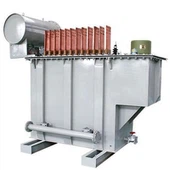
Transformer for Water Treatment Plant: Selection, Sizing and Applications
Water treatment plants are not exactly forgiving when it comes to power interruptions. Pumps have to keep running, blowers need to maintain aeration, filtration systems must stay online, and control equipment has to keep the whole process moving. Behind all of this electrical equipment, there is usually one important piece of infrastructure: the transformer for water treatment plant applications.

Choosing the right transformer is not simply a matter of looking at the total kVA and picking the next available size. Water and wastewater facilities have their own electrical challenges. Large motors can draw high starting currents, VFDs can introduce harmonics, and the operating environment may be humid, dusty, or chemically aggressive. A transformer needs to be selected with these conditions in mind.
For EPC contractors, electrical engineers, plant owners, and procurement teams, getting the transformer specification right at the beginning can save plenty of trouble later.
What Is a Transformer for a Water Treatment Plant?
A water treatment plant transformer is used to change the incoming electrical voltage to a level suitable for the plant's distribution system and equipment.
A typical power arrangement may look something like this:
Utility Power → Medium Voltage Switchgear → Transformer → Low Voltage Switchgear → MCC/PCC → Pumps, Blowers, Motors and Auxiliary Equipment
The incoming utility voltage can vary depending on the country and project. Common medium-voltage levels include 11 kV, 22 kV, and 33 kV. The transformer then steps this voltage down to a usable low-voltage level such as 400 V, 415 V, or 480 V.
Of course, the actual voltage ratio should always be based on the utility supply and the equipment requirements of the project.
The main job of the transformer is straightforward: provide a stable and reliable electrical supply. But in a treatment plant, there is a little more to it than that.
Which Transformer Type Is Suitable?
There is no universal answer here. The best transformer depends on the plant's size, voltage level, location, environmental conditions, and load profile.
| Transformer type | Typical application | Main advantage |
|---|---|---|
| Oil-immersed transformer | Main plant power supply | High capacity, efficient, robust |
| Dry-type transformer | Indoor electrical rooms | No liquid insulation, convenient indoor installation |
| Cast resin transformer | Indoor or demanding environments | Good moisture resistance and low maintenance |
| Pad-mounted transformer | Outdoor treatment facilities | Compact and enclosed |
| Harmonic-mitigating transformer | Plants with many VFDs | Helps address harmonic-related problems |
| Isolation transformer | Control and sensitive equipment | Electrical isolation and improved power quality |
For larger treatment plants with substantial motor loads, an oil-immersed transformer can be a practical choice, especially for outdoor substations. These transformers provide effective cooling and are available in a wide range of capacities.
For indoor electrical rooms, dry-type transformers are often more convenient. There is no transformer oil to manage, and they can be installed close to the plant's low-voltage distribution equipment when the room is properly designed.
A cast resin transformer is another option where moisture resistance and indoor operation are important.
How to Size a Transformer for a Water Treatment Plant
Transformer sizing deserves careful attention. Simply adding up the nameplate ratings of every motor and electrical device will usually give an overly simplistic answer.
A water treatment plant does not necessarily run every load at full capacity at the same time. Pumps may operate according to water demand, blowers may be controlled by VFDs, and some treatment equipment may operate intermittently.
At the same time, there are several loads that can have a significant impact on transformer selection.
| Load | Transformer Design Consideration |
| Raw water pumps | High motor starting and running loads |
| Booster pumps | Variable operating demand |
| Aeration blowers | Continuous and high-power loads |
| Sludge pumps | Intermittent motor loads |
| Mixers | Motor-driven process equipment |
| UV systems | Continuous electrical demand |
| Ozone systems | Potentially significant power consumption |
| Chemical dosing | Smaller auxiliary loads |
| HVAC and ventilation | Seasonal and continuous loads |
| PLC/SCADA systems | Sensitive control loads |
| Lighting | Auxiliary load |
| Future expansion | Additional capacity requirement |
A simplified calculation can be written as:
Transformer kVA = Maximum Demand (kW) ÷ Power Factor
For example, if the plant's maximum demand is 1,000 kW and the power factor is 0.90:
1,000 ÷ 0.90 = approximately 1,111 kVA
That does not mean the project should automatically order a 1,111 kVA transformer. Standard transformer ratings, design margin, motor starting, harmonics, ambient temperature, future expansion, and redundancy all need to be considered before the final rating is selected.
In other words, the calculation is a starting point, not the whole design.
Motor Starting and Large Pump Loads
Large pumps and blowers can make transformer sizing a bit tricky.
When a large motor starts directly across the line, its starting current can be several times higher than its normal running current. If several large motors start at the same time, the temporary demand can become significant and may cause voltage dips.
This is one reason motor-starting conditions should be reviewed when selecting a transformer for water treatment plant projects.
Many modern facilities use soft starters or VFDs to improve motor control and reduce starting stress. These devices can make the starting process much easier on the electrical system. But they introduce another consideration: harmonics.
VFDs and Harmonics
VFDs are increasingly common in water treatment facilities. They allow pumps and blowers to operate at the speed actually needed instead of simply running at full speed all the time. This can lead to meaningful energy savings.
The trade-off is that VFDs are nonlinear loads and can produce harmonic currents.
If harmonics become excessive, they may contribute to additional transformer heating, increased losses, voltage distortion, and problems with sensitive electrical equipment.
For facilities with a large number of VFDs, engineers may therefore consider K-rated transformers, harmonic-mitigating transformers, harmonic filters, or other power-quality solutions.
There is no need to automatically specify a special transformer for every VFD application, though. The decision should be based on the actual electrical system and measured or calculated harmonic content.
Indoor and Outdoor Installation
The environment around the transformer matters more than it might first appear.
Outdoor water treatment facilities may expose electrical equipment to rain, humidity, temperature changes, dust, and corrosive substances. Transformer enclosures, surface protection, ventilation, and cooling arrangements should therefore be selected according to the actual site conditions.
Indoor installations have their own requirements. The transformer room needs sufficient ventilation, appropriate clearances, suitable ambient conditions, and adequate access for inspection and maintenance.
If the treatment plant is close to the coast or operates in an atmosphere containing corrosive chemicals, corrosion protection deserves extra attention. It is one of those details that can seem minor during procurement but become expensive to fix later.
Reliability, Redundancy and Protection
For critical water infrastructure, transformer redundancy can be worth considering. A plant may use two or more transformers so that essential loads can continue operating if one unit is taken offline.
The electrical system might also combine transformers with standby generators and automatic transfer systems. Again, the right approach depends on the plant's process requirements and local regulations.
Transformer protection is equally important. Depending on the transformer type and voltage level, the system may include overcurrent protection, short-circuit protection, temperature monitoring, surge protection, differential protection, and other protective devices.
The transformer should not be treated as a standalone piece of equipment. Its protection needs to coordinate properly with upstream and downstream switchgear.
Standards and Transformer Specifications
International water treatment projects commonly reference IEC 60076 for transformer requirements, while projects in North America may use relevant IEEE C57 standards.
The final transformer specification may cover rated power, voltage ratio, insulation level, temperature rise, impedance, short-circuit withstand capability, cooling method, noise level, efficiency, tap changer requirements, enclosure protection, and testing.
The important point is to build the specification around the actual project. A generic transformer datasheet is rarely enough for a complex treatment facility.
Yawei Transformer for Water Treatment Applications
Jiangsu Yawei Transformer Co., Ltd. provides power and  distribution transformer solutions for industrial and infrastructure projects.
For a transformer for water treatment plant, the transformer can be designed around the project's voltage level, capacity, load characteristics, installation environment, and applicable standards. Depending on the application, this may include oil-immersed or dry-type transformer solutions.
For EPC contractors and plant owners, early communication with the transformer manufacturer can make the procurement process much smoother. Sharing the load list, voltage requirements, motor information, VFD percentage, installation conditions, and future expansion plans gives the manufacturer a much better basis for transformer selection.
Conclusion
A transformer for water treatment plant applications has a fairly demanding job. It needs to supply pumps, blowers, motors, control systems, and other equipment reliably, often for long periods with very little tolerance for downtime.
The right transformer is therefore selected by looking beyond basic kVA capacity. Motor starting, VFD harmonics, power factor, installation conditions, future expansion, redundancy, cooling, and protection all matter.
For municipal water treatment plants, wastewater facilities, pumping stations, and industrial water projects, a properly engineered transformer provides the electrical foundation for stable and efficient plant operation. And when the transformer is specified correctly from the beginning, the rest of the electrical system tends to be a lot easier to manage.
Q: How soon can you delivery the transformer?
A: It depends on the quantity and capacity of the transformer, normally within one month since the date drawing confirmed by buyer.
Q: How long can you provide the quality warranty?
A: 24 months since the date transformer operated.
Q: What payment method do you accept?
A: T/T (wire transfer) preferred, L/C both accepted.