Transformer Market Today: Shortages, Delays, and Rising Prices
Not long ago, transformers were one of those behind-the-scenes pieces of equipment-important, sure, but not exactly something people worried about.
That's changed. Fast.
Right now, the global transformer market is under real pressure. Demand has taken off, supply hasn't kept up, and the result is something the industry is openly calling a "transformer shortage." If you're involved in energy, construction, or infrastructure in any way, you've probably felt it already.

Click the image to learn more.
The shortage is real-and it's getting serious
Let's put some numbers on it:
Power transformers: up to 30% supply gap
Distribution transformers: around 10% shortfall
That's not a small mismatch-it's a pretty big hole.
And the reason? Demand is exploding from multiple directions at once:
Renewable energy projects (solar, wind-you name it)
Grid upgrades (a lot of infrastructure is just… old)
Data centers (AI isn't exactly low-power)
Electrification (EVs, industrial systems, everything moving electric)
All of this adds up to one thing: transformers have quietly become a bottleneck. If you don't have them, your project doesn't move. Simple as that.
Lead times are… kind of crazy right now
Here's where it really starts to hurt.
In the United States, getting a large power transformer can now take around 128 weeks. That's roughly two and a half years-which, honestly, is longer than some entire projects used to take.
Europe isn't much better. And even smaller distribution transformers? Those are taking longer too.
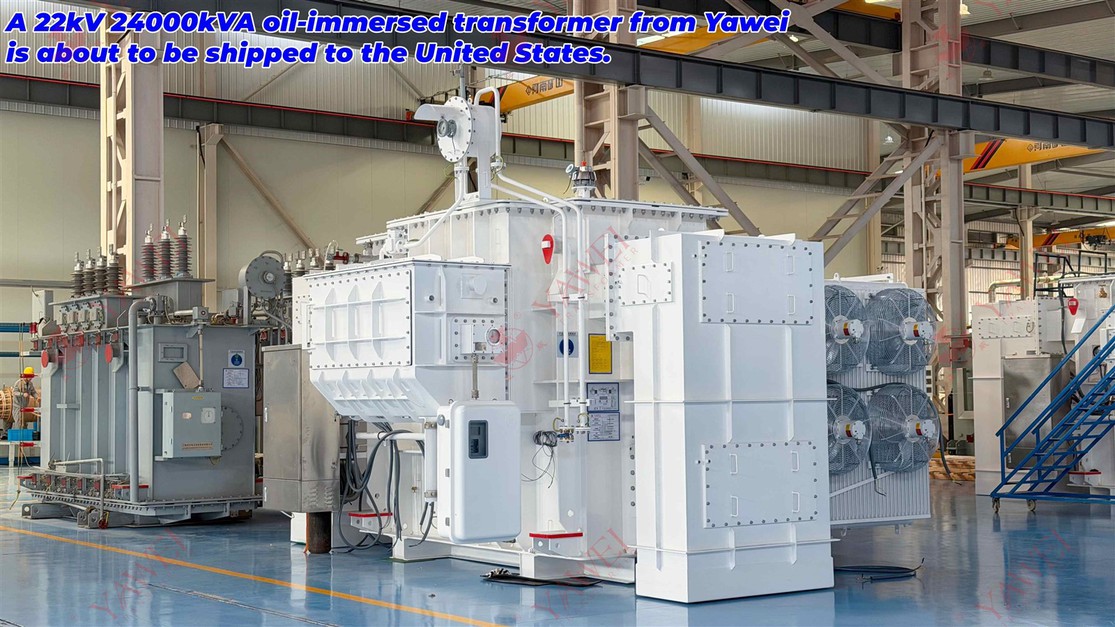
(Click the image to know more.)
Why the delays?
It's not just one issue-it's a mix:
Not many factories can build large transformers in the first place
Materials like copper and electrical steel are still tight
Skilled labor isn't easy to scale up overnight
Transporting these things is a logistical headache (they're huge and heavy)
So yeah, timelines are slipping. And for a lot of companies, planning has become… let's say, a lot less straightforward.
Prices have jumped-no surprise there
When supply drops and demand spikes, prices follow. That's exactly what's happening here.
Transformer prices are now 60% to 80% higher than they were in 2020
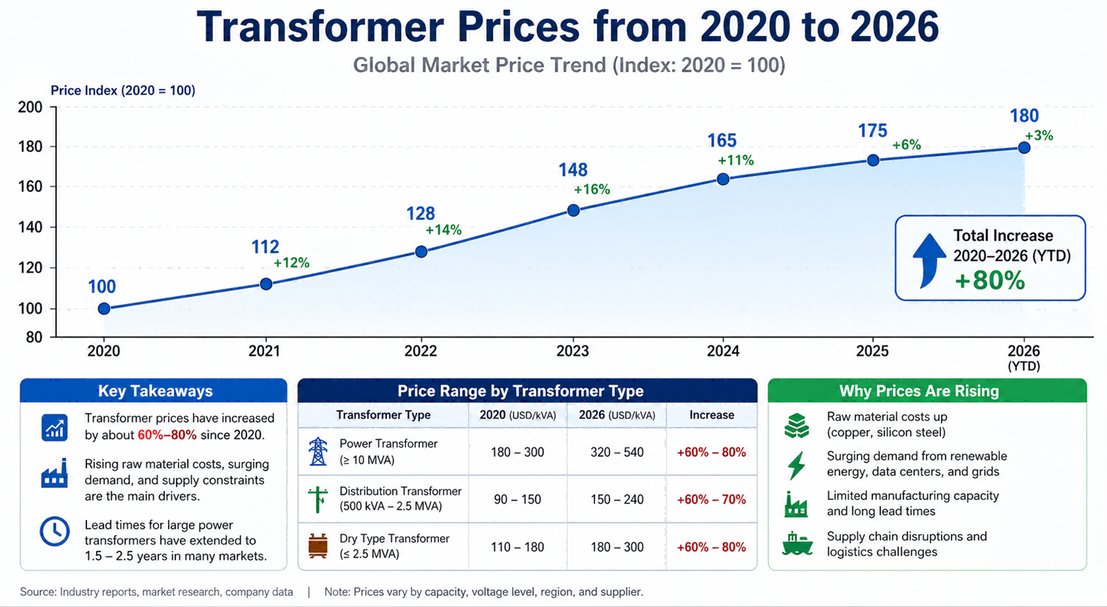
A few things are driving that:
Raw materials (especially copper and silicon steel) are more expensive
Energy and production costs have gone up
Logistics costs are still elevated
And of course, limited supply gives sellers more pricing power
For buyers, this changes the game. Budgets are tighter, decisions take longer, and in some cases, projects get pushed back-not because of funding, but because the equipment just isn't available.
Why everyone's looking at China

In the middle of all this, China has become a key player-arguably the key player.
Here's why:
It holds roughly 60% of global transformer production capacity
The supply chain is highly integrated (materials → components → assembly)
Export logistics are well established
Lead times are shorter: typically 10–12 months
Compare that to 2+ years elsewhere, and the appeal is obvious.
A lot of buyers are already shifting strategies:
Sourcing more from Chinese manufacturers
Spreading orders across multiple suppliers
Locking in production slots earlier than before
It's not just a trend-it's becoming standard practice.
What this really means (bigger picture)
This isn't just a temporary hiccup. The transformer market is changing in a more fundamental way.
1. Transformers are no longer "just equipment"
They've become critical path items. If they're delayed, everything else is delayed.
2. Procurement is getting more strategic
Companies are:
Ordering earlier
Diversifying suppliers
Thinking long-term instead of project-by-project
3. Local manufacturing is back in the conversation
The U.S. and Europe are both looking at expanding domestic production-but realistically, that's going to take time.
when does this get better?
Short answer: not immediately.
Most signs point to:
Supply-demand imbalance continuing for several more years
Lead times improving slowly-but not returning to "normal" anytime soon
Prices stabilizing eventually, but probably staying higher than pre-2020 levels
In other words, this is the new normal.
Final thoughts
The transformer market used to be predictable. Now it's anything but.
Between renewable energy, AI-driven power demand, and global electrification, transformers have moved from the background to center stage-and right now, there just aren't enough of them to go around.
If you're planning projects in this space, one thing is clear:
Don't treat transformers like a routine purchase anymore.
Plan early, secure supply, and build flexibility into your timeline-because waiting until the last minute just doesn't work anymore.