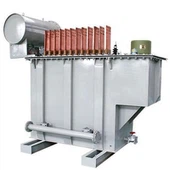
Understanding the Function of a Rectifier
Rectifiers are important parts of modern electronics. They change AC into DC. This conversion is necessary to power most electronic equipment.
Knowing about rectifiers is important if you want to know anything about electronics. They can be found in power supplies, radios, and battery chargers. Its job is important so that the device gets the right kind of current.
There are different kinds of rectifiers. The most common are half wave, full wave, and bridge rectifiers. Different types have their own features and uses.
A rectifier's basic function is straightforward. It lets the current flow in just one direction. This changes AC into something we can use, DC.
Diodes are the primary components in rectifier circuits. Make sure the current goes where it should. That makes them essential for making rectifiers.
Rectifiers aren't only for little things. They're in big power systems too. Renewable energy systems such as solar panels are included.Understanding rectifiers can help with creating good power systems. It's something that electrical engineers and people who build electronics for fun both need to know how to do.
What Is a Rectifier?
A rectifier is an electrical device. It's job is to convert AC into DC. It's an important step in lots of electrical uses.
Alternating current changes direction at intervals. On the contrary, Direct Current flows in one direction. A lot of electronic devices require DC to work properly.
There are various kinds of rectifiers. They are:
· Half-wave rectifiers
· Full-wave rectifiers
· Bridge rectifiers
Different types have different features and advantages. It depends on your application needs.
Rectifiers hold an important position in power supply. No rectifiers and devices might not get the right current. And it could cause malfunction or inefficiency.
Power conversion isn't the only thing that rectifiers do for devices, they also improve safety: They stop electrical overloads and surges. This kind of protection is important if we want electronic devices to last a long time.
Although rectifiers may appear simple, they are actually quite complicated. To understand how they work, you need to know about electricity. And it's also something that excites the electronic enthusiasts as well as the professionals. So basically, rectifiers are important parts of electrical and electronic systems. It is necessary for changing ac into some type of power which gadgets can make use of effectively and securely.
Why Do We Need Rectifiers? The Importance of AC to DC Conversion
A lot of electronic devices need direct current to work. AC is the primary form of electricity supplied by utilities. So we have to change AC into DC.
DC power is steady and constant. It's good for electronics. No rectifier, then no way for device to work well.
There are some important reasons for DC conversion:
Device Compatibility: Most devices use DC.
Efficiency: DC doesn't have the loss that AC has.
Stability: DC gives a constant voltage level.
Rectifiers make sure our devices work safely. They make sure the right voltage level is kept. No rectification, electronic circuit will be damaged.
There are lots of places where DC is important. Battery charging, radios etc. Rectifiers allow us to adapt the ac supply to suit our needs. They connect the power source to the devices that need it, and also help with energy saving. They just give out enough power to avoid wastage. This is important because we want to use energy in a more sustainable way.
How Does a Rectifier Work? The Basic Principle
Rectifiers change AC into DC by taking advantage of the characteristics of diodes. Diodes are semiconductor devices that let current go through in just one direction, kind of like a one-way door for electricity.
When AC voltage is applied to a rectifier, diodes are used to block one half of the AC cycle. This leads to a unidirectional current and hence DC power can be produced.
The basic working principle of a rectifier is as follows:
· AC Input: An alternating voltage is given.
· Diode conduction: Diodes conduct during the positive half cycle.
· Blocking Negative Cycle: Diodes block reverse current flow in the negative half.
· Output DC: Generates a pulsating, single-direction current.
Half wave rectifiers use one diode for this. On the other hand, full wave rectifiers use more diodes to handle both halves of the AC cycle.
Output, even though it's DC, isn't smooth and flowing. It needs some work. And there are other things too, such as filters etc. They help with reducing ripples and giving a steadier DC output.Understand these ideas is important when making good power supplies. Mastering those ideas means electronic devices get the right power to work well and quickly.
Key Components of a Rectifier Circuit
Rectifier circuit depends on some main parts that can change AC into DC. The most important part is the diode which is a kind of semiconductor device.
Diodes are important because they let electricity flow in just one way. They make sure that only half of the cycle of the AC gets through.
Transformers are used in rectifiers. They change voltage levels to fit what the rectifier needs and how the thing works.
Capacitors are also an essential part of a lot of rectifiers. They make the DC output smoother, cutting down on ups and downs and making the current better.
And also there are some rectifier circuit which uses inductor for better stabilization of the output Inductors give us better filtering, so we have a more steady DC output.
And here's a short list of the main things found in rectifier circuits:
· Diodes: Control current direction.
· Transformers: change the voltage level of the input.
· Capacitors: Make DC smoother.
· Inductors: Improve output stability.Understand them when it comes time to design or analyze a rectifier circuit. Each part has an important job to do for the AC to DC conversion to work well.
Types of Rectifiers: An Overview
There are different kinds of rectifiers, each having its own advantages and uses. Knowing the difference helps when trying to decide which is best for you.
There are three kinds of rectifier: half wave rectifier, full wave rectifier and bridge rectifier. Every one has its own way of changing AC into DC.
Here's a list of those rectifiers:
Half-Wave Rectifiers: One diode.
Full-Wave Rectifiers: Use 2 diodes in center-tapped or 4 diodes in bridge configuration.
Bridge Rectifiers: Use four diodes to convert both AC halves. Selecting the right rectifier relies on things such as what level of efficiency is needed and what kind of power source is available. It's important when making good electronic circuit designs.
Half-Wave Rectifier: Operation and Applications
A half-wave rectifier is the simplest type of rectifier. It uses a single diode to convert AC to DC.
During each AC cycle, the diode allows only one half to pass. This results in a pulsating DC output.
One primary advantage is its simplicity and low cost. However, it is less efficient because it uses only part of the AC waveform.
Half-wave rectifiers are often used in low-power applications. Some examples include signal demodulation and basic battery chargers.
Key points about half-wave rectifiers include:
Simple and cost-effective design.
Inefficiency due to partial AC cycle usage.
Suited for low-power applications.
Despite its limitations, the half-wave rectifier is an essential tool. It offers a basic introduction to the rectification process.
Full-Wave Rectifier: Center-Tapped and Bridge Types
Full wave rectifiers convert the whole AC input to DC. They are better than half wave ones.
There are 2 kinds of Full wave rectifier: Center tapped & Bridge. Both have better efficiency than single diode.
A center-tapped full wave rectifier has 2 diodes. They pass both halves of the AC waveform through a transformer.
Bridge rectifiers use four diodes placed in a certain arrangement. This way, the whole AC cycle can be changed over without needing a center tap.
The advantages of full-wave rectifiers are
· More efficient through full cycle conversion.
· DC output that is smoother with less ripple.
· Can be used on all kinds of different devices.
Full-wave rectifiers are important in power supplies. They change AC from the grid into DC for electronic devices.
Center-tapped full-wave rectifier
Center-tapped Full Wave Rectifier uses a Center Tapped Transformer. It splits the AC input in half and uses two diodes.
Each diode conducts for just one half of each ac cycle. So it makes full use of the input waveform, which is more efficient.
One big advantage is that there's a nice smooth DC output with less ripple. But it needs a center-tapped transformer, so it may cost more.
Here's a quick list for center-tapped full-wave rectifiers:
· Two diodes for center tapped transformer.
· The whole AC wave is converted.
· Smooth output with moderate difficulty.
This kind of rectifier is commonly found in medium and high voltage settings. It's especially handy when making steady power sources.
Bridge Rectifier
Bridge rectifiers stand out because they are neat. They use four diodes in a bridge configuration.
It can convert the whole AC wave shape so there's no need for a centertapped transformer. It has high efficiency and low component cost.
One big advantage is that it gives out steady DC without much ripple. So bridge rectifiers are commonly used in a lot of electronic devices.
The notable features of a Bridge Rectifier are:
· 4 diodes in bridge configuration.
· A full AC cycle is used.
Efficient, little ripples.Bridge rectifiers are flexible and commonly used in various applications. They are an important part of power supply units and many other electronic devices that need dependable DC power.
Output Characteristics: Pulsating DC and the Need for Smoothing
Rectifiers change AC into DC, and it's not steady. This pulsating DC has high points and low points, making a wavy shape that's not smooth.
And this kind of uneven flow would be bad news for delicate electronics. Most devices require a steady and unvarying DC voltage to work properly.
For this problem, we use smoothing circuit(s). They can help with reducing ripples and making it more stable.
The main aspects of pulsating DC and smoothing are as follows:
Pulsating DC: The result of a conversion process, it does have some fluctuations.
Devices affected: It can lead to problems with performance.
Solution: Use Capacitors/Inductors as Smoothing Components. Smoothing Circuits play an important role in making Power Supply Reliabile They make electronic devices work better and more reliably.
Smoothing Circuits: Capacitors and Inductors
Smoothing circuits use capacitors and inductors. These parts help make the DC output smoother.
Capacitors hold on to charge and let it go slowly. This action fills up the spaces between the voltage peaks, making the ripples smaller.
On the contrary, inductors oppose changes in current. They help keep a steady flow of electricity, which makes things more stable.
Here's a short list of their parts in making things smooth:
Capacitors: Store and discharge charge to smooth voltage.
Inductors: Keep flowing with the current.
Combined effect: They work together to give us a steady DC output. By using those parts, we could have gotten a steadier supply of power. Smoothing is important for lots of electronic systems to work well.
Efficiency and Performance of Rectifiers
A rectifier's efficiency matters for power supply systems. Good rectifiers change AC into DC with few losses, so they save energy and money.
There are many things that depend on performance. There are also the diode quality and circuit design. High quality parts improve rectifier efficiency.
A loss in a rectifier will usually result in heat. Cut down on these losses for better performance. Circuit design improvement can reduce heat generation.
Points affecting efficiency and performance:
Component Quality: The better the diode, the better the efficiency.
Heat Generation: Less heat is good.
Circuit design: A good circuit reduces loss. Choosing a suitable rectifier according to your requirements will greatly improve efficiency. Focus on components quality and design. It makes sure that the rectifier does well and stays reliable for a long time.
Single-Phase vs. Three-Phase Rectifiers
There are 2 kinds of rectifiers: single phase and three phase. They serve different purposes based on the power supply needs.
Single-phase rectifiers are commonly found in household appliances. They are simple and good enough for low power. But they will get big voltage ripple.
On the other hand, three-phase rectifiers are better suited for industrial use. They give out more steady voltage and they can deal with more power. So they're better for big power changes.
There are several key distinctions between single-phase and three-phase rectifiers.
Complexity: three-phase circuit is more complicated.
Output: 3-Phase gives smooth DC.
Application: Single-phase suits home devices; three-phase fits industrial uses.Understanding these differences is vital for selecting the right rectifier. The choice has great effect on efficiency and performance.
Applications of Rectifiers in Everyday Life
Rectifiers play important parts in lots of areas of contemporary living. They change AC into DC to run many electronic things.
Home electronic devices such as TVs and computers use rectifiers. These devices need steady DC to work best, rectifier circuits give it to them.
Rectifiers are important parts of phone and laptop chargers. They change AC from outlets into DC for charging. In automotive systems as well, rectifiers have significant roles. Alternators' AC gets changed into DC that vehicle electrical systems need.
Common rectifier applications:
· Electronic device power supplies
· Battery chargers
· Automobile Electrical System
· Radio signal processing
And they're versatile when it comes to renewable energy systems. Solar panels frequently make use of rectifiers for storing energy. Rectifiers guarantee that your devices will have steady and dependable power supply. Without them, many modern conveniences would be impractical.
Advanced Rectifier Designs and Modern Innovations
Modern innovation has changed how rectifiers are made. Semiconductor tech has advanced so rectifiers can do their job better and last longer, making power change over easier.
Advanced designs use better materials and parts. And these improvements give us better efficiency, less energy wasted as heat, and no more those
New type rectifier is important for high tech application. They can help renewable energy systems as well as complicated electronic equipment.
Key innovations in rectifier technology:
· Use of next generation semiconductor material
· Design improvement for higher efficiency
· Thermal management solutions new things coming up in the future look good, maybe smaller ones that work better.
With constant progress, rectifiers will continue to advance and develop to satisfy the increasing requirements of modern technology.
Troubleshooting and Common Issues in Rectifier Circuits
Rectifiers have some problems when working. The most common ones are diode failure and too much heat generated, which usually happen because wrong parts were chosen or there was too much power going through them.
Troubleshooting is methodical. First check all components for any visible damage/burnout. Use multimeter to check if there's any bad diode because it usually solves the problem right away.
And make sure they're safe. Loose connection or bad soldering will cause break in circuit. Monitor input/output voltage to see if there's anything abnormal. And mistakes such as too much voltage on the input end can bring about problems.
Common Rectifier Circuit Troubleshooting:
· Diode malfunctions
· Loose connections
· Excessive heat generation
Faulty or broken parts, this needs a good look into it. Regular care and watchful observation will keep away lots of troubles. To keep your circuit under control is to extend its life and make it work well.
Summary: Key Takeaways About Rectifiers
Rectifiers are key parts that change AC into DC. Knowing about them and what they do is important for both people who play with electronics and those who work with them. Half wave to bridge rectifiers, every type has its own advantage and use.
Key Points to Remember:
· Rectifiers change AC into DC.
· Types are half-wave, full-wave, and bridge rectifiers.
Efficiency and design differ according to application needs, these things power electronic devices and systems. Mastering how to use them and solving common problems can make circuits more reliable and effective.
FAQ
Q: 1. How soon can you delivery the transformer?
A: It depends on the quantity and capacity of the transformer, normally within one month since the date drawing confirmed by buyer.
Q: 2. How long can you provide the quality warranty?
A: 24 months since the date transformer operated.
Q: 3. What payment method do you accept?
A: T/T (wire transfer) preferred, L/C both accepted.
Q: What is the main function of a rectifier?
A: A rectifier converts alternating current (AC) into direct current (DC). This process is crucial for many electronic applications.
Q: What are the common types of rectifiers?
A: Rectifiers typically fall into three categories: half-wave, full-wave, and bridge. Each offers different benefits and uses.
Q: Why is rectification necessary?
A: Most electronic devices require DC power. Rectifiers enable the conversion from AC, which is generally available from power grids.
Q: Are rectifiers efficient?
A: Rectifier efficiency varies by type and design. Bridge rectifiers usually offer superior performance due to their full-wave rectification capability.
Q: Can rectifiers handle all AC currents?
A: Not all rectifiers are designed for high-capacity AC currents. Selections depend on application requirements and specifications.
Q: Where are rectifiers commonly used?
A: Rectifiers are prevalent in power supplies, radios, and battery chargers. They're integral to maintaining efficient power flow and device functionality.