

If you look at a K-rated transformer from across the room, it doesn't really look any different from a standard one. The core physics? Exactly the same. But if you roll up your sleeves and look closer, you'll find some pretty clever engineering tweaks hidden inside those windings.
Manufacturers don't just beef up these transformers with extra copper; they deliberately re-engineer them to handle the nasty harmonic currents cooked up by modern electronics.
By changing how the windings are put together, they can kill off extra heat, keep eddy currents from spiraling out of control, and stop insulation-destroying hot spots from forming in the first place. Here is how they actually do it.

Ditching Single Wires for Multi-Strand Conductors
Go into a standard transformer, and you'll often see one big, thick conductor doing all the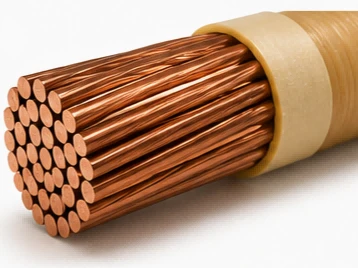 heavy lifting. In a K-rated unit? Not a chance. Instead, designers bundle a bunch of smaller wires together in parallel.
Why bother? Because harmonics are notorious for triggering high-frequency losses. When you push high frequencies through a thick wire, the current crowds toward the outside (the skin effect) and gets pushed around by neighboring wires (the proximity effect).
By splitting that one giant 200 mm² copper bar into, say, eight 25 mm² parallel strands, you give the current more surface area to move through. It keeps things running much cooler and makes it way easier for the transformer to dump heat.
The Shift to Foil Windings
On the low-voltage side of things-especially when you get into high-tonnage harmonic territory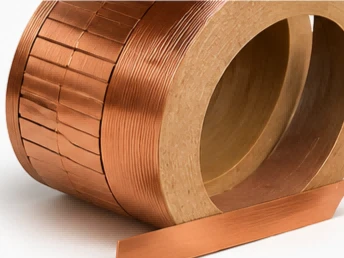 like K-13, K-20, or the extreme K-40 designs-you'll constantly run into foil windings made of copper or aluminum sheets.
Foil is great here for a few reasons:
It naturally spreads the current out evenly across the sheet.
It pretty much eliminates the nasty hot spots you get with standard wire.
It gives the transformer some serious structural backbone against short-circuit forces.
Transposed Conductors (Playing Musical Chairs)
When an application is absolutely riddled with harmonics, manufacturers pull out a trick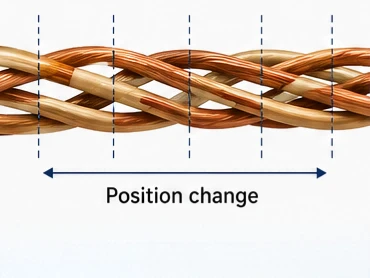 called continuously transposed conductors, or CTC.
Think of it as a controlled game of musical chairs for wire strands. As the bundle winds through the transformer, the individual strands physically swap positions at regular intervals. This ensures that no single strand gets stuck on the inside or outside of a bend for too long. Everyone shares the load equally, which cuts down on circulating currents and keeps temperatures beautifully balanced. It's an invisible detail, but it's a lifesaver for long-term efficiency.
Continuous Cylindrical Layouts
For dry-type K-rated transformers, you'll usually see the high-voltage side arranged in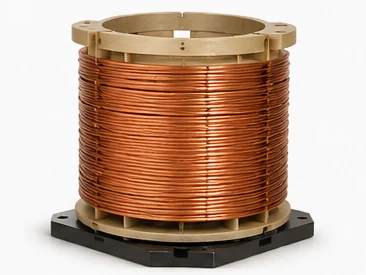 a continuous, layered cylindrical structure.
This isn't just about aesthetics. A neat, continuous cylinder smooths out the electric field distribution and keeps partial discharges (microscopic electrical sparks that ruin insulation over time) at bay. Plus, it leaves clean channels for air to flow through, which is exactly what you want when things start heating up.
Split Winding Architectures

In data centers or critical hospital grids where downtime isn't an option, designers often opt for split winding arrangements.
By splitting the winding paths, they can trap and reduce leakage flux and stray losses. It's one of those subtle design choices that doesn't get much press, but it adds a massive safety buffer for facilities that need 99.999% uptime.
Why Can't We Just Use Regular Transformers?
The electrical loads we deal with today are a far cry from what was around thirty or forty years ago. Our grids are packed with:
Servers and massive AI computing clusters
Variable frequency drives (VFDs) running heavy motors
Even widespread LED lighting systems
Every single one of these is a non-linear load, meaning they draw current in short, jagged pulses rather than clean waves. That pulsing creates harmonics.
If you feed those harmonics into a standard transformer, the windings act like an electric blanket, trapping heat and baking the insulation until it fails prematurely. A K-rated transformer isn't just an oversized version of a regular transformer with a bigger price tag-it's an entirely different beast engineered from the inside out to survive the thermal stress of modern tech.
Quick Comparison: Standard vs. K-Rated Windings
|
Feature |
Standard Transformer |
K-Rated Transformer |
| Conductor Setup |
Usually a single thick wire |
Multi-strand parallel bundles |
| Low-Voltage Style |
Traditional wire wound |
Heavy-duty foil or multi-strand |
| Harmonic Tolerance |
Bare minimum |
Built specifically for it |
| Eddy Current Losses |
Skyrockets under harmonics |
Kept tightly under control |
| Cooling Setup |
Basic |
Generous air channels/enhanced dissipation |
| Data Center Use |
Risky at best |
The industry standard |
The Bottom Line
At the end of the day, making a transformer "K-rated" isn't about slapping on more turns of wire. It's all about the geometry and engineering of those windings. By playing with multi-strand bundles, foil sheets, and clever transposition tricks, these units don't just tolerate harmonic heat-they handle it gracefully. That's exactly why they're the gold standard for AI infrastructure, data centers, and any environment where clean power is a myth.
FAQ
A: It depends on the quantity and capacity of the transformer, normally within one month since the date drawing confirmed by buyer.
A: 24 months since the date transformer operated.
A: T/T (wire transfer) preferred, L/C both accepted.


