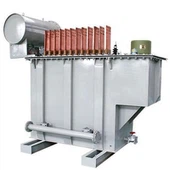
Delta Star Transformer Connection: Working Principle, Advantages, and Applications
Transformers are essential components in modern electrical networks because they allow electricity to be transmitted and distributed at different voltage levels. Among the various three-phase transformer connection methods, the delta star transformer configuration is one of the most widely applied solutions in utility, industrial, commercial, and renewable energy power systems.
The delta star connection combines a Delta (Δ) winding on one side of the transformer with a Star (Y) winding on the other side. This arrangement provides several practical benefits, including improved voltage stability, reduced harmonic effects, and the ability to provide a neutral connection for low-voltage distribution systems.
For many distribution applications, transformer manufacturers commonly use the Dyn11 vector group, which has become a standard choice for 11kV/0.4kV distribution transformers and similar power systems.
What Is a Delta Star Transformer?
A delta star transformer is a three-phase transformer in which one winding is connected in Delta and the other winding is connected in Star. In most distribution applications, the high-voltage winding uses the Delta connection, while the low-voltage winding uses the Star connection with a neutral point.
The transformer vector group is often expressed as Dyn11. In this designation, the letter "D" indicates that the high-voltage winding uses a Delta connection, while "y" represents the Star connection on the low-voltage side. The letter "n" shows that the neutral point is available, and "11" represents the phase displacement between the high-voltage and low-voltage windings.
This configuration allows the transformer to supply both three-phase and single-phase loads, making it especially suitable for distribution networks.
Working Principle of a Delta Star Transformer
The operating principle of a delta star transformer is the same as any other transformer. Electrical energy is transferred between the primary and secondary windings through electromagnetic induction. However, the winding connection method affects how voltage, current, harmonics, and grounding characteristics behave within the system.
On the Delta-connected side, the three windings are connected in a closed triangle. Since there is no neutral point, the Delta winding is commonly used for high-voltage applications where a neutral conductor is not required. The closed-loop design also provides a path for circulating harmonic currents, which helps improve voltage waveform quality.
On the Star-connected side, the three winding ends are connected together at a common point, creating a neutral connection. This allows the transformer to supply a four-wire distribution system where both line-to-line and line-to-neutral voltages are available.
For example, a 400V low-voltage distribution system can provide 400V three-phase power for motors and industrial equipment while also providing 230V single-phase power for lighting and office equipment.
Voltage and Current Relationships in Delta Star Transformers
The electrical characteristics of a delta star transformer depend on the different relationships between phase and line values.
| Connection | Line Voltage | Line Current |
|---|---|---|
| Delta (Δ) | Equal to phase voltage | √3 times phase current |
| Star (Y) | √3 times phase voltage | Equal to phase current |
In the Delta connection, each winding receives the full line voltage, while the line current is higher than the winding current. In contrast, the Star connection reduces the voltage stress on each winding because each phase winding receives only the phase voltage.
This difference makes the Delta-Star arrangement suitable for stepping voltage levels between medium-voltage and low-voltage systems.
Why Is Delta Used on the High Voltage Side?
The Delta connection is commonly selected for the high-voltage  winding because it provides several operational advantages.
One important benefit is harmonic control. Modern electrical systems often contain nonlinear loads that generate harmonic currents. A Delta winding creates a closed circulating path for third harmonic currents, preventing these harmonics from appearing excessively in the external power network.
The Delta connection also improves transformer performance when loads are not perfectly balanced. Industrial facilities, commercial buildings, and renewable energy systems often experience uneven phase loading, and the Delta winding helps maintain better overall system stability.
Another advantage is that high-voltage transmission and distribution systems usually do not require a neutral conductor. Using a Delta connection simplifies the transformer design while maintaining reliable operation.
Why Is Star Used on the Low Voltage Side?
 The Star connection is preferred on the low-voltage side because it provides a neutral point that can be grounded.
This neutral connection is extremely important in distribution systems because many electrical users require both three-phase and single-phase power. A typical 400V distribution transformer can supply 400V between phases and approximately 230V between a phase and neutral.
As a result, one transformer can serve different types of electrical equipment, including motors, HVAC systems, lighting circuits, and commercial appliances.
The grounded neutral also improves electrical safety by providing a reference point for protection systems and fault detection equipment.
Common Applications of Delta Star Transformers
The delta star transformer connection is widely used across different sectors because of its flexibility and reliability.
In utility distribution networks, 11kV/0.4kV Dyn11 transformers are  commonly installed to reduce medium voltage electricity into low-voltage power suitable for residential, commercial, and industrial customers.
Industrial plants often use delta star transformers because they can support heavy three-phase loads while maintaining stable voltage performance. Manufacturing facilities, mining operations, and large processing plants commonly rely on this transformer configuration.
Renewable energy projects, including solar farms and wind power systems, also use delta star transformers to connect generation equipment with medium-voltage distribution networks.
Data centers and commercial buildings may also use delta star transformer systems because they require reliable power distribution with excellent power quality performance.
Delta Star Transformer vs Star Delta Transformer
Although both transformer configurations use Delta and Star connections, their applications are different.
| Feature | Delta Star Transformer | Star Delta Transformer |
|---|---|---|
| High voltage winding | Delta | Star |
| Low voltage winding | Star | Delta |
| Neutral connection | Usually available on LV side | Usually available on HV side |
| Typical application | Distribution systems | Transmission and industrial systems |
| Common vector groups | Dyn11 | YNd11 |
The delta star configuration is more common in distribution transformers because the Star-connected secondary winding provides a convenient neutral connection for end users.

Advantages of Delta Star Transformer Connection
The popularity of delta star transformers comes from their ability to combine the strengths of both winding arrangements. The Delta side improves harmonic performance and helps manage unbalanced loads, while the Star side provides a neutral connection for flexible power distribution.
These transformers offer reliable operation, efficient voltage conversion, and compatibility with modern electrical networks. They are especially valuable in systems where both three-phase and single-phase power supplies are required.
For power utilities, industrial facilities, and renewable energy projects, the delta star connection remains one of the most practical and proven transformer designs.
Dyn11 Delta Star Transformer Example
A typical distribution transformer may have the following specifications:
| Parameter | Example Value |
|---|---|
| Rated Capacity | 1000 kVA |
| Primary Voltage | 11 kV |
| Secondary Voltage | 0.4 kV |
| Vector Group | Dyn11 |
| Cooling Type | ONAN |
During operation, the 11kV supply enters the Delta-connected high-voltage winding. The transformer transfers energy through electromagnetic induction and reduces the voltage level. The low-voltage Star-connected winding then delivers 400V three-phase power with a neutral point available for 230V single-phase loads.
This design has become a standard solution for many distribution applications worldwide.
Choosing a Reliable Delta Star Transformer Manufacturer
Selecting the right delta star transformer requires careful consideration  of factors such as rated capacity, voltage ratio, vector group, efficiency, insulation system, cooling method, and applicable standards.
Yawei Transformer provides customized transformer solutions for utility networks, industrial applications, renewable energy projects, and commercial power systems. With experience in manufacturing oil-immersed transformers, dry-type transformers, and power transformers, Yawei Transformer focuses on delivering reliable and efficient products that meet international requirements.
Conclusion
The delta star transformer connection is a key technology in modern power distribution because it provides efficient voltage transformation, improved harmonic performance, and flexible load supply capability.
By combining a Delta-connected winding with a Star-connected winding, this transformer configuration offers a practical solution for supplying reliable electricity to industries, buildings, renewable energy projects, and utility networks.
With its proven performance and wide range of applications, the delta star transformer continues to be one of the most important transformer designs in today's electrical infrastructure.
FAQ
Q: How soon can you delivery the transformer?
A: It depends on the quantity and capacity of the transformer, normally within one month since the date drawing confirmed by buyer.
Q: How long can you provide the quality warranty?
A: 24 months since the date transformer operated.
Q: What payment method do you accept?
A: T/T (wire transfer) preferred, L/C both accepted.