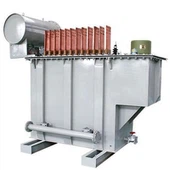
Understanding the Various Types of Transformers
Electrical transformers are devices that transfer electrical energy from one circuit to another, usually while changing voltage levels to make power safer, more efficient, or more usable. The different types of transformers exist because electrical systems have different demands: long-distance transmission, equipment protection, measurement, voltage conversion, signal handling, and isolation from faults or noise. This guide explains the major transformer types, where they are used, and how to think about choosing the right one for an application.
What are electrical transformers?
Electrical transformers are electromagnetic devices that use coils  of wire and a magnetic core to move energy between circuits without a direct electrical connection in many designs. In a basic transformer, alternating current in the primary winding creates a changing magnetic field, which induces voltage in the secondary winding. The ratio between the turns of wire on each winding determines whether the transformer steps voltage up, steps voltage down, or keeps it nearly the same.
This simple principle supports a wide range of transformer types. Some are designed for utility grids and industrial power distribution, while others are compact components inside electronics, control panels, medical equipment, test benches, and automation systems. Because transformers can influence voltage, current, safety, noise, and system compatibility, they are central to modern electrical infrastructure.
The basic ways transformers are classified
Before looking at specific designs, it helps to understand how transformers are commonly grouped. A single transformer may belong to more than one category. For example, a dry-type transformer can also be a step-down transformer, and a power transformer can also be three-phase.
Common classification methods include:
By voltage function: step-up, step-down, or one-to-one voltage transfer.
By application: power distribution, measurement, protection, isolation, control, or electronics.
By construction: core type, shell type, toroidal, dry-type, or oil-filled.
By phase: single-phase or three-phase.
By winding arrangement: two-winding transformers, auto transformers, or multi-winding designs.
By operating environment: indoor, outdoor, industrial, utility, marine, medical, or hazardous-location applications.
These categories are useful because transformer selection is rarely based on voltage alone. The installation environment, load profile, insulation requirements, cooling method, efficiency expectations, and applicable electrical standards all shape the final choice.
Power transformers move energy at scale
Power transformers are built for handling larger amounts of electrical power, typically in  generation, transmission, substation, and heavy industrial systems. Their main purpose is to raise voltage for efficient long-distance transmission or reduce voltage for distribution and use.
When voltage is increased, current can be reduced for the same power level, which helps limit losses in transmission conductors.
These transformers are usually engineered for continuous duty, thermal stability, and long service life. Many large power transformers are oil-filled because liquid insulation and cooling can help manage heat in high-capacity equipment. Smaller or indoor versions may use dry-type construction where fire safety, maintenance preferences, or environmental conditions make liquid-filled equipment less desirable.
Power transformers are not chosen casually. Engineers consider load demand, short-circuit withstand capability, impedance, cooling class, insulation level, noise, losses, and installation constraints. In critical infrastructure, redundancy and maintenance access are also important because a failed transformer can interrupt service to many users.
Distribution transformers bring voltage closer to the load
Distribution transformers are the familiar workhorses that reduce medium-voltage power to levels usable by homes, buildings, shops, and light industrial loads. They are found on utility poles, in pad-mounted enclosures, inside buildings, and near equipment groups. Their job is practical: deliver the right voltage near the point of use.
Compared with large power transformers, distribution transformers often operate with varying load throughout the day. Efficiency at partial load can matter because these units may remain energized continuously even when demand is low. In commercial buildings, a distribution transformer may serve lighting, receptacles, HVAC equipment, or dedicated process loads.
A key practical point is placement. Locating the transformer closer to the load can reduce low-voltage conductor length and voltage drop, but it may also introduce space, ventilation, access, sound, and code considerations. Good design balances electrical performance with the realities of the building or site.
Isolation transformers improve safety and reduce interference
Isolation transformers transfer power between circuits while intentionally separating the input and output electrically. The voltage may remain the same, or it may be stepped up or down, but the defining benefit is galvanic isolation. This separation can reduce the risk of certain shock hazards, limit ground-loop problems, and help protect sensitive equipment from electrical noise.
Isolation transformers are common in laboratories, control systems, medical environments, audio systems, industrial machinery, and service benches. They are also used where a separately derived source is needed, subject to the rules and grounding practices that apply to the installation. The transformer does not make electricity harmless, but it can change the way faults and noise behave in a system.
When evaluating isolation transformers, look beyond voltage and power rating. Important details include insulation rating, leakage current, shielding, temperature rise, enclosure type, grounding provisions, and whether the unit is designed for the specific environment. A medical-grade isolation transformer, for example, may have requirements that differ from an industrial control transformer.
Auto transformers use one winding for compact voltage conversion
Auto transformers use a single continuous winding with taps rather than completely separate primary and secondary windings. Because part of the winding is shared, they can be smaller, lighter, and more efficient than comparable two-winding transformers in many voltage-conversion applications. They are often used when the input and output voltages are relatively close.
The tradeoff is that auto transformers do not provide the same electrical isolation as a two-winding transformer. That makes them useful in some applications and inappropriate in others. They can be found in voltage adjustment equipment, motor starting, laboratory variacs, and systems where compact voltage transformation is needed without galvanic separation.
Use an auto transformer when efficiency, size, and cost are important and isolation is not required. Avoid using one where safety, noise separation, or fault isolation is the main objective. This distinction is one of the most important differences among transformer types.
Which transformer type fits which job?
The right transformer type depends on what the circuit needs to accomplish: change voltage, isolate equipment, measure electrical quantities, improve compatibility, or distribute power safely. Start with the load and the electrical system, not with the transformer catalog. Voltage, current, frequency, duty cycle, installation location, and protection requirements should guide the selection.
A practical selection checklist includes:
Define the input and output voltage. Confirm nominal voltage, allowable tolerance, and whether the system is single-phase or three-phase.
Calculate the load. Size the transformer for apparent power, expected demand, starting current, and future expansion where appropriate.
Identify the need for isolation. If safety separation or noise reduction is required, choose a two-winding isolation design rather than an auto transformer.
Review the environment. Consider heat, moisture, dust, ventilation, indoor or outdoor placement, and enclosure requirements.
Check grounding and protection. Coordinate overcurrent protection, bonding, grounding, and fault behavior with the larger electrical design.
Consider efficiency and heat. Transformer losses become heat, so ventilation and operating cost matter, especially for continuously energized equipment.
Match applicable standards. Use equipment rated and listed for the intended jurisdiction, installation type, and application.
This checklist does not replace engineering review, but it helps clarify the questions that matter. In many installations, the safest approach is to involve a qualified electrical professional before purchase or installation.
Voltage transformers support measurement and control
Voltage transformers, also called potential transformers in many measurement contexts, reduce high voltage to a lower, standardized value that meters, relays, and control equipment can safely handle. Instead of supplying large loads, they provide an accurate scaled representation of system voltage. This allows monitoring and protection devices to operate without being directly connected to dangerous high-voltage levels.
These transformers are common in switchgear, substations, industrial power systems, and metering panels. Accuracy matters because the connected instruments rely on the secondary voltage to represent the primary system correctly. The transformer must be selected for voltage class, burden, accuracy, insulation, and protection needs.
Voltage transformers are often discussed alongside current transformers, which scale current rather than voltage. Together, they allow electrical systems to be measured, controlled, and protected in a practical way. Without these instrument transformers, many high-energy systems would be far harder and more hazardous to monitor.
Step-up and step-down transformers set usable voltage levels
Step-up transformers increase voltage from the primary side to the secondary side. Utilities use them to raise voltage after generation so power can travel long distances more efficiently. They also appear in specialized equipment that needs higher voltage than the available supply.
Step-down transformers reduce voltage for safer or more practical use. They are common in buildings, electronics power supplies, control circuits, doorbells, chargers, industrial panels, and distribution networks. In everyday terms, a step-down transformer helps convert available electrical power into a level that equipment can actually use.
The important idea is that voltage and current move in opposite directions in an ideal transformer. When voltage increases, available current decreases proportionally, and when voltage decreases, available current increases proportionally, within the limits of transformer capacity and real-world losses. That relationship is why transformers can adapt power delivery so effectively.
Single-phase and three-phase designs serve different systems

Single-phase transformers are widely used in residential, light commercial, control, and small equipment applications. They work with single-phase AC supplies and are often simpler to install for smaller loads. Many low-voltage control transformers and small distribution units fall into this category.
Three-phase transformers serve larger commercial, industrial, and utility systems. They may be built as one three-phase unit or as a bank of three single-phase units. Three-phase power is efficient for motors, large equipment, and balanced power distribution, making three-phase transformers essential in factories, data centers, large buildings, and grid infrastructure.
Choosing between single-phase and three-phase is usually determined by the available supply and the load. A three-phase motor system, for instance, generally needs a transformer arrangement that supports three-phase power. Trying to force the wrong transformer into the wrong system can lead to poor performance, overheating, or unsafe conditions.
Construction style affects performance and installation
Transformer construction influences size, efficiency, sound, cooling, and installation requirements. Core-type and shell-type designs arrange windings and magnetic paths differently, affecting mechanical strength and magnetic performance. Toroidal transformers use a ring-shaped core and are often valued in electronics for compact size and low stray magnetic fields.
Cooling and insulation are also central design choices. Dry-type transformers use air and solid insulation, making them common indoors where liquid-filled equipment may not be preferred. Oil-filled transformers use insulating liquid for cooling and dielectric strength, which can be suitable for larger outdoor or utility applications but requires attention to containment, maintenance, and environmental considerations.
Enclosures matter too. A transformer installed in a clean electrical room has different protection needs from one placed outdoors, near machinery, or in a dusty industrial space. The best design is not always the most powerful one; it is the one that matches electrical demand, physical setting, safety requirements, and maintenance expectations.
Key takeaways for understanding transformer types
The many different types of transformers are easier to understand when you focus on their purpose. Power transformers move large amounts of energy through grids and industrial systems. Distribution transformers bring voltage down near the point of use. Isolation transformers separate circuits for safety, noise control, or system design reasons. Auto transformers provide compact voltage adjustment when isolation is not required. Voltage transformers make high-voltage systems measurable and controllable.
When comparing electrical transformers, avoid choosing by voltage rating alone. A reliable selection considers load, phase, frequency, isolation, environment, efficiency, thermal performance, protection, and applicable standards. If the transformer will be part of a building, machine, utility connection, or safety-critical system, professional design and installation are essential.
Transformers may look like passive pieces of equipment, but they shape how electricity is delivered, measured, protected, and used.
Understanding the main transformer types gives you a stronger foundation for reading specifications, planning systems, and asking better questions before selecting equipment.
Q: How soon can you delivery the transformer?
A: It depends on the quantity and capacity of the transformer, normally within one month since the date drawing confirmed by buyer.
Q: How long can you provide the quality warranty?
A: 24 months since the date transformer operated.
Q: What payment method do you accept?
A: T/T (wire transfer) preferred, L/C both accepted.