

What's the Electricity Things Called in the City? A Simple Guide to Urban Electrical Infrastructure
Have you ever walked through a city and wondered, "what's the electricity things called in the city?" You might be looking at a transformer, an electrical cabinet, a substation, power lines, or some other part of the city's power distribution system.
There isn't really one name for everything. In general, these facilities and pieces of equipment are called electrical infrastructure, power infrastructure, or the electric power distribution system.
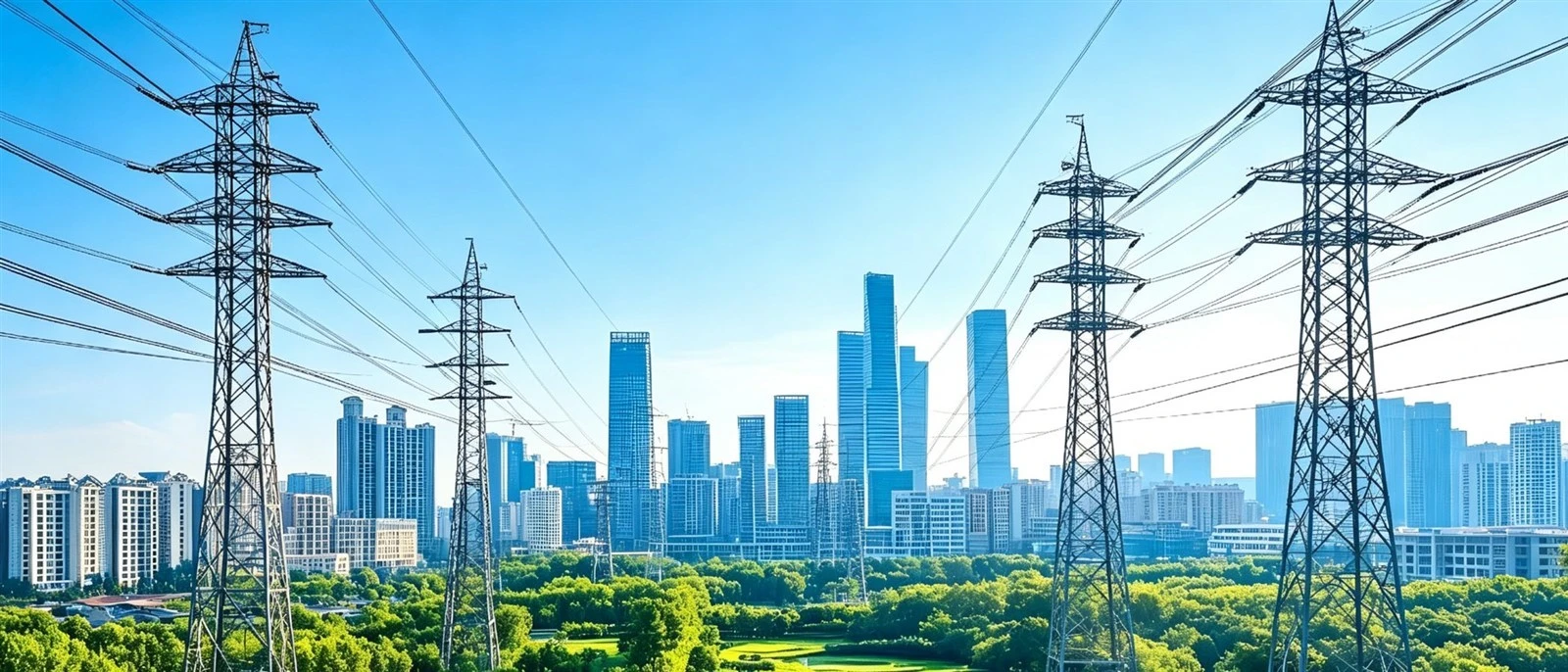
Once you know what you're looking at, it becomes much easier to understand how electricity gets from the grid to your home, office, factory, subway station, or other buildings.
What's the Electricity Things Called in the City?
The answer depends on the particular equipment you're asking about.
For example, the large fenced electrical facility outside a city may be an electrical substation. A box sitting beside a road could be a pad-mounted transformer or a distribution cabinet. The cables running above a street are usually called power lines, while cables buried underground are known as underground power cables.
Here's a quick overview:
| City Electrical Equipment | Common Name | Main Function |
|---|---|---|
| Large electrical facility | Electrical substation | Changes voltage and controls power flow |
| Equipment that changes voltage | Transformer | Steps voltage up or down |
| Overhead cables | Power lines / distribution lines | Carry electrical power |
| Underground cables | Underground power cables | Distribute electricity below streets |
| Street-level electrical cabinet | Distribution cabinet | Distributes and protects electrical circuits |
| Switching equipment | Switchgear | Controls, isolates, and protects circuits |
| Small roadside transformer | Distribution transformer | Reduces voltage for local consumers |
| Pole-mounted equipment | Pole-mounted transformer | Supplies nearby buildings and facilities |
| Underground transformer enclosure | Underground transformer vault | Houses electrical equipment below ground |
| Grid connection facility | Substation / switching station | Connects and controls sections of the power network |
So, if you just need a general term, urban electrical infrastructure is probably the easiest one to use.
Electrical Substations in Cities
An electrical substation is one of the key parts of a city's power network. It receives electricity at one voltage level, changes that voltage when necessary, and sends the power onward to another part of the grid.
Large cities normally have many substations. After all, electricity has to reach residential neighborhoods, office buildings, shopping centers, factories, hospitals, transportation systems, and plenty of other facilities.
A typical substation can contain power transformers, circuit breakers, disconnect switches, busbars, current transformers, voltage transformers, protection relays, and control equipment.
The layout isn't always the same. In places where land is limited or expensive, especially in busy city centers, substations may be installed inside buildings or underground rather than taking up a large outdoor area.
Transformers: Those Big Electrical Boxes
If you've seen a large metal tank near a substation or a compact  box beside a road, there is a good chance you're looking at a transformer.
A transformer changes AC voltage from one level to another while keeping the frequency unchanged. This sounds simple, but it's a fundamental part of the electrical grid.
Electricity is usually transmitted at high voltage because higher voltage allows power to travel long distances with lower current and reduced transmission losses. But homes, offices, and most electrical equipment don't need those extremely high voltages.
That's where transformers come in.
A simplified power path looks something like this:
Power Plant → Transmission Network → Substation → Distribution Transformer → Building → Electrical Equipment
Without transformers, modern electrical distribution would be a very different story.
What Are the Electrical Boxes on City Streets?
This is probably one of the things people mean when they search  "what's the electricity things called in the city?"
You've probably noticed green, gray, or metal boxes sitting near sidewalks, roads, apartment complexes, or commercial buildings. Depending on what's inside, these can be called distribution cabinets, utility boxes, switching cabinets, transformer enclosures, or pad-mounted transformers.
They don't all do exactly the same job.
Some contain fuses or circuit breakers. Others distribute electricity between several underground circuits. Larger enclosures may contain transformers that reduce medium voltage to a lower voltage for nearby customers.
These boxes are especially common in areas where the power network is installed underground. They provide utility workers with access to important electrical equipment without having to rely on overhead poles.
Underground Electrical Equipment
Many modern cities are moving toward underground electrical  distribution, particularly in downtown areas, new residential developments, commercial districts, airports, and transportation projects.
Instead of seeing lots of overhead wires and poles, you may see access covers, electrical cabinets, underground vaults, and compact transformer stations.
An underground transformer vault, for example, provides space for a transformer and related equipment below street level. It sounds straightforward, but the design has to deal with some very practical issues, including ventilation, drainage, water resistance, fire protection, maintenance access, and electrical safety.
Underground systems can make a city look much cleaner, but they aren't necessarily simpler. Installation can be more complicated, and maintenance may require special equipment and procedures.
What Are the Wires Called?
The wires and cables that carry electricity around a city are  generally called power lines, distribution lines, or electrical cables.
You'll usually see them in one of two arrangements: overhead or underground.
Overhead distribution lines are supported by utility poles. They are relatively easy for utility crews to inspect and repair, which is one reason they remain common in many areas. On the downside, storms, falling branches, and other weather conditions can cause problems.
Underground distribution cables are installed beneath roads, sidewalks, and other areas. They are less visible and can make urban areas look tidier. They also avoid some of the problems associated with exposed overhead conductors. The trade-off? Installation and repair can be more expensive and time-consuming.
There isn't one solution that works everywhere. Utilities have to consider local regulations, construction costs, available space, environmental conditions, and the needs of the electrical network.
Switchgear and Circuit Breakers
Not everything in a city power network is designed to change voltage. Some equipment is there mainly to control and protect the system.
Switchgear is used to switch, isolate, control, and protect electrical circuits. Depending on the application, it can include circuit breakers, disconnect switches, fuses, busbars, protection relays, and other components.
If a fault occurs on a distribution circuit, protective equipment can disconnect the affected section. This helps prevent equipment damage and, ideally, keeps the problem from affecting a much larger part of the network.
You'll find switchgear in substations as well as in industrial plants, commercial buildings, hospitals, transportation facilities, and data centers.
Pole-Mounted Transformers
In neighborhoods with overhead distribution systems, you  may notice electrical equipment mounted directly on utility poles.
These are commonly called pole-mounted transformers.
Their job is to reduce medium-voltage electricity to a lower voltage that can be used by nearby homes and businesses. Depending on the local system, one transformer may supply several homes or other small loads.
Pole-mounted transformers are relatively compact and have been used for decades. They're still a practical choice in many residential and rural distribution networks.
Pad-Mounted Transformers
If a neighborhood uses underground distribution cables,  you might see a large metal cabinet sitting on a concrete pad instead.
That's often a pad-mounted transformer.
Pad-mounted transformers are widely used in residential communities, commercial properties, industrial sites, and other locations where underground power distribution is preferred.
They connect the medium-voltage distribution system to the lower-voltage network serving nearby buildings. Their compact, enclosed design also makes them a good fit for many modern urban environments.
For city projects, things like available space, appearance, public safety, maintenance access, and load requirements all have to be considered when choosing this type of equipment.
How Does Electricity Move Through a City?
The easiest way to understand the city power network is to think of it as a chain.
Electricity starts at a power plant or another generation facility. A step-up transformer increases the voltage so the electricity can travel efficiently over long distances.
The high-voltage transmission network then carries that electricity toward cities and industrial areas.
Once it gets closer to the area where the electricity will actually be used, substations reduce the voltage to a level suitable for regional and local distribution. Distribution transformers reduce it again before it reaches individual buildings and other customers.
The simplified process looks like this:
Generation → Step-Up Transformer → High-Voltage Transmission → Substation → Distribution Network → Distribution Transformer → Building
Of course, the real grid is much more complicated than this simple diagram. There are multiple voltage levels, interconnected networks, protection systems, switching points, and backup arrangements. But this gives you a useful picture of what's going on.
Why Transformers Matter in Urban Power Distribution
Cities have changing and often unpredictable electrical loads.
An office district may have heavy air-conditioning demand during the day. Residential areas can see demand rise in the evening. Factories may run large motors and other equipment. Meanwhile, modern data centers can require huge amounts of electricity around the clock.
That's why transformers can't simply be selected by looking at today's average load.
Engineers need to consider the expected load, voltage level, installation environment, cooling method, temperature rise, insulation system, short-circuit withstand capability, efficiency, noise, maintenance requirements, and possible future expansion.
For example, the transformer used in a residential neighborhood may have very different requirements from one installed at a manufacturing plant or a large data center.
For urban projects, the physical installation environment matters too. A transformer may need to fit into a small substation, underground vault, commercial building, or compact outdoor enclosure.
Urban Electrical Infrastructure Is More Than Just Power Lines
So, when someone asks "what's the electricity things called in the city?", they're really asking about a whole system rather than one specific piece of equipment.
The equipment you see around a city can include transformers, substations, switchgear, distribution cabinets, overhead lines, underground cables, electrical vaults, and service equipment. All of these components work together to move electricity from the grid to the places where it's needed.
And the system is changing.
Electric vehicles, data centers, battery energy storage, renewable energy, electric public transportation, smart buildings, and industrial electrification are all adding new demands to urban power networks.
That means cities need electrical infrastructure that can handle today's loads while leaving enough room for tomorrow's growth.
For transformer manufacturers, this is becoming especially important. Transformers need to be reliable, efficient, properly sized, and suited to the specific environment where they will operate.
Conclusion
If you're searching "what's the electricity things called in the city?", the broad answer is urban electrical infrastructure or the electric power distribution system.
But once you look more closely, you'll find that every part has its own name. The large electrical facilities are usually substations. The equipment that changes voltage is a transformer. The cabinets beside roads may be distribution cabinets or pad-mounted transformers. The cables can be power lines, distribution lines, or underground power cables. And the equipment used to control and protect circuits is generally called switchgear.
Together, these components keep electricity moving through modern cities.
For utilities, EPC contractors, industrial facilities, commercial developments, and other power projects, selecting the right transformer is an important part of building a reliable electrical network. Yawei Transformer provides transformer solutions for power distribution, industrial facilities, renewable energy projects, commercial applications, and other electrical infrastructure projects.
Sometimes the equipment may look like just another box beside the road. In reality, it can be one small but important part of a much larger system keeping the city powered.
Q: How soon can you delivery the transformer?
A: It depends on the quantity and capacity of the transformer, normally within one month since the date drawing confirmed by buyer.
Q: How long can you provide the quality warranty?
A: 24 months since the date transformer operated.
Q: What payment method do you accept?
A: T/T (wire transfer) preferred, L/C both accepted.


